Category: International

  • Voices of the Drug War: Mexico and Canada

    Voices of the Drug War: Mexico and Canada

    In Mexico the drug war has had a devastating impact on communities, families, the social fabric and the economy. Deepen your understanding of the complex roots of this tragedy and hear ideas for new and better ways forward.

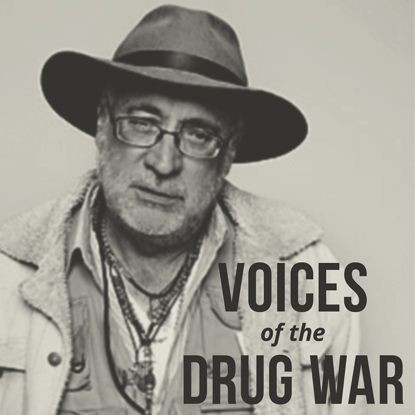
    Join the Canadian Drug Policy Coalition, Global Exchange and the Movement for Peace with Justice and Dignity for an evening with Javier Sicilia and Teresa Carmona.  Both of these outstanding Mexicans have lost children in the drug-war-driven violence of recent years. Both have chosen to forge their tragedies into opportunities to become agents of the changes so urgently needed in Mexico as well as in North America.
    Mr. Sicilia and Ms Carmona will share their experiences as both victims of the drug war and founders of an important peace movement. They will lead a discussion on why they are committing the moral weight of Mexico’s Movement for Peace with Justice and Dignity to the call for drug policy reform throughout our hemisphere.

    In Canada the drug war has had devastating impacts on individuals, families and communities across the country. Canada’s current drug laws support a lucrative underground and violent drug trade, fuel the spread of HIV and Hepatitis C, disproportionally target marginalized populations, and ensure the availability of illegal drugs to young people in our communities. Bud Osborn poet and Downtown Eastside activist will read and talk about his own journey through the drug war in North America.

    Donald MacPherson, Director, Canadian Drug Policy Coalition will moderate the discussion and highlight the opportunities coming towards us to accelerate the movement for ending the war on drugs.

    You are invited to attend – Voices of the Drug War: Mexico and Canada

    Register here: drugpolicy.ca/javier-sicilia/

    Monday, October 28, 7-9 PM
    World Arts Room
    SFU Woodward’s
    149 West Hastings Street
    Vancouver, BC

    For more info: [email protected]


    donate1The Canadian Drug Policy Coalition relies on donations from people like you to operate. Our small team ensures even the smallest contributions go a long way to make your voice heard. Please donate today.


  • Civil Society is Key to Global Drug Policy Reform

    Civil Society is Key to Global Drug Policy Reform

    The CDPC is continuing its coverage of the week-long meetings of the Commission on Narcotic Drugs in Vienna this week. 

    The current UN drug control system is based on three international drug control treaties: the 1961 Single Convention on Narcotic Drugs, the 1971 UN Convention on Psychotropic Drugs and the 1988 Convention Against Illicit Traffic in Narcotic Drugs and Psychotropic Substances. This drug control systems requires member states to take measures to prevent the non-medical use of a wide range of drugs through restrictions on production and supply, and by suppressing demand.

    Canada is a party to these treaties and subject to scrutiny by the International Narcotic Control Board. Historically, these drug control treaties and organizations were created by governments and stacked with law enforcement professionals with very little influence or participation by civil society groups.

    The United Nations Office on Drugs and Crime (UNODC) operates as the secretariat for the UN and advises governments on effective law enforcement, treatment systems, methods of estimating drug use and publishes the annual World Drug Report. The UNODC is front and centre this week because of its responsibilities for the organization of the Commission’s meetings

    On Wednesday, the head of the United Nations Office on Drugs and Crime, Yury Fedetov, met informally with NGO’s. Fedetov was faced with drug policy reform groups like the Transnational Institute in Holland, Transform Drug Policy Foundation, the International Drug Policy Consortium, and Law Enforcement Against Prohibition.  I almost felt sorry for the guy and then I remembered that he still holds many of the cards when it comes world drug control. Fedetov faced many questions about the involvement of civil society in the deliberations of the Commission. Clearly there is a push for these groups to be involved in a more meaningful way – and there are examples at the UN where civil society groups play a much larger role, such as UNAIDS.

    This week the CND Committee of the Whole is discussing a resolution entitled “Preparations for the high-level review of the implementation by Member States of the Political Declaration and Plan of Action on International Cooperation towards an Integrated and Balanced Strategy to Counter the World Drug Problem.” Yes, apparently the titles given to CND resolutions can be … long. Let’s just say the resolution has something to do with an upcoming review of the Commission’s activities.

    This resolution also refers to the 2016 UN Special Session (UNGASS) on the “World Drug Problem”. This session is the first opportunity for a global discussion on drug policy since 1998. The last paragraph of the resolution would make the CND the primary preparatory body for UNGASS 2106. Some civil society groups are here in Vienna pressing delegations to open the preparatory process so that it will include civil society and other UN organizations with a stake in drug policy.

    This is key to global drug policy reform. We want as fulsome and open a debate in 2016 as we can muster to ensure the numerous experiments in reform taking place around the globe can be openly considered.

  • Bolivia and Coca Chewing: Speaking Truth to Power

    Bolivia and Coca Chewing: Speaking Truth to Power

    As I mentioned in my previous blog, representatives of the CDPC are here in Vienna at the annual week-long meetings of the UN Commission on Narcotic Drugs. The opening plenary on Monday March 11th included an extremely engaging speech from Evo Morales, President of Bolivia. While most speakers reiterated their support for international drug control efforts and continually emphasized the need for “international cooperation”, Morales pushed through the usual dull diplomatic language to speak some truth to power. He opened his speech by asking if there was tension in the room and he wondered if it was related to the knowledge that “the fight against drugs has failed globally?”

    This isn’t something that’s said very often here in heart of international drug control policy-making.

    Morales thanked the 169 countries who supported Bolivia’s re-accession to the 1961 Single Convention on Narcotic Drugs. After a first attempt to amend the Single Convention failed in 2011, Bolivia left the Convention with the intent to rejoin with a new reservation designed to align its international obligations with its constitution, which protects indigenous rights.

    The reservation, which legalizes coca for local use, applies only to Bolivian territory and the exportation of coca internationally remains prohibited. With the support of those 169 countries Bolivia re-entered the Convention with the reservation in place. Only 15 countries objected, including Canada.

    Morales reminded his audience that traditional and indigenous use of coca leaf has important social and health benefits and that its inclusion in the 1961 Convention was an error. In its natural state it has many medicinal properties, and he suggested that international drug controls have hindered scientific research into these benefits. He was careful to emphasize that Bolivia does not support the trade in cocaine but he pointedly noted that efforts to control drug trafficking are intertwined with other geopolitical goals of “mastery” and “dominance”. He chastised the U.S. for trying force Bolivia to curb its coca farming with threats and by tying eradication of coca to the building of schools in the 1980s. In no uncertain terms, Morales drew a parallel between these policies and American efforts to control the region. No doubt, in a sedate and conservative institution like the CND, his words stung for some delegates.

    His speech was a reminder that the edifice of international drug control has some serious cracks. Not only are other Latin American leaders speaking out on the need for debate about the way forward, but the recent legalization of cannabis in Colorado and Washington, a proposal by the Norwegian government to decriminalize heroin smoking (a way of using heroin considered to be more safe than injecting because the risk of overdose is less), and the now fairly long-standing decriminalization of drugs in Portugal, represents the efforts of jurisdictions to plot a new way forward guided more by the principles of justice and public health than by law enforcement. In fact, in eight U.S. states bills legalizing cannabis have been introduced in recent months.

    It looks like the long-term efforts to broaden the scope of policy options for drug issues is beginning to reap rewards. Let’s hope the CND can catch up.

  • Repressive Drug Policy Still the Norm at CND

    Repressive Drug Policy Still the Norm at CND

    The Commission on Narcotic Drugs (CND) was established in 1946 as a commission of the UN Economic and Social Council (ECOSOC). UN commissions carry out specific responsibilities assigned to ECOSOC. The CND assists ECOSOC in supervising the application of international drug control conventions and agreements. It is the principal policy-making body within the UN system on drug control issues. It is also the governing body of the UN Office on Drugs and Crime Programme.

    The CDPC is here in Vienna for the annual week-long meetings of the CND at the UN. And as you can see, it’s easy to slip into talking in acronyms when attending such an event. The casual use of these acronyms is only the tip of the iceberg when it comes to accessing the often turgid and mostly impenetrable operations of the CND. Unlike other UN commissions and programs, civil society plays a small but growing part in the deliberations of the CND. In fact, some countries still oppose the participation of civil society entirely. What this means is that the key policy-making body for global drug control is still partly insulated from the concerns of groups working on issues like human rights and the prevention of HIV and Hep C among people who use drugs. It’s also clear that words like “harm reduction” are flash points. Official country delegations and speakers avoid this term assiduously.

    The opening plenary session on Monday morning signaled the tone of these meetings. Most speeches in this session reiterated support for the international drug control system but cracks were apparent, such as a rousing speech by the President of Bolivia, Evo Morales. A speech by Yuri Federtov, Executive Director of the UNODC, reflected some of these tensions. Federtov’s speech was a carefully constructed one. He embraced the key assumption of these UN groups and meetings: that drugs are at the centre of the world’s drug problems and he touted the role that the UNODC is playing in trying to control the availability of drugs.

    An alternative diagnosis might suggest that drug laws based on the international treaties are responsible for many of the harms associated with drugs themselves. Criminalization of drug use fosters discrimination and discrimination drives people away from health and other services. Criminalization has failed to stem the tide of drug use around the world, but it has helped to create a lucrative underground economy without regulatory controls.

    Despite lofty words to the contrary, drugs are more available than ever and ever more pure than they were 40 years ago. But, and this is an important but, Federtov acknowledged that international drug control policy cannot remain isolated from needed improvements in HIV services nor can it ignore discrimination and the lack of evidence-based services for people who use drugs. In fact, the Deputy Executive Director of the UNODC admitted that historically, drug control was handed over to law enforcement and the principle of public health has been forgotten until recently.

    Despite these admissions, much more needs to done to change a system where repressive drug policies and laws still trump public health approaches in many places around the world with dire consequences for people who use drugs.

    Canada is no exception. As CDPC’s upcoming report on Canadian drug policy will reveal, a public health approach to drug use has not been fully realized. We still rely on a patchwork of policies and programs to support harm reduction and treatment, while law enforcement continues to receive escalating resources. This approach is expensive, lacks evidence of its effectiveness and continues to result in harms to people who use drugs including criminalization and marginalization.

  • Sometimes Violations of International Law Are Cause for Celebration

    Sometimes Violations of International Law Are Cause for Celebration

    The United States is again in violation of international law. That is a strong statement and one that reminds us of the invasion of Iraq, Guantanamo bay, water-boarding, rendition, and the strong international legal arguments made about these situations.

    But in this case the violation will be hailed by many as a positive step.

    On 6 November various ballot initiatives were voted on in the US, from abolishing the death penalty to allowing assisted suicide, to legalising gay marriage. Three had the clearest potential to render the US in breach of international law if they succeeded. With the votes in Colorado and Washington which established a legally regulated framework for non-medical production and sale of marijuana, that breach has now occurred.

    The laws in question are the 1961 UN Single Convention on Narcotic Drugs and the 1988 UN drug trafficking conventions (which has a longer, duller title). Alongside one other treaty (which deals with synthetics) these form the bedrock legal foundation of the global drug control regime. Most countries follow them very closely, including the US.

    Some states have been pushing at the boundaries of these treaties for some time, however, on particular points of contention that have developed in the decades since the treaties were negotiated. Times have changed since 1961. Grey areas have been exploited, arcane scheduling systems utilised, and interpretations adopted that allow more room for manoeuvre.

    But what sets these ballot initiatives apart is that there is no grey area to exploit, and it would take some legal gymnastics to interpret your way past that. This is straight up legalisation of recreational use, production, and sale, which is not permitted. It’s what the system was set up in large part to prohibit, with marijuana receiving particular attention alongside coca and opium. While most substances are listed in annexed schedules, these three are written into the very terms of the treaties (‘cannabis’ is the term used).

    The US (alongside over 180 other states) is required, under a very robust and politically supported regime, to ‘limit exclusively to medical and scientific purposes the production, manufacture, export, import, distribution of, trade in, use and possession of drugs’.

    There is more, of course, and there are various provisos and caveats on certain provisions, but this is a ‘general obligation’ of the regime around which all else revolves. In other words, the US is not just in breach of some marginal aspect of the system, now, but a fundamental requirement of it that goes to the heart of prohibition.

    Millions of US citizens are now permitted to buy and sell marijuana for recreational purposes (regulations pending). These laws apply to a population far exceeding that of Sweden (where I am currently sitting) and way over twice the size of Ireland (where I’m from). This would be supported by neither government, which have signed contracts with the US in the form of these international agreements to the effect that none of them would allow it. The fact that this has happened at state and not federal level does not rectify the legal dilemma the US government now faces.

    Many in the US and worldwide are celebrating the results in Colorado and Washington as the beginning of the end of the war on drugs – and appropriately through a democratic process. People have voted for the US to breach international law. That very few would have cared or knew about this is not relevant. This is the fact of it.

    There are now four possible scenarios. The US Federal Government can fight it out, stepping all over state sovereignty. The US can withdraw from the treaties in question. The treaties themselves can be changed by international processes. Or the US can carry on in breach and turn a blind eye. I think the fourth is the most likely. Ironically, this leads inexorably to arguments for broader reform, but this is something the US overnment has ardently opposed, even signing a recent declaration with the Russians to that effect.

    So the implications for international law and the place of the UN drugs conventions within it must be considered.

    We would not celebrate an ongoing breach by the US of the Convention on the Elimination of Racial Discrimination or the International Covenant on Civil and Political Rights, to which it is also bound. Nor would we tolerate (though they happen regularly) violations of the Geneva Conventions, the Torture Convention, the Nuclear Non-Proliferation Treaty or environmental protocols. Indeed, there is a hierarchy in international law that is exposed by the Colorado and Washington votes.

    But it is one within which the drug control regime has an unnaturally elevated position due to the widespread political consensus around prohibition, and fears that have been intentionally fuelled over the years. Drugs, in the UN conventions, are seen as a threat to mankind, and an ‘evil’ to be fought. Over time, respect for the UN drugs conventions has been equated with respect for the rule of law itself. ‘The three United Nations drug control conventions…set the international rule of law that all States have agreed to respect and implement’ said the President of the UN’s International Narcotics Control Board (INCB) in a recent speech. (The INCB is the body that monitors States’ implementation of the drugs conventions). He has confused the rule of law with specific laws.

    There are some things that are wrong in themselves (malum in se) and things that are wrong because they are prohibited (malum prohibitum). But when it comes to drug laws, fighting something that is prohibited has resulted in widespread acts that are wrong in themselves and that breach basic legal principles – the rule of law.

    The racially discriminatory nature of drug laws is common knowledge. Some governments rely on the international regime to justify executions of people convicted of drug offences (in violation of international law, in fact). Police violence, mass incarceration, denial of due process are routine in States’ pursuit of the general obligation the US now breaches.

    The international legal arguments about the Colorado and Washington results will certainly arise. They must, though it will likely be in the rather closed and stale environment of UN drugs diplomacy. When that happens it must emerge is that these ballots are a victory for the rule of law even as they bring the US into conflict with the drugs conventions. Fundamental legal principles of proportionality, fairness and justice, not to mention democracy, have won out over arbitrary and unreasonable controls on human behaviour.

    Ending the war on drugs, moreover, will be a victory for international human rights law. It will be a victory for international law itself – for environmental law, anti-corruption agreements, international security, for the achievement of international development agreements and improved health – all of which have been damaged by decades of prohibition. Colorado and Washington have taken us one step closer. For that we should all celebrate.

    – Damon Barrett

    Damon Barrett is Deputy Director of Harm Reduction International, co-founder of the International Centre on Human Rights and Drug Policy, and an Editor-in-Chief of the journal Human Rights and Drugs.  This blog post was first published on Damon’s Huffington Post blog and the Transform website.

  • Canada’s War on Pot Just Got Weirder

    Canada’s War on Pot Just Got Weirder

    Prohibition took another strange turn this week when it was reported that RCMP officers in Alberta have started to strap on snowboards and patrol the Lake Louise and Nakiska ski resorts in an effort to deter “substance abuse”.

    From the CBC:

    The officers, who are in uniform and carrying weapons, are focusing their attention on substance abuse on the chairlifts and gondolas.

    “It’s going to deter people from bringing narcotics or have that second look of doing something on the ski hill because they know there is going to be a police presence,” said RCMP Cpl. Jeff Campbell, the detachment commander in Lake Louise. (…) 

    Two officers will be on patrol Fridays, Saturdays and Sundays as well as holidays including March break and Easter weekend. RCMP hope to expand the program once they have more officers certified.”

    While the RCMP ski patrol is a volunteer program, it is still very much official police business and carries the full weight of the law. The program has been in effect since December with the primary focus being to deter skiers and snowboarders from using “narcotics”, but has thus far resulted in just one minor cannabis seizure.

    Officials from Lake Louise have gone on record welcoming the RCMP presence, but have also made a point of clarifying that crime isn’t an issue at the resort, which raises a number of questions as to why such a program even exists.

    With 65% of Canadians in favour of either legalizing or decriminalizing cannabis, should the RCMP really be expanding their efforts to clamp down on casual use?

    The RCMP is touting the ski patrols as a “pro-active policing initiative” but given that neither ski hill (nor any ski hill for that matter) has any real need for a police presence, is it an appropriate and responsible use of police resources?

    This program, which explicitly promotes the additional enforcement of a highly unpopular law, is emblematic of a much larger problem: the growing disconnect between the RCMP and the Canadian public.

    An Ipsos-Reid poll from late December on public confidence in the RCMP found that support for the mounties has decreased sharply over the past five years.

    In January, Vic Toews, Minister of Public Safety, held a summit with law enforcement officials from across the country to discuss the economics of policing. The purpose of the summit was to examine policing costs, which reached a whopping $12.6 billion in 2011, and to discuss ways to make policing in Canada more efficient and cost-effective.

    As the cost of policing becomes increasingly unsustainable and confidence in the RCMP heads downhill, chasing after pot-smoking snowboarders seems like a rather absurd waste of police resources.

    So how could Canada lower its policing costs and repair public confidence in the RCMP?

    One of the simplest solutions to these two critical problems would be to regulate and tax cannabis.

    This would free up police resources currently being wasted on the suppression of a substance that the majority of Canadians think should not be illegal, while at the same time restoring faith in police officers by removing the burden of such an unpopular law.

    If you’d like to learn more about how the CDPC is working to change cannabis law in Canada, please sign up for our email alerts and we’ll keep you up to date.

  • If The War On Drugs Isn’t Working, Why Are We Still Fighting It?

    If The War On Drugs Isn’t Working, Why Are We Still Fighting It?

    When leaders from the Organization of American States gathered in Cartagena last April, Prime Minister Stephen Harper offered a rare concession on the topic of drug policy.

    In response to the chorus of dissent coming from countries like Guatemala, Mexico and Colombia, Harper stated:

    “I think what everyone believes and agrees with, and to be frank myself, is that the current approach is not working, but it is not clear what we should do.”

    But as the Canadian Press reported yesterday, it would seem that the Harper government is steadfast in its commitment to dysfunctional anti-drug strategies:

    “Spillover from Mexico’s violent drug war is prompting the Harper government and the Canadian military to become more involved in helping defend the tiny, Central American country of Belize.

    A series of internal reports, obtained by The Canadian Press under the access to information law, show the government has quietly increased co-operation with the Commonwealth nation, formerly known as British Honduras.”

    While details are scarce, the Canadian military has been actively participating in a variety of counter-narcotic operations in the region. For example, in December, a Canadian Forces press release indicated that the Canadian Navy was involved in a “large drug bust”.

    From the release:

    “Working alongside our American and multinational allies, HMCS Ottawa’s successful operation demonstrates our Government’s commitment to address the illegal trafficking of drugs in the Caribbean basin”, said the Honourable Peter MacKay.   “I’m proud our sailors act as excellent ambassadors for our nation, for making Canadian streets safer by patrolling the seas to our south and for working with like-minded nations to better protect citizens of our continent.”

    This particular dimension of the war on drugs – military interdiction ­– has been especially damaging to those Central and South American states that have hosted broad counter-narcotic conflicts. And tragically, the mistakes that have been made time and time again seem to be materializing in Belize.

    The rationale for the Canadian military’s involvement in Central America and the Caribbean is built on a series of faulty premises. Firstly – that military might and securitization can defeat drug cartels. One need only look to Mexico, which saw an explosion in violence after President Calderón declared war on the drug cartels, to see how woefully dangerous an idea this is.

    Secondly, regardless of the Canadian military’s interdiction efforts, the supply of illegal drugs to Canadian consumers has remained the same. As with all attempts over the last forty-plus years to control the flow of narcotics into Canada, as long as a demand exists, the supply will continue. No counter-narcotic activity, no matter how costly or logistically sophisticated, has ever managed to halt the flow of drugs across Canadian borders. All it does is shift violence from one theatre to the next, destroying communities and causing unneeded deaths as conflict spills from state to state.

    And so the question is – if war on drugs isn’t working, as PM Harper has stated, then why are we still fighting it?

    Thankfully there is a silver lining to the Belize report – if one scrolls below the fold and scans the comment section, you’ll find an outpouring of common sense from readers.

    As one commenter put it:

    “The single biggest thing we can do is end the drug war at home.”

  • Drug Policy Leaders Honoured with Diamond Jubilee Award

    Drug Policy Leaders Honoured with Diamond Jubilee Award

    At an event to be held at Simon Fraser University’s Harbour Centre Campus this evening, Senator Pierre Claude Nolin will award sixteen individuals from British Columbia’s drug policy reform community with the Queen’s 60th Anniversary Diamond Jubilee Medal.

    Among the recipients are the Canadian Drug Policy Coalition’s Executive Director, Donald MacPherson, and steering committee members Philippe Lucas and Gillian Maxwell.

    “All of these recipients have worked to improve public health in their community. They have dedicated many years of their lives to participate in the implementation, evaluation and construction of programs to help those struggling with addictions or health issues to connect with the services and medication they need,” said Senator Nolin. “They have worked with municipal, provincial and federal governments to advance critical public health programs, and such work is indispensable to our nation as a whole.”

    In lieu of the Senator’s absence due to medical appointments, the event will be presided over by Philip Owen, former Mayor of Vancouver, and Senator Yonah Martin, who will present the medals.

    The event will also feature a special tribute to Irene Goldstone, former Director, Professional Education and Care Evaluation at the BC Centre for Excellence in HIV/AIDS.

    Full list of recipients:

    Donald MacPherson, Bud Osborn, Liz Evans, Dean Wilson, Maxine Davis, Gillian Maxwell, Ann Livingston, Philippe Lucas, Rielle Capler, Kirk Tousaw, John Conroy, David Bratzer, Dr. Evan Wood, Dr. Thomas Kerr, Hilary Black, Mark Haden.

  • CDPC Heads to Panama to Create Alternative Scenarios for Drug Policy

    CDPC Heads to Panama to Create Alternative Scenarios for Drug Policy

    At the April 2012 Summit of the Americas in Cartagena, the members of the Organization of American States commissioned the OAS to analyze the hemisphere’s drug policies and to present and explore alternatives to address the issue of illegal drugs and drug use. On Saturday, January 20th, the OAS will formally commence this process in Panama City, Panama.

    The CDPC is proud to announce that CDPC Executive Director and SFU Adjunct Professor, Donald MacPherson, will be in attendance as part of the OAS’s scenario-building team and representative of Canada.

    “There is a real shift taking place in the global drug policy regime and the OAS review process is a good indicator of this. Governments from across the hemisphere are beginning to look for smarter alternatives to the war on drugs that are more effective at addressing both public health harms and public safety issues at the same time,” said MacPherson.

    “Who knows what will happen when we start imagining different futures in the area of drug policy. The important thing is to get people talking about alternatives – alternatives that have a hope of achieving success. The OAS process will begin to do that – it will bring people with diverse views together to look forward and see what kind of drug policies make more sense than prohibition. And in the end we all have the same goal – improved public health and safety when it comes to drugs and drug use.”

    The group will meet twice over the next two months and work together for four days each meeting. The meetings are being facilitated by Reos Partners and the Centro de Liderazgo y Gestion and will result in a report that will be used to inform the OAS’s position on drug policy.