Municipal governments, along with federal and provincial governments, have an important role to play in reforming harmful drug policies. To support public health and human rights, the Canadian Drug Policy Coalition (CDPC) advocates for full decriminalization of simple drug possession and necessity trafficking*, investment into social supports such as housing, expansion of safe supply and harm reduction measures, and legal regulation of all drugs under a single regulatory framework.
To forward key policy changes such as decriminalization, and to support harm reduction measures such as supervised consumption sites, having support from city council can make all the difference in implementing the changes that are needed to address the drug toxicity crisis.
*Necessity trafficking is sharing or selling drugs for subsistence, to support personal use, or to provide a safe supply.
Throughout the country, dozens of events are being held on August 31 to honour those who have been lost to drug overdose and to raise awareness of the toxic drug poisoning crisis. The following list of events are just some of the initiatives our friends and partners are holding to acknowledge this day:
ENSEMBLE:
In collaboration with John Howard Society, ENSEMBLE is having a free community BBQ on August 31st from 11am-3pm for International Overdose Awareness Day (80 Weldon St, Moncton). We will also be doing free Naloxone training! Individuals can submit names of loved ones lost to the toxic drug supply to [email protected] and we will display them on hearts to commemorate them.
ENSEMBLE is also hosting a candlelight vigil at city hall on August 31st at 8pm. They will read out names, light candles and take a moment to collectively grieve.
Sagkeeng Arena Complex and Sagkeeng Arbor Aug 23 – 26, daily from 10 a.m. – 3 p.m. (see poster for details)
Moms Stop The Harm:
Moms Stop the Harm encourages members to consider a variety of actions in your community on August 31 to mark IOAD 2022. These include:
Make, wear and distribute purple ribbons.
Organize or participate in an IOAD event.
Leave an empty purple chair for your loved one. Take photos and share on social media.
Demonstrate what a regulated, safe supply could look like. You can do so by ordering a demonstrator box to display at your event. Order by Aug 10, 2022 by sending your name, address and event to [email protected].
Check out the different communities they’ll be in on August 31 here!
Ryan’s Hope and Moms Stop The Harm
Ryan’s Hope and Moms Stop The Harm will be meeting at City Hall for a flag raising, proclamation from the Mayor, and a short ceremony of remembrance. Organizations will be on hand to hand out harm reduction kits, and naloxone. 9:30 a.m. at Barrie City Hall, 70 Collier St.
Ryan’s Hope and Moms Stop The Harm will meet in honour of those we have lost for a time of remembrance, celebration, and mourning. Speeches, a moment of silence, and a candlelight vigil will be held. If you would like your loved one honoured, email your photo and memory to [email protected]. 8 p.m. at Barrie City Hall, 70 Collier St.
United Way Simcoe Muskoka
To align with Overdose Awareness Day, United Way Simcoe Muskoka is hosting a documentary screening of Flood: The Overdose Epidemic in Canada, which tells the human story behind the overdose epidemic. Following the screening will be a panel discussion with local experts and people with lived experience to shine a light further on this local crisis. It is a free event, tickets here: https://tickets.algonquintheatre.ca/TheatreManager/1/online?performance=2226
Doors open at 6:30 p.m. show starts at 7 p.m. at Algonquin Theatre in Huntsville, 37 Main Street East.
Sandy Hill Community Health Centre
Please join us for guest speakers, narcan training and tabling by related organization! 11:30 am at 120 Lisgar st – Human Rights Monument.
Chilliwack Community Action Team and Shxwha:y Village
Mountainside Harm Reduction Society is partnered with the Chilliwack Community Action Team and Shxwha:y Village to host an event on Wednesday August 31st from 12pm – 4pm. Resources, memorial activities, drug checking and consumption services, support groups, free food trucks & a live butterfly release will be happening at 44680 Schweyey Road.
Blood Ties Four Directions – Yukon
Blood Ties Four Directions will be holding a space where the community can share memories and hopes for change in a supportive sharing circle. We will be providing a memorial tree for those who have passed and candles. We will also be having a few speeches and introducing the “Getting to Tomorrow dialogue”. We will be providing some stew and bannock for refreshments. Our event will take place on the 31st from 11am-2pm (6189 6th Avenue Whitehorse, Yukon).
The East Kootenay Network of People who Use Drugs will be hosting our 3rd annual protest 🪧 in Cranbrook. We will meet at ANKORS at 12:00pm 🕛. From there we will march through down town Cranbrook, to City Hall.
Black-CAP
Join us on 31 August 2022 as we raise awareness of overdose and reduce the stigma of drug related deaths. It’s a time to remember our loved ones and a time to act! Learn how to recognize and respond to an Overdose. Naloxone training and kits are available. 12 pm – 4 pm at Christie Ossington Neighbourhood Center (854 Bloor Street, West).
Avenue B
Avenue B will be hosting a Harm Reduction Fair at Kings Square from 10 am – 2 pm with tables from Moms Stop the Harm, SUNAR, Avenue B (including Naloxone training), Ridgewood, Riverstone Recovery, and more. 100 King St, Saint John.
ANKORS:
ANKORS, the Rural Empowered Drug Users Network, Mental Health and Substance Use, Circle of Indigenous Nations Society, Nelson Fentanyl Task Force, Freedom Quest, The HUB, Kootenay Boundary Supported Recovery, and other local resource providers and groups will be hosting a Vigil from 1 pm – 2 pm, and a Knowledge Walk from 2 pm – 3 pm in Cottonwood Falls Park, Nelson.
Coalition of Substance Users of the North (CSUN)and Community Partners
CSUN and community partners are inviting the community to attend their event on August 31st from 12 pm – 3 pm. The event will take place at the front entrance of the walking bridge on Front Street. They will be hosting an opening ceremony, open mic, memorial flower drop, Elder/partner/honourary guest acknowledgement, and closing ceremony. Learn more about the event here.
Maple Ridge Street Outreach Society
Join the Maple Ridge Street Outreach Society for a Pancake brunch to honour and remember loved ones lost to the Fentanyl poisoning epidemic. The event will be a space to share food and stories to remember our loved ones and call for actions. The brunch is from 10 am – 12 pm at Neighbourhood House, 11739-223 Ave in Maple Ridge. Learn more about this event here.
Mission Overdose Community Action Team
Mission Overdose Community Action Team will be hosting a memorial art walk from 4 pm – 7 pm. Please meet at 1st Ave in Mission. Art will be displayed on First Ave. with support of the Mission Downtown Business Association. Live Music, Resources, Refreshments, Empty Chair Campaign, Naloxone training, conversation. Memorial open mic & guest speakers 5:30pm. Learn more about this event here.
ROAR – Reducing Overdose: Abbotsford Response
ROAR will be hosting an event from 11 am – 2 pm at Jubilee Park. There will be Keynote speakers, Naloxone training, information booths, interactive art activities, and food trucks. Learn more about the event here.
Sunshine Coast Community Action Initiative
The Sunshine Coast Community Action Initiative is hosting an event from 3-6 PM at Hackett Park in Sechelt, BC. Enter the park at the corner of Ocean Avenue and Dolphin Street. The event will bring recognition to the lives lost to overdose and call for action from government to work harder to decrease the fatalities from this crisis. The event will include speakers, music, local resources, and an intentional space to memorialize those who have been lost.
Memorial for Overdose Outrage
The Memorial will start between 1:30pm until about 3 pm. Please meet in the courtyard (churchayard next to 955 Queen St E).
CN Tower Illumination
In honour of IOAD, the CN Tower will be illuminated in purple for all to see.
Parkdale Queen West Community Health Centre
Join the Parkdale Queen West Community Health Centre from 11 am – 3 pm for their event.
We are looking for a web designer with experience in interactive design and educational websites to design and develop an all-encompassing Harm Reduction Hub website as part of our existing website.
We envision this as a ‘go-to’ destination on our existing website that is interactive and accessible and encompasses a range of Harm Reduction materials including videos, documents, an event calendar, maps, images, resources, toolkits etc.
Another aspect of this project will include reworking our current menu bars to better centralize content provided by staff.
Site content is being developed internally. This project is focused on website design, UI/UX, and web development on an existing WordPress website.
Timeline
Scope of project: 10-12 weeks
Proposals reviewed and selected by Sept 14, 2022
Work to begin late September 2022
Website launch January 2023
Project Purpose
Stimulus works in close collaboration with experts from every province, including people with living experience, national organizations and regional partners.
Our goal is to create a website (accessible from drop-down menu https://stimulusconference.ca) that connects all the resources that come out of these individuals and organizations, to provide an interactive, centralized and collaborative space that provides resources and information to people who use drugs, frontline workers, community groups and others in the harm reduction and drug policy sector.
Scope of Work
The Web Developer will work both independently and collaboratively with CDPC staff to brainstorm, conceptualize, plan and design a compelling and interactive website to exist within our current website. This website will encompass current Stimulus branding and present materials (provided by CDPC staff) in an accessible, user-friendly way. While this website will use existing branding materials (colours, fonts, logos), the page will have its own unique components compared to other CDPC and CAPUD websites, separate from the appearance of existing websites.
It’s essential that we provide a visual resource centre including functionalities such as
Categorized resource directory
Search feature
Video library
Interactive Event Calendar (with user submission function)
Social stream
Parallel French website
Potential other functionalities to include
Harm reduction map
Forum with user profiles
Deliverables
Meetings with Stimulus/CDPC staff for updates on progress
Tutorial on how CDPC staff can upload and manage the website (maintenance guide)
Website with populated sections (content provided by CDPC staff)
Required Information
At least 5 years of web design or development
Examples of educational web design (non-profit examples are an asset)
Examples of online archives/libraries
Experience with integrating search engines on websites
Proposed timeline and budget
The CDPC welcomes and values labour and life experiences done outside of formal school or work environments. Please do not hesitate to let us know about any experience that you have in your communities that meet our requirements.
The Canadian Drug Policy Coalition values equity, diversity, justice, and inclusion, and is focused on enriching our commitment to and application of these principles. We encourage applicants from a range of communities, experiences, and backgrounds including, Indigeneity, race, drug use, ability, sexuality, gender, and those affected by the criminalization of drugs and/or sex work.
Budget
$12,000 for website design, including tax
Possibility for additional maintenance retainer
Proposals Email questions and proposals to: Naja Kassir, Stimulus Program Coordinator [email protected]
WARNING: This post contains mention of sexual abuse
On May 12th, 2022, Canadian Drug Policy Coalition (CDPC) posted a statement. The CDPC statement, removed from the website drugpolicy.ca on May 20th, addressed concerns involving an incident of sexual abuse that came to light in 2018, within a clinical trial conducted by the Multidisciplinary Association for Psychedelic Studies in the United States (MAPS) and also implicated MAPS Canada. The CDPC statement suggested that there were reports that MAPS “ignored, minimized, suppressed and used a participant’s formal account of sexual assault to coerce her into a position of extreme social and economic precarity”. CDPC had not independently verified any such reports. CDPC has retracted the CDPC statement. We apologize for any errors within the original statement. CDPC maintains its unequivocal support for victims of clinical malpractice engaged in psychedelic therapeutic trials.
We would like to make explicit that the May 12th CDPC statement and this statement do not necessarily reflect the views of the over 50 organizations that are members of the Canadian Drug Policy Coalition.
Stigma is a mark or characteristic connected to negative attitudes or beliefs about people because of who they are, what they do, or their circumstances in life. Negative attitudes or beliefs could be about race, social class, and even behaviour. Many people who currently use drugs or have used drugs in the past may experience stigma on a frequent or daily basis. Because many of the activities around substance use—like possessing or dealing drugs—are criminalized, people who use substances are often stigmatized as both people who use substances and criminals.
Stigma is harmful because it creates real barriers to people accessing health care, legal support and important social services, creating a perpetual harmful cycle where those who would most benefit from help cannot access it and are further marginalized in society. People are less likely to seek help for substance use disorder because of the shame associated with stigma. They are more likely to use substances alone, greatly increasing their risk of death because there will be no one to intervene should they overdose.
Avoiding Stigmatizing Narratives
Perpetuating stigmatizing stereotypes by advancing inaccurate narratives can also have harmful consequences for people affected by substance use disorder. These narratives often don’t reflect the lived realities of the people involved. Here are a few to avoid:
Harm reduction enables drug use. Harm reduction services do not exist in silos. At supervised consumption sites, people can access a whole range of supportive services, such as housing and counselling, that drastically increase their likelihood of improving their health and stability in life. Harm reduction does not enable people who use drugs; it provides a pathway to health and recovery while keeping people alive.
Abstinence is the most effective (only) way to address substance use disorder. This has not been borne out in research. For some people, it is impossible to adhere to abstinence as a condition of treatment; therefore, these health interventions fail these individuals. Effective treatment involves accessibility and lower barriers to ensure those who want and are ready for treatment can access it.
Fentanyl over-prescription is fuelling overdose. The majority of overdoses in Canada are not caused by pharmaceutical-grade fentanyl produced by drug companies, which is often prescribed to patients in the form of take-home patches or administered in hospitals. Most overdose deaths are caused by illegally produced fentanyl created in clandestine labs and sold on the street, often as heroin. Focussing on the former diverts attention away from the latter and thus the true cause of the overdose crisis (prohibition and flawed drug policy) and affects access to pain medication for a population that requires it.
The dichotomy between a person who uses drugs and a person who sells them (“drug dealer”). This “criminal versus victim” separation is based on an inaccurate understanding of substance use and has been popularized by its simplicity and the convenient way it vilifies members of society deemed “criminal.” In reality, people who use drugs often sell them to support their own substance use. These individuals—often highly marginalized and precariously housed—face a range of systemic barriers and stigma preventing them from fully integrating into society.
Hitting rock bottom is necessary for someone to recover. Human connection and support is essential for people to successfully recover. Allowing a person to “hit rock bottom” is the opposite of these conditions and will often end in fatal overdose. As noted by the First Nations Health Authority, “hitting rock bottom can be more destructive than helpful.”
Addiction is a choice and moral failing. Many reasons cause people to turn to drugs, but underpinning much of the substance use disorder we see in society is trauma. Substance use is often a response to traumatic life events wherein individuals seek relief from significant pain—physical/psychological—while navigating life to the best of their ability. People should not be vilified for the ways they choose to cope with this trauma. It is natural to seek respite through some external object or activity, and many individuals face barriers to accessing less harmful means of support, for example, healthy and supportive social networks and counselling services.
Considerations for More Accurate Storytelling
Avoid sensational photos. Sensationalized images—including extreme close-ups of jagged needles, broken glass, and large mounds of white powder—unnecessarily ratchet up fear. This fuels stigma towards people who use drugs, increasing social isolation and thereby also adversely affecting their health and safety. These images are also inaccurate and fail to reflect the realities of substance use for most people. This article by the New York Times is a good example of how non-stigmatizing images can both respect the requirements of journalism and the dignity of subjects involved. It features people with dignity and respect while not sanitizing the realities of substance use.
Use credible subject-matter experts and sources. Hearing from both sides of the story on a matter of public health is important when both sides represent honest, credible viewpoints informed by evidence. Members of the scientific and drug policy communities who rely on rigorous studies and evidence are best positioned to comment on matters of substance use. The scientific consensus strongly supports harm reduction and a move away from a criminal justice approach in a similar way to how the vast majority of science supports the reality of human-caused climate change. Based on expertise and experience, numerous senior public health officials have also openly supported legal regulation and a safe supply of drugs for people experiencing substance use disorder. Giving police, business associations, and other individuals lacking expertise in public health wide latitude to comment on this issue in a way that puts their comments on an equal footing to credible sources distorts the debate away from scientific consensus and can help amplify misinformation. These groups are able to comment on their own personal, isolated experiences (and those of their members and community), but it is also important to put these comments into a wider public health context where the evidence has borne out more societal benefits than harm.
Note: Some of the information in this guide was adapted from “Changing the Narrative.” For more information, visit https://www.changingthenarrative.news/
June 1, 2022 – A growing group of drug policy and human rights organizations across Canada — comprising people who use drugs, health professionals, legal experts, academics, and others — say the Government of Canada’s latest move to decriminalize drug possession should go further to protect everyone, in particular those most endangered by drug prohibition and the drug toxicity crisis. We support policy that moves the needle forward; however, it is disappointing that decriminalization under the model announced on May 31st will not protect all people who use drugs from the harms of criminalization.
We support progress, but we dream bigger. We want full decriminalization for all.
Yesterday, the Government of Canada, led by its newly created Ministry of Mental Health and Addictions, joined with the Government of British Columbia to announce implementation of B.C.’s requested exemption to the Controlled Drugs and Substances Act (CDSA). B.C. is the first jurisdiction in Canada to effect this policy change. The policy provides legal protection to adults in B.C. who possess illicit drugs up to a cumulative total of 2.5 grams.
Yesterday’s announcement validates the efforts of people who use drugs and their allies across B.C. and Canada, who have for decades led the charge for drug decriminalization. But the announcement also signals a missed opportunity. A cumulative threshold quantity of 2.5 grams leaves many people who use drugs behind, namely those living in rural and remote communities who already bear the disproportionate brunt of drug prohibition and the drug toxicity crisis. People purchase larger quantities of drugs for myriad reasons: geographic restrictions, personal mobility reasons, and to limit interactions with the illicit drug market. Concerns over too-low threshold quantities were expressed repeatedly to B.C. and Health Canada by B.C.’s own Core Planning Table for Decriminalization and the Board of the Vancouver Network of Drug Users (VANDU) — to no avail.
This decision comes just as a more progressive drug policy bill, Bill C-216, is up for vote in Parliament today, on June 1. It is clear that the timing of the announcement is meant to hamper the progression of that bill through to committee stage, whereupon it could be further strengthened. Nonetheless, we call on Members of Parliament to listen to the voices of experts in this field and vote Bill C-216 through to committee stage today.
The fact that Canada is not considering national action towards decriminalization is shameful at this juncture, particularly as three jurisdictions have already applied for exemptions to date. The piecemeal approach the Government of Canada is now clearly taking does not adequately address the urgency of the drug poisoning crisis in this country.
We will continue to push for decriminalization for everyone and to turn the page on an outdated drug war that continues to kill as many as 20 people each day in Canada. Criminalization has failed, and there is no need to continue along this misguided path. Truly, a systems change is required in the context of a public health emergency caused by the system itself. We must decriminalize drugs and the people who use them, and provide access to a legal, regulated supply. Canada cannot wait.
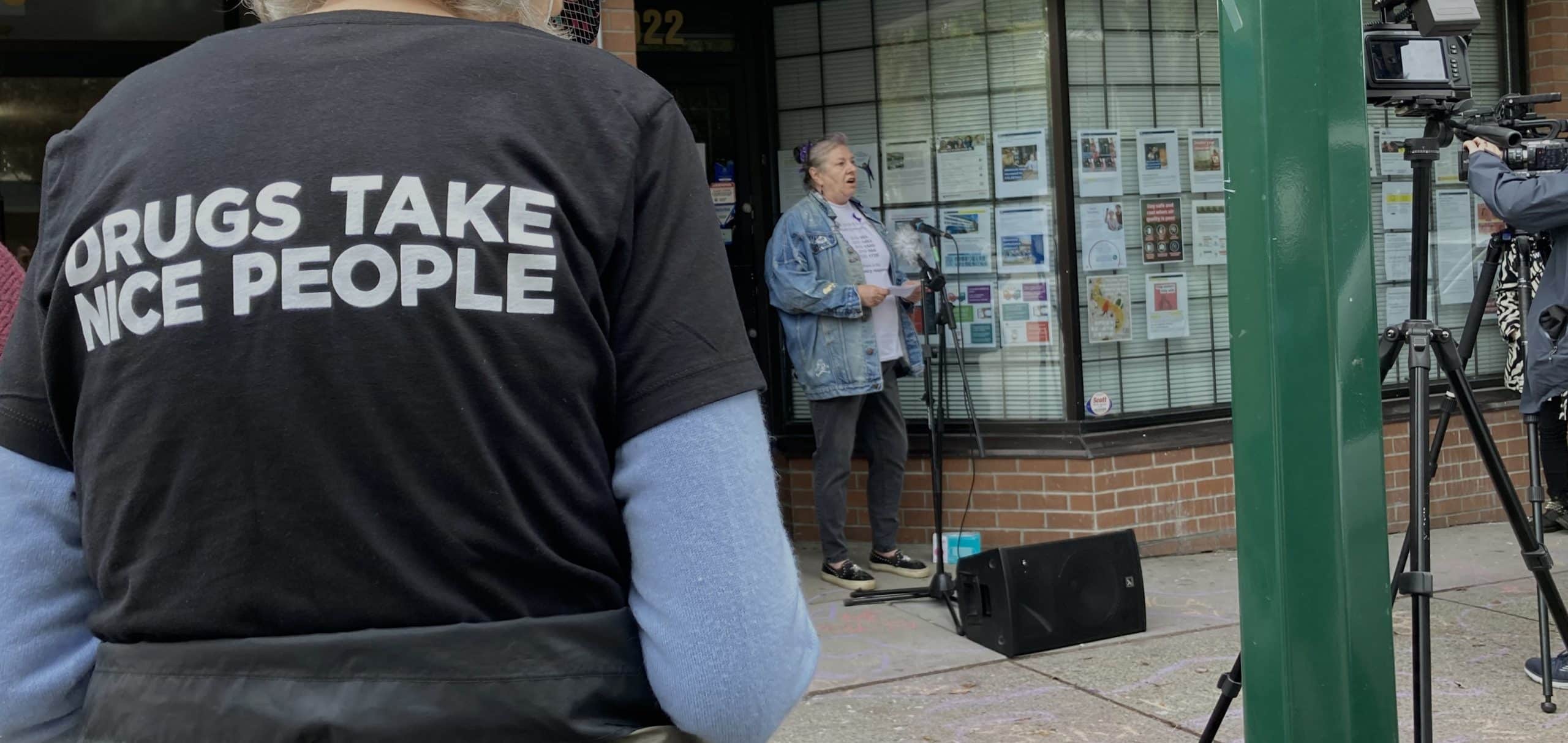
Today marks the National Day of Mourning for workers killed or injured on the job. CDPC’s executive director Donald MacPherson participated in a memorial ceremony in Vancouver, B.C. to honour those who have died or have suffered injury or illness due to a work-related tragedy.
The Day of Mourning is a stark reminder of the urgent need for a safe supply of drugs in B.C. and across Canada, and increased access to harm reduction measures in the workforce.
A memorial wreath is placed at a ceremony in Vancouver, B.C. on April 28, 2022, honouring workers killed or injured on the job.
In British Columbia, the majority of employed people in the province who died of toxic drug poisoning from 2017 to 2021 were employed in the trades, transport, and equipment operator industries.
The impact of the drug poisoning crisis on those in the trades, construction, and transport industries can be attributed to factors such as managing physical pain, mental health, and a culture of substance use within the industry. 1
On this National Day of Mourning for workers killed or injured on the job, the Canadian Drug Policy Coalition is renewing its calls for an immediate, robust scale up of safe supply alternatives to the toxic illegal drug market and federal government action to decriminalize simple possession of drugs in Canada to reduce stigma and engage workers who may be at risk of drug toxicity deaths.
“It is common for people in these types of jobs to experience work-related injuries, stress and pain. They may not have or know where to find the resources they need to take care of these issues. This could lead to using pain medications and other substances more often to cope.” 3
In January 2022, the province announced new funding for the Vancouver Island Construction Association (VICA) to expand its Tailgate Toolkit project – a program aimed at harm reduction and prevention of toxic drug poisoning in B.C.’s construction industry. According to the province, the project will raise awareness of pain management and reduce stigma associated with drug use.4
A group of workers attend a memorial ceremony in Vancouver, B.C. on April 28, 2022, to honour those who have died or suffered injury or illness due to work-related tragedies.
April 28 is the national Day of Mourning for workers killed or injured while on the job.
A group of workers attend a memorial ceremony in Vancouver, B.C. on April 28, 2022.
Support drug policies rooted in social justice, compassion, and evidence. Sign up for our newsletter to get updates and learn how you can take action with us.
The Honourable Carolyn Bennett, M.D., P.C., M.P. Minister of Mental Health and Addictions and Associate Minister of Health
The Honourable Jean-Yves Duclos Minister of Health cc: Hon. Sheila Malcolmson, B.C. Minister of Mental Health and Addictions
Dear Ministers Bennett and Duclos:
Re: Proposed cumulative threshold of 4.5 grams in BC
We write as a coalition of over 20 civil society organizations in Canada, comprising people who use drugs and their families, Indigenous and racialized groups, service providers, legal organizations, research groups, and drug policy advocates. Our mission includes abolishing criminal and other laws, policies, and practices that control, stigmatize, pathologize, and punish people who use drugs.
We understand Health Canada is considering British Columbia’s request for an exemption from the Controlled Drugs and Substances Act to decriminalize simple possession up to a cumulative threshold quantity of 2.5 grams. As you know, this is far lower than the cumulative threshold of 4.5 grams requested by the province — already an exceedingly low cumulative threshold for many people who use drugs and near-unanimously rejected by BC’s Core Planning Table on Decriminalization.
Ministers: there is no legal or evidentiary basis for a cumulative threshold of 2.5 grams. Per the recommendation of our 2021 platform, we urge you to reject this quantity and dispense with threshold quantities altogether.1
As we’ve routinely communicated to you, there are significant risks of “net-widening” in defining a threshold that does not reflect real-world patterns of use. Drug markets will adjust to a low threshold, including via changes to the potency and amounts of drugs held or sold, potentially increasing overdose risk. Other harms resulting from a 2.5 grams threshold may include the incentivization of interactions with the unregulated market as people try to avoid criminalization by frequently purchasing smaller amounts.2 Those who will be most profoundly harmed by a low threshold will be Black, Indigenous, and other racialized, marginalized, and low-income communities, who are profiled and disproportionately arrested and incarcerated for drug offences.
A 2.5 grams threshold flies in the face of your governments’ commitment to evidence-based drug policy, anti-racism, and reconciliation with Indigenous communities. It sets a dangerous precedent for other municipalities across Canada seeking an exemption. It disregards the recommendations put forward by BC’s Core Planning Table and caters to the unsubstantiated, stigma-based requests of police. We know Health Canada has met with police as part of its decision-making process, while requests from drug user-led groups like the Vancouver Area Network of Drug Users (VANDU) have been ignored entirely.
Decriminalization must be done right. You have a moral, legal, and ethical responsibility to uphold the human rights of people who use drugs; this requires you to centre their expertise. A 2.5 grams threshold will continue to inflict grave harms on our communities and must be abandoned.
We ask that you therefore:
1) provide us with the rationale and evidence for a 2.5 grams threshold; and 2) meet with us this month to ensure that the perspectives of people who use drugs are prioritized and the recommendations of the BC Core Planning Table are ultimately adopted.
Signed,
Avenue B Harm Reduction AVI Health and Community Services BC Association of Aboriginal Friendship Centres Blood Ties Four Directions British Columbia Centre on Substance Use British Columbia Civil Liberties Association CACTUS Montreal Canadian Association of People who Use Drugs (CAPUD) Canadian Drug Policy Coalition Canadian Students for Sensible Drug Policy Centre d’intervention et de prévention en toxicomanie de l’Outaouais (CIPTO) Centre on Drug Policy Evaluation Drug Users Advocacy League Drug User Liberation Front ENSEMBLE Services Greater-Grand Moncton Gilbert Centre HIV Legal Network Indigenous Harm Reduction Network Moms Stop the Harm Multidisciplinary Association for Psychedelic Studies Canada Ottawa Inner City Health Pivot Legal Society South Riverdale Community Health Centre Vancouver Area Network of Drug Users (VANDU)
Additional signatures (added April 21, 2022 onwards)
Association des intervenants en dépendance du Québec (AIDQ) Sandy Hill Community Health Centre EACH+EVERY: Businesses for Harm Reduction Sandy Hill Community Health Centre PAN Student Overdose Prevention and Education Network (SOPEN) Gilbert Centre
2 A. Greer et al, “The details of decriminalization: Designing a non-criminal response to the possession of drugs for personal use,” International Journal of Drug Policy 102 (2022) 103605.
Support drug policies rooted in social justice, compassion, and evidence. Sign up for our newsletter to get updates and learn how you can take action with us.
I never made it to college or university. As a matter of fact, I never even completed high school. So the idea that I could one day be a skilled and experienced mixed-methods researcher, get paid for my knowledge and respected when I spoke, and co-author published papers and articles far exceeded my modest dreams. I had participated in research in the past as an interviewee—giving my perspective on a variety of subjects—but never from the investigative side. As you can imagine, when I was offered the opportunity to train and work as a qualitative researcher I was thrilled and jumped at the chance, particularly as the subject was one I was personally and professionally invested in: safe(r) supply.
“This project laid a path for me. Now all I have to do is walk it!”
~ Phoenix Beck McGreevy
Imagine Safer Supply is a massive undertaking—a multi-provincial qualitative research project seeking to explore the attitudes and perceptions people have about safer supply. We spoke to both people who identify as substance users and people who were primarily involved in frontline service provision to drug users. We found that there is less of a hard line dividing these two groups than we had expected.
I started with the project as a member of the Community Advisory Committee (CAC) in the summer of 2020. The team consists of the principal investigators, research associate, research assistants, and our community advisory team—the group with which I did most of my work on the project. Our committee had members with lived and living experience of drug use and/or the provision of frontline services for people who use drugs, as these were the two groups upon which our qualitative research was focused. Amongst our team, we found a similar level of crossover between the user/service provider camps as we did among the participants.
Ready to help?
Support drug policies rooted in social justice, compassion, and evidence. Sign up for our newsletter to get updates and learn how you can take action with us.
We started from a blank slate, learning each step of research: developing interview questions, ethics review, leading interviews, and finally on to data analysis and knowledge translation. Unfortunately, as a result of the COVID-19 pandemic, which was in its first year, we were unable to do any of our work in person despite being dispersed across the country from British Columbia to Quebec. The team met frequently on Zoom and co-conducted qualitative interviews by phone or Zoom.
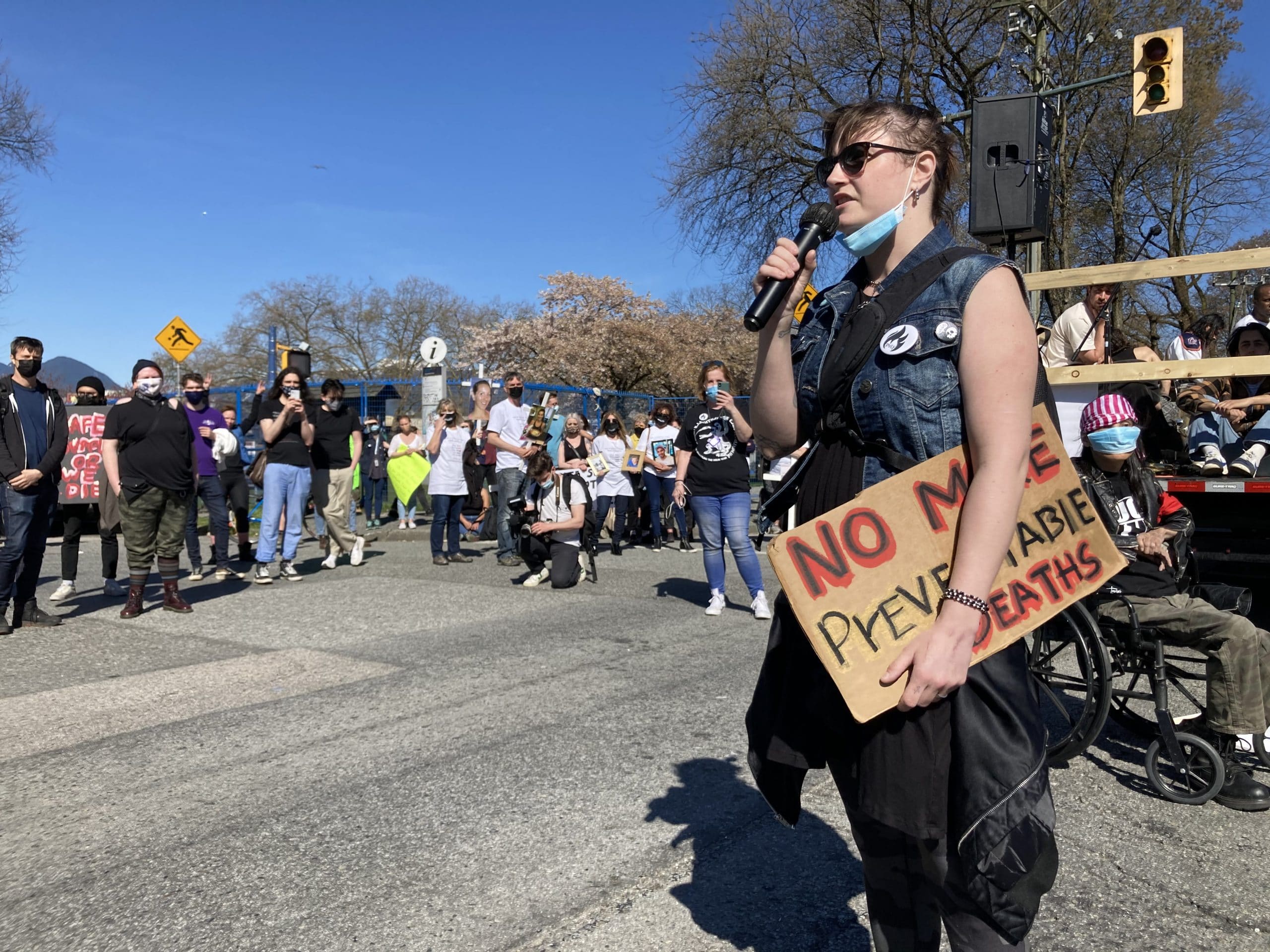
Safe supply rally; Vancouver; 2021
The research itself tested my newly minted but fierce qualitative interview skills. At first, I relied heavily upon the interview guides, asking each question in order and going through the prompts dutifully. I kept an eye on the time, shepherding participants along through the questions, neglecting to probe worthwhile digressions for the sake of following the guide in front of me. As each interview progressed and I debriefed with my colleagues—accepting constructive criticism—I became more comfortable with the art of interviewing. I began to sense where the really interesting stuff was and how to tease it out of each participant.
Our project has the word “imagine” in its title for a reason. We are asking people to envision their ideal safe supply program, from the available substances to the staff and the setting. We soon found that getting people to imagine something that doesn’t yet exist is very difficult and takes finesse to avoid influencing people’s responses. So many of the people we spoke to brought up ideas and then shot them down, saying things like, “Oh, well that would never work here because…” Many participants found their concepts limited by existing societal and governmental structures. However, we encouraged people to really dream, to imagine models of safe supply that could be possible outside prohibition or medical models, and even capitalism and criminalization. When people ventured outside the realm of what’s currently possible, that was where the really beautiful data lived.
Safe supply rally; Vancouver; 2021
For some participants, the primary focus of their ideal safe supply program was about the effect it would have on their lives. People dreamed of the life they could lead without having to hustle or do crime to feel normal. For others, it was about the physical, brick-and-mortar site of such a program. They laid out plans for community centres that welcomed people who use drugs and offered a sense of belonging and kinship where they could find wellness, however that felt for them.
We encouraged people to really dream, to imagine models of safe supply that could be possible outside prohibition or medical models, and even capitalism and criminalization. When people ventured outside the realm of what’s currently possible, that was where the really beautiful data lived.
Once the data collection phase was completed, we began data analysis. Spirited Zoom calls ensued as we developed our code book, combing transcripts and thinking critically about what each quote meant and how to categorize it. Each of us had different skills and interests that were shaped and honed further, bringing value to our analysis. Once our code book was fully developed and captured all the rich information our participants offered, we began to analyze the data in earnest. Currently, the team is working on analysis of the themes presented within the transcripts before we move on to knowledge translation. We plan to bring the project full circle by presenting the findings to our own communities, wider harm reduction and drug policy audiences, and drug user organizing groups, to inform their work moving forward.
On this project, I discovered a passion and aptitude for research that I didn’t know I possessed. Each new skill I learned was exciting and I burned to know more. The idea of taking things that the community knows and transmuting it into the hallowed form of “evidence” was thrilling to me. Creating data that could be used to make change and speak truth to power—I never dreamed it would be something I could do.
This project enabled me to imagine more than just safer supply programs: it led me to imagine a place for myself in academia and a career in research. This project laid a path for me. Now all I have to do is walk it!