
Author: Canadian Drug Policy Coalition

  • Imagine Safe Supply for African, Caribbean and Black Communities An Interview with Marc McKenzie

    Imagine Safe Supply for African, Caribbean and Black Communities An Interview with Marc McKenzie

    Marc McKenzie is a semi-retired frontline worker with Shepherds of Good Hope supportive housing in Ottawa. A lifelong human rights and development proponent in the social services world, he has worked in case management, mental health, and addictions harm reduction advocacy and is a founding member of the Men’s Health Group operating through the South Riverdale Community Health Centre in Toronto. Marc has a passion for music, especially jazz, and served as the transportation co-ordinator of the first Toronto Downtown Jazz Festival. For two years in the mid-90’s, he also was the host of two radio programs at CKWR, then a community radio station, in Waterloo, Ontario. Marc has a keen interest in the connectedness of all things: “Personal discovery, growth, and development is the best gig ever…so much life available, through listening”. 

    Frank Crichlow is the Board President of the Canadian Association of People Who Use Drugs and President of the Toronto Drug Users Union. He works at the South Riverdale Community Health Centre in Toronto as a Community Health Worker and is a community advocate with multiple organizations for people who are unhoused and who use drugs within African, Caribbean, Black, and racialized communities.

    Frank Crichlow: Marc, could you share a little bit about yourself in terms of your work or pursuits and how you came to be interested in the topic of safe supply?

    Marc McKenzie: My interest in safe supply started when, many years ago, a lethal herbicide called paraquat started to be sprayed on marijuana crop, which made its way into the consumer marketplace in Canada none-the-less, as part of the war on drugs campaign. At that time, Mexican pot dominated the North American market, and the spraying of their fields was carried out by the Mexican government in response to mandates set by the American government. The action started quietly, almost covertly, without notification to the public, but was outed by the American anti-discrimination group NORML (National Organisation for the Reform of Marijuana Laws), a private advocacy group. To me, the war on drugs is foolish at best and unconscionable at worst, and I don’t think that humanity can thrive under that mentality. After first working for large corporations for a number of years, I redirected my energies to social work and advocacy. I started with peer work and then, over time, moved on to other forms of social work. At every turn, whether working on the frontline, in case management, housing, or some other aspect of support services, the need for comprehensive harm reduction – from operating philosophy through to integrated service delivery – always presents itself.

    Frank Crichlow: There is currently a gap in culturally oriented harm reduction and safe supply models for African, Caribbean, and Black (ACB) communities. Imagine Safe Supply research findings point to the importance of ACB leadership in the development of organizational and social policies, and a greater involvement of racialized communities in the development of drug policy in general. For example, we heard about a desire for ACB and Black LGBTQIA+ counsellors that can respond to the cultural aspects of people’s needs. My viewpoint is that there are Black people in the lower staffing roles or who are receiving services, but where is the leadership? My question to you is, what advice would you give Black people transitioning into organizational leadership roles in social service and frontline organizations that would be part of safe supply access and support?

    Marc McKenzie: The concept, “safe supply”, is seated in a radically different perspective from that of any other mindset that has ruled society up to this point. At the societal level, embracing it calls for a paradigm shift in core belief. History shows that legislators and elected officials are generally slow, if not disinclined, to move towards such a big swing. Among their many concerns is mainstream public opinion, even if making the move is an act of true leadership. Skillful advocating to the public is key to opening channels of discussion towards gaining a sense of permission to rethink, let alone act.

    To Black people in service leadership roles, I would say if you don’t already have a solid grasp of the factors that form(ed) the history and subsequent present circumstances that shape the ACB experience, then make that learning a priority and share what you learn. Whether through intensive immersion or relaxed conversation, look to soak up as much relevant socio-political insight as you can, such as theory and practice of class stratification and the nature and full objectives of the systems by which Canada operates. Be mindful of your information sources and of your influencers. A grounded understanding of that mechanism – how it all works and to what ultimate ends – furthers the prospect of independent-minded growth and development. Successful advocacy for safe supply calls for the pursuit and maintenance of informed original thinking.

    Home-grown talent is needed. Look to develop streaming programs that can cultivate new leaders, especially from within the ACB community. This goes for those who could be mentors, as well. In society at large, inequities that plague the ACB community and especially those needing safe supply, as unique and glaring as some of those are, are largely underexposed and remain unperceived. The war on drugs narrative currently owns centre stage. More and new vitality is needed; I think the ACB community voice would benefit from steady grassroots on up development, meaning steady progressive job positions for peers, frontline workers, and beyond, and for those who can mentor. Community self-determination and strength development needs to have more of a voice, and ears listening who are motivated to respond. Safe leadership means being in regular and ongoing meaningful contact with people who have current, recent, or long past /elder lived experience.

    Check yourself closely and ongoingly as best you can, to have an updated sense of where you and your team truly stand on relevant issues and service ideas, and why. Know your limits. Know what the Canadian Constitution and the UDHR (Universal Declaration of Human Rights) say on human rights. Challenge status-quo practices that work against human rights and the promotion of health and well-being.

    Gather input through dialogue from as wide a range of sources as you are able, including input from those opposed to the viewpoint you represent, to build community through relationship. Model open-mindedness and support the work of other safe supply stakeholders and allies. Look to contribute towards, utilize, and reference networks active in any medium that aim at furthering harm reduction ideals and services. Support initiatives that promote healthy self-determination. Grass-roots development and action is vital; demonstrate a spirit of advocacy in action as a community standard.

    Bring the conversation forward at all relevant discussion tables and look for opportunities to have best ideas explored. In a country said to be aspiring to democracy, the way forward is through dialogue. True resolution of contentious matters is more successfully negotiated than fought. Do not be sidelined from pushing the discussion envelope beyond the existing company and/or industry narrative and practices. Use evidence-based awareness raising as an orientation for listeners. At meetings, through in-house and outside partner workshops, at community “town-hall” and “coffee house” gatherings, in any relevant forum, humanize the concern. Report on real-life lack of safe access story outcomes and the related further implications. Link these to the nation’s determinants of health, and health and well-being agenda. This also has implications for the CDSA (the Controlled Drug and Substance Act of Canada) and the broader Canadian legal framework in which many of the downstream inequities that negatively impact the ACB community play out.

    Finally, be mindful of developing and maintaining an empowered proactive perspective rather than a reactive, victim-centric one. Having a personal need for safe supply or not, we share origins and overall group history with all the ACB community, and generally face some form of the same barriers, one way or other.

    Frank Crichlow: We heard about needed aspects of equity for Black women in relation to safe supply. One, there’s a need for anonymous, non-medical safe supply avenues where Black women can speak about substance use without judgment or police involvement. Two, there is a need for spaces at harm reduction gatherings and conferences for Black women. Third is the need for better access to support services for Black women, such as mental health and housing. Question, are there any additional areas that you think deserve attention to ensure safe supply equity for Black women? What kinds of safe supply and harm reduction support do you think Black women need, and what are the considerations around this access?

    Marc McKenzie: So, within the situational context of our society, Black women typically occupy the lowest rungs of the socio-political and socio-economic ladders. For me, theirs qualifies as a “special status” which arises from racism coupled with gender bias. I believe the inequities you mention (and others) are expressions or symptoms of the mentality that brokers power in this society.

    Reordering society to support rather than oppress Black women – and therefore all Black community since the women are the nexus of its well-being – would quite naturally over time result in greater equity and abundance for everyone. By this I mean all of society, considering that in humanity if anyone suffers, everyone suffers. But this support would be at the material expense of those who currently enjoy the “privilege of more” as their circumstance and way of life. Oppressing the lives of Black women is the surest way to gut all Black people.

    For ACB women needing non-medical safe supply, for a start, the relationship between these women and the police (and by extension the judicial system) needs to be improved and demonstrated through routine actions to the point where the women can know they are not being targeted or dismissed; that they are related to and are served as full-value members of society. This is tricky because ultimately, the police and courts serve the status quo. Still, often enough an event that spirals into more downstream negative outcomes for these women, and by extension their families, begins with a situation the police come into, or are not called into when they should be because of fear and trust concerns. In my view, how the police and courts treat a group of people generally sets the tone for how they are regarded by most other services, and by broader society overall.

    As a place to start, a presence of ACB female police officers and other first responders, especially in lead roles, would likely invite a sense of approachability and reasonable engagement. Same goes for all other support services, especially counselling. In particular, a visible Black LGBTQIA+ councillor presence would be invaluable to this community. Such representation could help people move out of the silos they live in around substance use and step towards relationship building, brought on by action and response informed by recognition, respect, cultural affinity, and understanding. These are attitudes open to progressive solutions and which move away from the existing “war on drugs” impasse. Along with this, having non-uniform officers from “community-oriented-policing” units visibly involved in social justice and advocacy initiatives, even when just as listeners, demonstrates a willingness by “the system” to develop practical humanistic relationships with communities, which is an important signal to young people coming up.

    Still, there is a primary factor present to this day, deep in the psyche of much of the ACB community at large, that underpins its vulnerability. Its impact expresses in a spiral of forms, but its origins come back to oppression and the denial of self-determination. The commonly used terms “baby mother” and “baby father”, for example, indicate it. These terms originated as a way of Black slave men and women who’d had a child together, referring to each other, arising from the slave owner program of disallowing marriage amongst them and pairing each with different sexual partners at each “breeding” session, as if managing cattle. This was a routine practise in Black slave history in the Americas, for a long time, applied as a device intended to damage the psyches of slaves through the disruption of family ties. It rendered these people “emotionally diminished” and thus easier to control. Additionally, any member of the union – man, woman, or child – could be sold off separately to another owner, at any time.

    The result was a fragile and injured alliance between the women and men, and children chronically raised in forced single parent, variable half-sibling situations, as prescribed by external forces and not resulting from choices based in self-determination. Because the program operated to serve the interest of commerce, the drive of the institution of slavery-for-profit trumped human kinship ties. Enslaved people’s sense of grounding commitment between the sexes, and parent-child relationships, were destabilized if not torn apart (divide and conquer) and the ACB community has yet to fully recover. The ties between women and men are still often described and exercised more through the existence of a child they co-create, than by direct lasting commitment to each other as full-value people and equals. Self-esteem issues linger as a slave trade hangover and emotional trust remains at a premium, just as the program always intended. Subsequently, the sense of grounding and empowerment that a lineage of stable relationships between parents, grandparents, and ancestors provides the psyche of a child stands on shaky ground. With the weight of such historical scars on their shoulders, the children, in turn, live out the cycle as new marks for underdevelopment and exploitation.

    The downstream impact is that society targets, discriminates against, and punishes people who come from this history. This impact plays out in myriad ways including restricted access to housing, stigmatization, discriminatory education streaming, reduced job opportunities and prospects, fear of the process around acquiring citizenship status and equity, and more. There is barrier-ridden health care that often means no situational or culturally sensitive (and sometimes, instead, even inappropriate) care available, and deliberate negative agenda-driven high incarceration rates have additional harmful impacts on development and stability.

    These factors become the normalized circumstances that shape the lives of many in the ACB community. And reflexively, support services all too often treat members of this community as societal outcasts. This is the framework that harm reduction for the ACB community needs to know of, and to inform about, if it is to formulate appropriate responses to this community’s needs. And yes, I know that there are other important questions to be asked and answered, but you have to start with knowledge and sharing of the formative elements. Connecting the dots and letting everyone in on the secret(s) brings this matter out of the shadows, and at least invites permission to service providers across the board to think boldly in terms of solutions. Remember, we’re asking the system, which is reflected in the mainstream, to rethink itself.

    The unique plight of the ACB community, especially with regard to harm reduction and safe supply, remains virtually unknown to the general public. Typically, politicians, even if they know, don’t want to deal with it. That is why I feel that, for the long term, the development of a grassroots leadership through people who can share ownership of the movement is the next step to bringing sustainable growth and improvement. Of course, this needs to be done while continuing to petition against the long list of existing and still developing day-to-day inequities and harms. 

    At the end of the day, this initiative signals a spiritual, transformative quest for all of society. Safe supply and harm reduction are not really to be conditional privileges. They are actually woven into the human birthright.


    Imagine Safe Supply is a community-based research project that explored participation in safe supply in Canada for people who use drugs and frontline workers. For more information on this research please visit here.

  • Canadian Drug Policy Coalition/ Doalition canadienne des politiques sur les drogues

    FOR IMMEDIATE RELEASE: National and International Support Grows for Safe Supply Advocates Arrested in Vancouver 

    xʷməθkʷəy̓əm, sḵwx̱wú7mesh & səlilwətaɬ lands Vancouver, BC | November 3, 2023 

    Last week’s police raid and arrests of Drug User Liberation Front (DULF) members in Vancouver have triggered an outpouring of local, national, and international support for DULF and the urgent expansion of nonmedical safe supply in response to the ongoing unregulated drug crisis.  

    Building on a series of safe supply protest actions, DULF launched a compassion club in 2022 to offer non-prescription safe supply to 43 people at risk from the unregulated drug market. After a year of operation, the compassion club’s preliminary findings showed significant health and safety benefits for members. DULF’s intervention demonstrates a viable grassroots model to address the devastating consequences of the unregulated drug market, led by people who use drugs. 

    The necessity of DULF’s nonmedical safe supply framework was affirmed this week with the release of the BC Coroners Service Death Review Panel Report: An Urgent Response to a Continuing Crisis. The report calls on the Ministry of Mental Health and Addictions to seek a federal exemption for opioid and stimulant drug access without a prescription. “The consensus of the panel is that with a proper system of checks and balances in place, the substances can be provided in a safe and responsible manner,” said Michael Egilson, chair of the death review panel.

    The criminalization of DULF has ignited widespread national and international support. Communities in Toronto, Vancouver and Victoria held public solidarity rallies today, with an event planned in Ottawa for Sunday. These rallies in support of DULF advocate for the scaling up of community-based compassion clubs, rather than criminalization. 

    “Governments and police are scapegoating those bold enough to disobey unjust laws and save lives – like our DULF colleagues. We didn’t set out to be outlaws. But we realized that nobody was coming to save us, so we’ll have to save ourselves.” said Garth Mullins, host of Crackdown Podcast and community organizer.  

    An open letter in support of DULF has received endorsements from over 200 organizations and 1,700 individuals. The letter calls for the immediate halt to criminalization of community-regulated safe supply, restoration of DULF funding, and a formalized commitment to create a framework to uphold and protect community-regulated safe supply in BC.

    “Businesses are seeking solutions that keep their staff, operations and neighbours safe,” said Euan Thomson, letter signatory and executive director of EACH+EVERY, a national coalition of businesses supporting harm reduction approaches to unregulated drug poisoning. “It’s well past time that grassroots initiatives led by people who use drugs were provided the space to operate without being criminalized.”

    DULF’s small, community-led model of safe supply, has demonstrated how access to safety-tested drugs with known potency and contents can reduce overdose, keep people alive, reduce hospitalizations and stabilize lives. DULF’s work has support from leading researchers, physicians and health care providers, public health officials, and community groups. 

    “People in places of institutional power and policy-making must not hide behind the word illegal. Instead, they must focus on the law and policy that forces people and organizations like DULF to take action at great personal risk,” said DJ Larkin, executive director of the Canadian Drug Policy Coalition. “A compassion club that is saving lives every day is only illegal because the law and policy is unjust.”

    In the words of members of the DULF Compassion Club, “We speak out in support of their actions with DULF, actions that opened up possibilities for us, for our community, and for drug users and people everywhere. The possibility to stay alive, and even to thrive. Today our survival hangs by a thread.” 

    -30- 

    Media Contacts:

    Jessica Hannon for Canadian Drug Policy Coalition

    [email protected]

    604-341-5005

    Euan Thomson, executive director, EACH+EVERY

    [email protected]

    About the Canadian Drug Policy Coalition:

    Founded in 2010, the Canadian Drug Policy Coalition works in partnership with more than 60 organizations and 7,000 individuals working to support the development of a drug policy for Canada that is based in science, guided by public health principles, respectful of the human rights of all, and seeks to include people who use drugs and those harmed by the war on drugs in moving towards a healthier society. Learn more at www.drugpolicy.ca

  • Canadian Drug Policy Coalition/ Doalition canadienne des politiques sur les drogues

    For Immediate Release: Nationwide Support Rallies as Vancouver Police Target Safe Drug Supply Program

    Vancouver, BC | October 27, 2023 —

    Advocates, community organizations and concerned members of the public across the country are adding their names to an open letter condemning the October 25 arrests of members of the Drug User Liberation Front (DULF). 

    Please see below for our response to the criminalization of the Drug User Liberation Front’s heroin, cocaine and methamphetamine compassion club in Vancouver, and view the live document which will be updated continuously with new signatories.

    Media are invited to contact organizations listed among the signatories directly for comment. 

    Canadian Drug Policy Media Contact: [email protected]


    RE: Vancouver Police Press Release, “VPD executes search warrants in Downtown Eastside drug investigation”

    To:

    Vancouver Police Department

    City of Vancouver, and

    Province of British Columbia: 

    The signatories of this letter condemn the criminalization of community-regulated safe drug supply distribution in Vancouver on October 25, 2023, executed through search warrants, arrests and interrogations by Vancouver Police Department. 

    Unregulated drug toxicity is the leading cause of death in BC for persons aged 10 to 59, accounting for more deaths than homicides, suicides, accidents and natural diseases combined. In this urgent context, the Drug User Liberation Front (DULF) operates a compassion club to save lives and reduce the harms of the unregulated drug market. 

    DULF has been public about its activities since its first safe supply action on April 14, 2021. Its second action in July 2021 was conducted in plain sight of a Vancouver Police Department station with officers in attendance. In 2022, the City of Vancouver issued a business license to DULF. That year, the Province of BC initiated a $200,000 grant through Vancouver Coastal Health to help cover DULF’s overhead costs. 

    DULF was transparent in its application for a Controlled Drugs and Substances Act exemption to the Government of Canada, publishing both its application and the Government’s denial of the exemption for public examination. 

    DULF has conducted formal evaluation of its compassion club in partnership with qualified researchers at the BC Centre on Substance Use (BCCSU). The data show the program is keeping people alive and in better health, with lower reliance on criminal activity. The removal of funding not only hinders DULF’s compassion club, it closes down a critical overdose prevention site – an outcome with legal precedent to be reversed.

    The statement issued by Vancouver Police on October 26, 2023 is an apparent attempt to distance governments and police from the active and passive roles that each have played in DULF’s activities while political backlash builds against safe supply more broadly.

    International reporting on DULF includes articles in Time Magazine and The Guardian. It is inconceivable that any institution operating in drug policy or enforcement could have remained unaware that DULF operates a compassion club. 

    If political institutions took issue with DULF’s activities, carried out with a clear aim to minimize harms to its community while more than 2,000 people are killed each year in BC by policy inaction, they had ample opportunity to respond when DULF distributed regulated drugs in front of a Vancouver Police station in 2021, requested a business license from the City of Vancouver, and approached Vancouver Coastal Health for funding. 

    Given the transparency with which DULF has operated, it is fair to conclude that these institutions are disingenuously betraying people who are at risk of death while a seven-year unmitigated public health emergency persists.

    In solidarity with DULF, the signatories of this letter demand that Vancouver Police, the City of Vancouver, and the Province of BC: 

    • Immediately cease criminalizing community-regulated safe supply in BC;
    • Restore DULF funding cut by Vancouver Coastal Health; 
    • Formalize a commitment to create a framework to uphold and protect community-regulated safe supply in BC. 

    To view the growing live list of signatories, including individuals, click here. 

    MEDIA: Please engage organizations directly from the list below. 

    Signed: 

    National Organizations

    Canadian Association of People Who Use Drugs

    Canadian Students for Sensible Drug Policy 

    Canadian Drug Policy Coalition

    CATIE: Canada’s Source for HIV and Hepatitis C Information

    Drug Policy Alliance (USA)

    EACH+EVERY: Businesses for Harm Reduction

    Harm Reduction Nurses Association

    HIV Legal Network

    International Network of People who Use Drugs

    Moms Stop The Harm

    Regional Organizations

    4B Harm Reduction Society, Edmonton, AB

    Alberta Alliance Who Educate and Advocate Responsibly, AB

    Bonfire Counselling, Vancouver, BC

    Canadian Students for Sensible Drug Policy – Vancouver, Vancouver, BC

    Canadian Students for Sensible Drug Policy – Calgary, Calgary, AB

    Coalition of Substance Users of the North (CSUN), Lhtako Dene Nation, BC

    Corporación ATS / Echele Cabeza, Colombia

    Disability Arts & Activism Archive, BC

    Harrogate Psychological Services, Edmonton, AB

    HIV & AIDS Legal Clinic Ontario (HALCO), ON

    Kootenay Independent Safe Supply Society, Nelson, BC

    Kootenay Insurrection for Safe Supply, Nelson, BC

    Kykeon Analytics Ltd, Victoria, BC

    Langley Community Action Team: We All Play a ROLE, Langley, BC

    Medicine Hat Drug Coalition, Medicine Hat, AB

    Metzineres – Refuge Environments for Drug Users, Barcelona, Spain

    PAN, Vancouver, BC

    Sure Shot Harm Reduction, Ottawa, ON

    People For Reproductive Rights and Freedoms, Edmonton, AB

    Pivot Legal Society, Vancouver, BC

    Prairie Harm Reduction, Saskatoon, SK

    Project SAFE, Philadelphia, USA

    REMA Feminist & Antiprohibitionist Network, Spain

    Ryan’s Hope, Barrie, ON

    SafeLink Alberta, AB

    SAFER Victoria, Victoria, BC

    Solid Outreach Society, Victoria, BC

    Student Overdose Prevention and Education Network, Hamilton, ON

    The POUNDS Project, Prince George, BC

    Toronto Overdose Prevention Society, Toronto, ON

    Tri-Cities Community Action Team, Tri-Cities, BC

    United For Change Edmonton, Edmonton, AB

    Vancouver Community Action Team, Vancouver, BC

    We Care Substance Use Resource Society, BC

    Workers for Ethical Substance Use Policy, Vancouver, BC

    Whistler Community Services Society, Whistler, BC

    WILD collaborative harm reduction association, Vancouver Island, BC

    Your Journey, Airdrie, AB

    Youth RISE, Edmonton, AB

    -30-

  • Connecting the Dots on Public Space and Drug Policy 

    Connecting the Dots on Public Space and Drug Policy 

    Every person, regardless of their housing status or relationship to drugs, should be able to access safety. We expect our governments to uphold that, not put people at further risk. But that’s not always what happens.  

    Last week, the City of Barrie, Ontario discussed a controversial proposed public space bylaw that would introduce fines ranging from $500 to $100,000 for distributing food, water, clothing, shelter, or other essentials – like harm reduction supplies – to assist people without city authorization. This is not only unbelievably cruel, it’s bad policy: this bylaw punishes people harmed by systems, rather than addressing root causes. It doesn’t solve any problems, just introduces new ones.   

    As a national organization working with community groups across Canada, we know this proposed bylaw in Barrie is no anomaly – it’s just one particularly troubling example of law and policy that further endangers people at risk of dying from unregulated drugs, under the guise of public space legislation.    

    That’s why last week we filed a report with the United Nations Rapporteurs on Homelessness and Extreme Poverty outlining how laws like Barrie’s proposed bylaw violate human rights and put people at risk. Together with community partners, we’re calling attention to the need for a different path: one that upholds the human rights of all people and advances community health and wellness.   

    So, how do public space bylaws relate to drug policy? Let’s connect the dots. In Canada, most public space is regulated through municipal bylaws and other provincial, territorial, or federal land use legislation. These bylaws often criminalize activities related to drug use at the intersection of poverty and homelessness – like using drugs in public space. But the thing is, because our drug laws have made the unregulated market so dangerous, public space may actually be the safest place for people to use drugs, especially in communities that lack supervised consumption services. Being somewhere visible ensures proximity to others and access to emergency health care, outreach services, and harm reduction support. When we criminalize drug use in public space, we don’t solve the problem – we just push it out of sight, and in doing so, make it more dangerous.     

    There is a better path. This is a policy problem, and together we can change policy. To build communities where we can all access safety, we need to implement public health and human rights-based drug policy at every level of government. This includes full decriminalization of drug possession, equitable access to safe regulated supply programs, harm reduction equipment and services, and evidence-based, voluntary treatment that aligns with people’s needs and informed consent. It also means ensuring public space bylaws don’t target people who use drugs.   

    This UN submission is one step we can take to draw attention to this misguided approach, and support elected officials to enact good policy. As Barrie City Council and municipalities across this country navigate issues of public space, CDPC and our community partners are committed to advocating for the rights and well-being of people who use drugs, their loved ones and their communities – that’s all of us.      

  • Local and national organizations report proposed Barrie public space bylaw to United Nations

    Local and national organizations report proposed Barrie public space bylaw to United Nations

    Barrie, ON | September 20, 2023

    One day after Barrie City Council’s community safety committee heard presentations on a controversial proposed public space bylaw, local and national organizations have sent it to the United Nations Rapporteurs on Homelessness and Extreme Poverty for review. 

    The Canadian Drug Policy Coalition and Pivot Legal Society filed the report today, with endorsements from Barrie Housing and Homelessness Justice Network, Indigenous Harm Reduction Network and the Gilbert Centre, in response to a UN call for submissions on laws and policies that criminalize and punish people in poverty and homelessness. In the report, advocates and policy experts point to Barrie’s proposed bylaw as a particularly egregious example of public space legislation and policy in Canada endangering people living in homelessness and poverty, particularly those who are at risk of fatal drug poisoning. 

    “This bylaw targets unhoused people and their ability to survive,” said Sarah Tilley of the Gilbert Centre. “It effectively criminalizes being homeless — and interferes with the ability of us as outreach workers to carry out our potentially lifesaving work. Despite the public outcry and serious concerns from grassroots organizations and policy experts, the City of Barrie seems determined to move ahead with this harmful and ineffective approach.” 

    The proposed bylaw amendment would introduce fines ranging from $500 – $100,000 for distributing food, water, clothing, shelter, or other essentials to assist people with sleeping or protection from the elements without authorization from the city of Barrie. It came to Barrie City Council in May and June 2023. Met with significant public opposition, including a public statement from the Office of the Federal Housing Advocate, council referred the matter back to city staff for review and updates.  

    “This is not the kind of international attention we want Barrie to receive,” said Reverend Christine Nayler of Ryan’s Hope. “I am hoping to appeal to Council’s humanity and ask them to rethink these punitive bylaws that will harm our city’s most vulnerable residents, and to remind them that these proposed bylaws are a violation of the Charter of Rights and Freedoms. Passing bylaws that go against Charter Rights opens the city to legal challenges and will end up costing the city more than addressing the root cause of the issue: a lack of truly affordable and low-barrier housing. Investing dollars in prevention rather than punishment makes sense.” 

    In October 2021, the Canadian Drug Policy Coalition hosted health and social service workers, policy experts, people who use drugs, and other community members affected by the toxic drug crisis to discuss challenges and solutions. The resulting report identified six key recommendations for action, including:

    • increased access to deeply affordable housing;  
    • funding for a lived experience advisory group to address the toxic drug crisis, and; 
    • the creation of multi-sectoral decision-making tables to support municipal policy development for the City of Barrie.

    “In the Barrie dialogues, we heard the need for community-driven solutions that lift people up, rather than cause harm,” said DJ Larkin, executive director of the Canadian Drug Policy Coalition. “Every person, regardless of their housing status or relationship to substances, should be able to access safety. The frontline services provided by Barrie’s community organizations are part of that. Our governments should be working to make people safer, not putting them at further risk.”  

    The UN submission comes as Barrie City Council considers next steps on the public space bylaw amendment. There is currently no public date for a council vote on the bylaw.

    -30- 

    Video and documents available: 

     
    About the Canadian Drug Policy Coalition 

    Founded in 2010, the Canadian Drug Policy Coalition works in partnership with more than 60 organizations and 7,000 individuals working to support the development of a drug policy for Canada that is based in science, guided by public health principles, respectful of the human rights of all, and seeks to include people who use drugs and those harmed by the war on drugs in moving towards a healthier society. Learn more at www.drugpolicy.ca 

    About Ryan’s Hope 

    Ryan’s Hope is a grassroots volunteer-based organization started in memory and honour of Ryan Nayler. Our mission is to advocate for and support people living with mental illness, substance use issues and experiencing homelessness. www.ryanshopebarrie.ca 

    About Barrie Housing and Homelessness Justice Network  

    The Barrie Homelessness & Housing Justice Network (BHHJN) is a multidisciplinary network of homelessness and housing advocates who have come together to advocate for the right to housing and the elimination of chronic homelessness in Barrie. www.bhhjn.ca 

    About The Gilbert Centre 

    The Gilbert Centre provides social and support services to empower, promote health, and celebrate the lives of people living with and affected by HIV and other sexually transmitted infections (STI) and the individuals and families from the lesbian, gay, bisexual, transgender, queer (LGBTQ) communities of Simcoe Muskoka. www.gilbertcentre.ca

    Media contacts: 

    DJ Larkin 

    Executive Director, Canadian Drug Policy Coalition 

    Phone:  604-341-5005

    Email: [email protected]

    Reverend Christine Nayler 

    Co-founder and Director, Ryan’s Hope  

    Jennifer van Gennip 

    Barrie Housing and Homelessness Justice Network  

    Sarah Tilley

    Harm Reduction Program Manager, Gilbert Centre

  • Canadian Drug Policy Coalition releases findings of first-of-its-kind qualitative research on safe supply of drugs 

    Canadian Drug Policy Coalition releases findings of first-of-its-kind qualitative research on safe supply of drugs 

    Unceded territories of the xʷməθkʷəy̓əm (Musqueam), Sḵwx̱wú7mesh (Squamish) and səlilwətaɬ (Tsleil-Waututh) First Nations (Vancouver, B.C., Canada) – Today, the Canadian Drug Policy Coalition (CDPC) released the findings from its three-year Imagine Safe Supply study that examined ideas about safe supply participation with people who use drugs and frontline workers.

    “The debate around a safer supply of drugs is making headlines across Canada, for all the wrong reasons,” said DJ Larkin, Executive Director of the CDPC. “Misinformation and stigma are turning attention away from evidence, data and meaningful engagement with people most affected by our current toxic drug crisis. These misinformed narratives have the potential to do very real harm, and worsen an already unbearable situation that is causing the deaths of thousands of people every year. This research refocuses on what’s possible when we work toward solutions that are effective and meaningful for people who use drugs.”

    “In our research, we looked into the gaps between current access to regulated supply of drugs and ‘desired’ safe supply,” said Erin Howley, Senior Research Associate with the CDPC, and the Imagine Safe Supply project lead. “This data offers deep insight into what effective safe supply based on the leadership of people who use drugs could look like.”

    The three-year, community-based qualitative research project involved in-depth interviews with 33 people from across British Columbia, Alberta, Ontario, and Quebec about what they need for safe supply. Key findings from Imagine Safe Supply include:

    • The values of community-building, autonomy and self-determination, mutual care, trusted relationships, and cultural inclusion are central to the design of any effective safe supply program or service.
    • Effective safe supply includes a range of choices around drug options and dosages that reflect people’s unique reasons, needs and desires for using drugs. 
    • Holistic safe supply would offer a spectrum of models and supports to address the diverse needs and person-centered goals of PWUD; there is no one-size fits all approach. Effective safe supply supports a full range of choices including consensual and equitable detox and treatment options, and holistic social and economic supports, including housing.
    • All levels of government and decision-makers need to prioritize approaches to safe supply that centre the knowledge, leadership, and relationships between people who use drugs.

    The Imagine Safe Supply research team includes people who use drugs and frontline workers, as well as graduate students and staff of the Canadian Drug Policy Coalition at Simon Fraser University. The research team co-created and led every stage of the project, including research design, interviews, data analysis, and knowledge sharing. This research was undertaken through a partnership with Thunderbird Partnership Foundation, which stewards all data related to First Nations research participation in accordance with OCAP® Principles; First Nations findings have not yet been published. 

    “Our project has the word ‘imagine’ in its title for a reason,” said Phoenix Beck McGreevy, Community Research Associate. “We asked people to envision their ideal safe supply program, from the available substances to the staff and the setting. When people ventured outside the realm of what’s currently possible, that was where the really beautiful data lived.” 

    “This research changes the channel on the safe supply debate, by placing people who use drugs and frontline workers front and centre,” said Howley. “These findings offer resources that bring real-world experience to the drug policy debate, and provide knowledge and guidance to service providers, clinicians and decision-makers developing effective responses to the drug poisoning crisis in Canada.”

    The CDPC is calling on decision-makers in Canada to increase the scale and scope of safe supply access across Canada, including rural and remote areas and to underserved populations. This includes ensuring access to regulated drugs of known contents and potency to act as an alternative to the toxic unregulated drug supply, and ensuring people using drugs – with an emphasis on racialized and Indigenous people who are disproportionately affected by this crisis – are fully involved in safe supply design and delivery.  

    -30-

    Images available for download

    See dropbox link for:

    • Photographs of the Imagine Safe Supply research team
    • Illustrated headshots of the Imagine Safe Supply research team
    • Illustrations from the Imagine Safe Supply Zine, a forthcoming knowledge translation document created to share findings from the research

    Background:

    The Canadian Association of People Who Use Drugs (CAPUD) defines safe supply as “a legal and regulated supply of drugs with mind/body altering properties that traditionally have been accessible only through the illicit drug market”. Safe supply means drugs that are legally regulated with a known potency and composition. More information on Imagine Safe Supply and its findings can be found at https://drugpolicy.ca/imagine-safe-supply/

    About the Canadian Drug Policy Coalition

    Founded in 2010, the Canadian Drug Policy Coalition works in partnership with more than 60 organizations and 7,000 individuals working to support the development of a drug policy for Canada that is based in science, guided by public health principles, respectful of the human rights of all, and seeks to include people who use drugs and those harmed by the war on drugs in moving towards a healthier society. Learn more at www.drugpolicy.ca

    Media contact:

    Lesli Boldt for Canadian Drug Policy Coalition

    [email protected]

    604-662-3500

    Vancouver, B.C.

  • Honouring Donald MacPherson – A Force for Change in National Drug Policy

    Honouring Donald MacPherson – A Force for Change in National Drug Policy

    Dear CDPC supporters,

    CDPC’s Executive Director, Donald MacPherson, is retiring. On behalf of the CDPC Steering Committee, I want to recognize his incredible contributions to drug policy and the CDPC, and thank him for his unwavering mission to make drug policy humane, equitable, realistic and just.

    Before bringing his passion and insight to the creation of CDPC, Donald worked with the City of Vancouver as the Director of the Carnegie Centre, and then as the city’s Drug Policy Coordinator.  In that latter role, he published Vancouver’s ground-breaking Four Pillars Drug Strategy in 2000. This framework reflected the then-still-controversial notion that health care for people who use drugs must be understood broadly, beyond just abstinence from drug use, positioning harm reduction as a necessary element of any sensible, effective strategy.

    Donald co-founded the Canadian Drug Policy Coalition in 2011 to bring people together from across the country in a coordinated, ongoing effort to challenge and reform drug policy as a matter of not only local but national concern. As the drug poisoning crisis exploded, Donald positioned CDPC as a leader in advocacy. For years, he has convened people who use substances, politicians, health and legal experts, and other stakeholders to focus upon specific issues such as supervised consumption spaces and safe supply, decriminalization/legalization/regulation and many other critical interventions. Through changing governments at municipal, provincial and national levels, Donald has created strategies to work well with those who consider drug policy reform a valid pursuit, as well as those who are opposed because of fear, misunderstanding or ideology.

    Donald has been deeply committed to the meaningful and active involvement of people who use substances and has heightened the voices of people affected the most by unjust drug policies. Similarly, he has sought to ensure that CDPC’s work confronts the truths of the racism embedded in punitive drug policies and contributes to ongoing efforts at reconciliation with the First Peoples of Canada. 

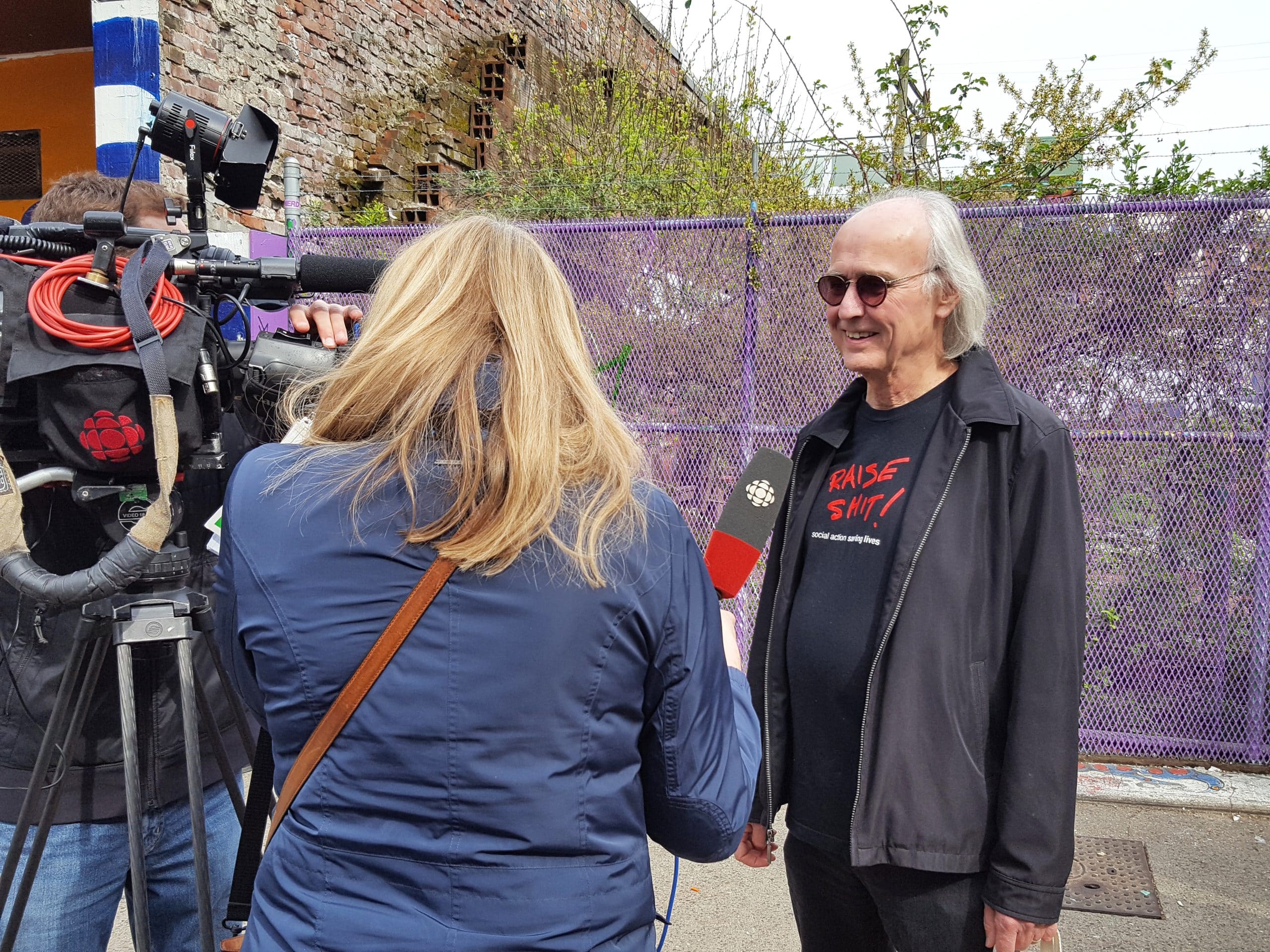
    In addition to his many accomplishments in community, Donald is also co-author of Raise Shit! Social action saving lives (2009) and More Harm than Good: Drug policy in Canada (2016), regularly contributes to various reports and scholarly papers, and has shared his knowledge and experience around the world, including as vice-chair of the Board of the International Drug Policy Consortium, a civil society organization working to improve policy responses to drugs globally. 

    Donald served on Health Canada’s Expert Task Force on Substance Use, which issued unambiguous recommendations to end criminalization of simple possession and other measures to support and protect people who use drugs and communities – measures we’re finally seeing some progress on. He is an adjunct professor at Simon Fraser University, and has also been awarded an Honorary Doctorate from Adler University in Chicago/Vancouver, the Queen Elizabeth II Diamond Jubilee Medal, and Nora and Ted Sterling Prize in Support of Controversy at Simon Fraser University for his contribution to social justice in the field of drug policy.

    Donald has been a mentor, teacher and example of commitment to many people from all walks of life. He has affected people’s views and persuaded the unpersuadable.  He has been a giant on the national and international stage. But he has also been humble, kind, quiet, patient, respectful, approachable, and creative. He will speak of drug policy as effectively in a city of several million as in a small remote community. He is diplomatic when needed and forthright when necessary.  

    Donald has been a force for change in this country, advancing equity, justice and human rights. In recent months, as word that Donald would transition into a well-deserved retirement, one of the phrases I have heard most often is “How can we fill Donald’s shoes?”. It will be difficult. But Donald will leave us with an army of informed, committed, energetic people who understand the issues of drugs and drug policy, and who are enthusiastic to push forward with advocacy to make the world better. 

    Thank you, Donald! You will be missed greatly! Have a very happy retirement!

    Marliss Taylor

    Chair, CDPC Steering Committee

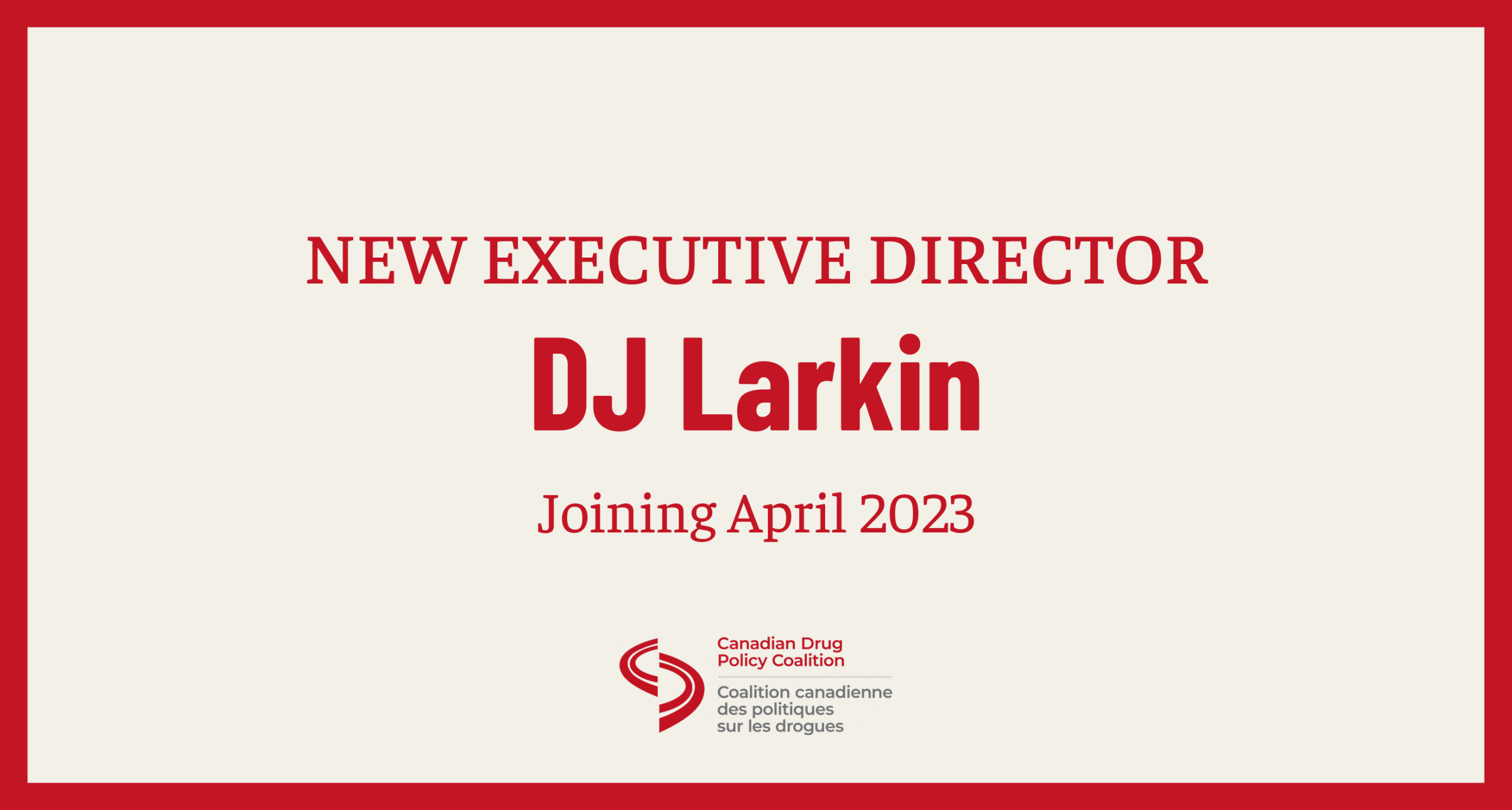
  • The Canadian Drug Policy Coalition announces DJ Larkin as new Executive Director starting April 2023

    The Canadian Drug Policy Coalition announces DJ Larkin as new Executive Director starting April 2023

    Following a nationwide search, the Canadian Drug Policy Coalition (CDPC) is pleased to announce that DJ Larkin has been chosen as the organization’s new Executive Director. DJ will succeed Donald MacPherson, the founding Executive Director of CDPC, who is retiring later this year after over a decade with the Coalition.

    DJ currently lives on the unceded Indigenous lands of the xʷməθkʷəy̓əm (Musqueam), Skwxwú7mesh (Squamish) & səlil̓wətaʔɬ (Tsleil-Waututh) Peoples, and is committed to lifelong learning, self-improvement, and action to dismantle settler colonialism.

    DJ Larkin is a respected lawyer and legal advocate who has worked on issues impacting people experiencing criminalization and systemic marginalization for over a decade. DJ has worked to centre the voices of people who use drugs through support for peer-led groups in Vancouver’s Downtown Eastside and in working with individuals and organizations in numerous other regions and communities. DJ has represented Indigenous governments—both elected and hereditary—in litigation regarding rights, land, and resource management. In 2017-2018, DJ also co-investigated and co-authored an in-depth report on systemic exclusion and marginalization of people living at the intersection of poverty, housing insecurity, and criminalized substance use aimed at creating systemic legislative and policy reform.

    The CDPC vision is clear and its mission unwavering,” DJ said of the Coalition. “This reflects the work of generations of brilliant and dedicated people who use drugs, activists, academics, allies, advocates, and policy leaders like Donald MacPherson. I also know that so much more work needs to be done, and I have enormous shoes to fill. I’m honoured to have the opportunity, and I look forward to getting to work later this spring.”

    DJ Larkin will join the CDPC as executive director in April 2023. 

    Contact us:
    Alessia Matsos
    Communications Coordinator
    Canadian Drug Policy Coalition
    [email protected]
    (905)-869-7451

  • Do The Work; Get Paid: Colonial Pay Systems Cause Harm

    Do The Work; Get Paid: Colonial Pay Systems Cause Harm

    In our drug policy work, the Canadian Drug Policy Coalition (CDPC) acknowledges the colonial ideologies, systems, and processes in which we operate within.

    We strongly feel that we must emphasize that colonial systems continue to cause harm and that our work is embedded within these systems. CDPC is a part of Simon Fraser University—and large institutions such as these move in ways that are often rigid, culturally insensitive, and uncreative when it comes to working with Indigenous peoples. This is evident when it comes to paying Indigenous people in ways that are culturally respectful. The protocol of requesting receipts and invoices, and sometimes waiting for weeks to get paid, is a huge barrier to many—and a disincentive to collaboration processes that must be meaningfully addressed.

    We feel it is important to acknowledge that there have been times when we acted insensitively and are grateful to those who have taken the time to educate us on how these processes may not best serve key groups that we truly wish to serve efficiently and compassionately. We are moved by these relationships and would like to honour them by striving to improve how we ensure our Indigenous allies are paid in a way that works best for them.