
Author: Canadian Drug Policy Coalition

  • I’ve been to rehab four times and I may never stay sober. I’m still recovering.

    I’ve been to rehab four times and I may never stay sober. I’m still recovering.

    It’s simple, hun—you have the disease.” Bill says this as he hands me a wooden chip inscribed with the serenity prayer:

    “God, grant me the serenity to accept the things I cannot change, the courage to change the things I can, and the wisdom to know the difference.”

    An biker who somehow landed in Westbank, Kelowna, Tom is paternal. I’ve never been told that I have a disease, but his words incite relief. I cannot stop drinking, and illness is better than badness. I have done horrible things.

    I accept a tattered copy of the Big Book and devour it, highlighting, underlining, and earmarking earnestly until I have it memorized. I meet others who do the same. We form unexpected kinships, our lives irrevocably intertwined through a singular, obstinate pursuit of wellness. I repent. They hold me. I have never felt such intimacy.

    When I leave 28 days later, we promise to stay in touch. I never speak to them again.

    I am 18 years old.

    I have been sober for 45 days, and something is very wrong. My legs have stopped working, and when I try to articulate how physically enervated I am—how utterly incapacitated—my councillors tell me to pray.

    “God, grant me the serenity to accept the things I cannot change, the courage to change the things I can, and the wisdom to know the difference.”

    I am drowning in a vast, violent emptiness. Anhedonia. Near-catatonia. The obsessions, the compulsions, the counting, the rituals; these I must relinquish to a Higher Power (though without them, I’m not sure who I am).

    “Stop thinking so much.”

    “You need humility.”

    I eat 1175 calories a day—no more, no less. Identical meals at breakfast, lunch, and dinner. To deviate would trigger a binge. Pleasure is not safe. I attend group sessions and while other women weep, I try to stay awake.

    Am I a sociopath?

    All I want is chocolate.

    I am 19 years old.

    I arrive with a black eye and hematoma on my chin. It obscures my jawline and deforms my cheekbones, my reflection as grotesque as the memories I suppress. I don’t know how it (I) got there.

    “Third time’s the charm.”

    I am too tired to have hope. After nearly three years of homelessness, I am also too tired not to. Alcohol and bulimia have been replaced by crack cocaine. I no longer feel human. The things I did at 18 pale by way of comparison.

    “Your brain is broken.”

    I am hostile. My mind is a rabid animal, and I don’t trust this place—these people—to tame it. One month becomes two. Two becomes three, then six, then seven. Something shifts. I listen in a way I never have before. I believe in a way I never have before. The obsessions, rituals, counting, compulsions; they haven’t left, but they have transmogrified into something like spirituality.

    “I could drink.”

    I stop what I am doing.

    Fall to my knees.

    Pray.

    “God, grant me the serenity to accept the things I cannot change, the courage to change the things I can, and the wisdom to know the difference.”

    Once. Twice. Three times.

    Six if the thought returns. Nine times. Twelve. Fifteen.

    I am terrified of myself.

    “Every moment you spend in treatment, your disease is outside doing push-ups in the parking lot. It gets stronger as you do. It will never go away.”

    In my sixth month I enrol in two university courses. One of them is introductory sociology. I am intrigued.

    The councillors become trusted confidantes. They convince me I can leave. They expect to see me regularly.

    I move into a basement apartment two blocks away. I visit the councillors every day, sometimes once, sometimes twice or more. I relay my academic successes.

    “Don’t let it go to your head. Recovery must come first.”

    I am 22 years old.

    “Fuck you!”

    The voice is not my own. A new woman has just arrived, and she is detoxing—hard. I am five months sober, and I have entered treatment voluntarily. I may return to my PhD, but I know I’m not prepared. I was promised that staff were trauma-informed.

    That was bullshit.

    Publicly funded, there are two councillors for thirty patients. Most have been street-entrenched for years or decades. We are told not to discuss drug use. Or violence. Or sex work. Or poverty.

    “If you get triggered, we don’t have the tools to contain you.”

    Twelve-step meetings are optional. AA members come bi-weekly to share their experience, strength, and hope. When they do, I look away.

    “God, grant me the serenity.”

    I walk past the door, my fists clenched tightly. Bile rises in my throat.

    I see myself in them. I will see myself in them when a month, two months, a year, from now they use again. They will hate themselves. It will not be their fault.

    “This place is a joke!”

    This time the voice is mine. I am with the psychiatrist. I denigrate her profession.

    “I do not consent to being pathologized.”

    She raises her eyebrows; takes notes; says nothing.

    I leave early. In addition to bipolar disorder, obsessive compulsive disorder, borderline personality disorder, possible dissociative identity disorder, complex post-traumatic-stress disorder, somatoform pain disorder, possible autism, and, of course, severe alcohol and stimulant use disorders, my discharge summary notes that I present as rather angry.

    I am 30 years old.

    As I write this, I am 31 years old. I have been abstinent from alcohol and illicit drugs for nearly two years. Before my last relapse, I had been abstinent for eleven months. Prior to that (and prior to the two-year bender that was my Masters’ degree), I hadn’t touched drugs or alcohol for well over five years.

    My adult life has been shaped by substance use (or lack thereof): freneticism during periods of active use; temporal boundaries demarcated by surges of euphoria and devastating loss; rigidity and suffocation while sober; crystalline awareness that despite my Herculean efforts to think, look, and act normal, the best I’ll do is pass.

    Panic, regardless. I fully expect to use again. Perhaps not immediately but eventually, definitely.

    I am still recovering.

    Only now, I don’t say that I’m recovering from addiction. Alcohol and drug use were never the problems. In a society that was built on oppression, though (that is, in a society that wouldn’t exist without the ongoing displacement, dispossession, and disappearance of Indigenous peoples; that has been designed to control, regulate, and disadvantage Black communities; that approaches disability as a fatal character flaw; that produces enormous wealth disparities and prohibits anyone who can’t or won’t conform to White, cis-hetero patriarchal standards of productivity from access to power or resources), alcohol and drugs are convenient red herrings.

    I am still recovering.

    Rather than focus on recovering from a “hopeless state of mind and body,” however, I have turned my efforts outward.

    For someone who once espoused the merits of sobriety (and who viewed sobriety as the pinnacle of addict achievement), to now be unbothered by the idea of substance use (mine and anyone else’s) is a radical departure.

    How did I get here?

    During my third round of addiction treatment, I found sociology. I had very few expectations, but “the systematic study of society” seemed interesting, and it also fit my schedule. I still lived in extended care at treatment centre three, so I took the bus to campus between morning check-in, individual and group therapy sessions, and my daily chore routine. I wrote my first essays in the communal kitchen I shared with 120 other patients, and I asked staff to proofread my work because I didn’t own a computer (not that I would have been permitted to use one even if I had).

    At first, education was jarring. After four years immersed in twelve-step programs, to be introduced to the social determinants of health (that is, the socio-cultural, economic, and political conditions that positively or negatively influence one’s health status) was de-stabilizing. Specifically, the insight that exclusion on the bases of income, race, sex, gender, and disability, among other facets of one’s identity, is correlated with outcomes such as substance use confounded me. I had been taught that addiction was solely my responsibility. It was the product of a malignant mind, nothing more, and so extraneous conditions such as homelessness were consequences of one’s usage, not causes.

    The more I reflected, however, the more sociology made sense. I developed an “awareness of the relationship between personal experience and the wider society,”1 and was able to understand patterned behavior responses among social groups as they pertained to rates of addiction.

    Indigenous peoples, for example, report much higher rates of alcohol and illicit drug addiction than other ethnic groups. Why? Because White frontiersmen introduced alcohol as a tool of colonization. Not only was it a profitable trade good, but authorities knew it would distract from the violence they enacted.3 The attempted genocide that followed included confining Indigenous peoples to reserves, apprehending and abusing generations of children through the residential school system and, in Canada, the “60’s Scoop,” prohibiting cultural engagement, non-consensual medical experimentation, and legislation that continues to disproportionately inflate Indigenous rates of poverty, homelessness, unemployment, and murder. Furthermore, mainstream addiction treatment approaches substance use through a Western world-view, erasing traditional knowledge systems and perpetuating colonial disruption.

    Is it any wonder, then, that Indigenous people are more “prone” to substance use?

    This is not to say that personal stories aren’t unique, or that individual trajectories won’t be informed by multiple, intersecting forces throughout the life course. We can’t accurately predict behavioural outcomes based on one or two bits of demographic information, but we can (we must) analyze trends (addiction-related and otherwise) within their historical contexts.

    Initially, I was fascinated by this information but didn’t think that it applied to me. I was raised in a wealthy suburb. I’m White. I had been sexually harassed, sure (and raped multiple times while homeless), but every AA sponsor I’d had told me this was further evidence of my powerlessness over substance use. “We put ourselves in vulnerable positions while using—when you stay sober, you’ll stop being taken advantage of.” My life chances hadn’t been constrained by systemic oppression (other than ableism, but I did not yet identify as neurodivergent), just my own bad choices, so I remained convinced that while addiction is beyond some, less privileged, people’s control, the origins of my own usage still lay firmly within me.

    Then I learned about trauma. My professors introduced me to the implications of interpersonal trauma, and they demonstrated that prolonged developmental trauma, regardless of perceived severity, fundamentally alters one’s nervous system.2 I won’t disclose intimate details of my childhood, but I will say that one needn’t be raised in poverty or contend with racism to regularly feel afraid. This can have enormous physiological consequences in childhood, as being in “fight or flight” mode can lead to mood disturbances4, emotional dysregulation5, and loss of connection6—all potential roots of addiction.

    Over time, it became evident that personal traumas are inextricable from broader (“macro-level”) structures such as the economic system. Our “micro-level” communication is shaped by the norms and expectations of society, so values such as individualism, a product of capitalism, invariably affect our actions. AA itself is hyper-individualized: It treats addiction as a “spiritual malady,” and in so doing it mars one’s ability to interrogate how social inequalities (and the maladaptation they evoke) make substance use desirable—and sometimes very necessary.

    With this, I questioned everything.

    “What if I had been raised differently because my parents had been raised differently? If my Grandparents hadn’t been impoverished immigrants, would we all have been a bit more inclined toward tenderness? Would I still have developed an eating disorder?”

    “What if I developed an eating disorder, but the response to it had been less informed by a lineage of poverty? Rather than see bulimia as indulgent, would my parents have had the skills to inquire about the feelings underneath? Would I still have started drinking?”

    What if, when I started drinking, I hadn’t been sent to addiction treatment that taught me that sickness was innate? Would I still have blamed myself for all that had happened, prompting an endless cycle of institutionalization, homelessness, self-flagellation via health-negating behaviours, subsequent institutionalization, and even fiercer destruction each time it didn’t have the desired result?

    On and on and on. But, most importantly:

    “Wait. Why is high-intensity alcohol and illicit drug even considered bad in the first place?”

    I specialized in the medicalization of deviance (“abnormality”) as a mechanism of social control.7 In so doing, I catapulted head-first into a voyage of unlearning everything I knew about addiction. I was enabled in part by research, yes, but mostly grew from a) leaving AA and figuring out who the hell I was beneath the meetings and the chanting; and b) connecting with drug user activists. They, more-so than any text, instilled in me that the war on drugs, not drugs themselves, is a threat to our survival.

    The history of alcohol and drug prohibition has been thoroughly documented elsewhere, so I needn’t repeat it here. Suffice to say that some substances are illegal not due to their chemical properties, but because they used to afford racialized immigrants and descendants of slavery economic and festive alternatives to wage labour. This threatened colonial nation-building projects, so state officials criminalized anything that might undermine their access to a compliant, exploitable workforce. Substance use also triggered fears of racial mixing (a major no-no among White European settlers obsessed with racial purity), and it threatened Victorian-era morality because ultimately, getting high feels really fucking good.

    Today, the “disease model of addiction” has been naturalized in common discourse. That frequent, high-intensity substance use is a “chronic, relapsing condition” is a taken-for-granted assumption, with few publicly questioning why so many of us get and stay afflicted.

    But, when we closely examine the most damaging outcomes of addiction—unemployment, incarceration, lack of access to medical treatment, homelessness, fatal overdose, suicide—we see that most are derived from the stigma, discrimination, and legislation surrounding use, not the actual act of using.

    If, for example, heroin were to be publicly available, regulated, and normalized, people wouldn’t have to use in secret. They would know exactly what and how much they were getting instead of being poisoned by a toxic drug supply, and this would substantially reduce one’s risk of overdose. Beyond this, not getting fired or acquiring a criminal record by using would enhance employment options, and homelessness due to “unemployability” would thus be less prevalent.

    Additionally, sustained illicit use necessarily propels one into a nefarious shadow world, one in which using becomes priority and social norms are suspended in favour of acquiring one’s next fix. How much of deviance is the result of not caring to participate in society, and how much is learning to not care after being treated like a degenerate? We internalize the labels ascribed to us, and we begin to act accordingly.

    So where does this leave me?

    Blue banner featuring an image of the book The Becoming by Nicole Luongo

    Ultimately, I have come to see my own alcohol and crack-fueled binges, which now happen roughly once every 12 – 18 months, as the culmination of economic, political, legislative, institutional, and inter-personal failures. When I have tried to prevent benders by seeking help for post-traumatic stress (and the terrifying dissociative and somatic symptoms that accompany it), my first option is a sterile psychiatric ward, where I exist behind locked doors, am medicated beyond recognition, and am released with an appointment slip reminding me that a month later I am to meet with a harried psychiatrist who will review my medical records, tell me to consider permanent institutionalization, and prescribe me sufficient doses of antipsychotic and mood-stabilizing drugs to kill myself should I opt to (which I always seriously consider).

    Mid-bender, trying to seek support looks like presenting at an emergency room, waiting for hours while hallucinating or in severe withdrawal, being given hefty doses of diazapam with the instruction not to ingest while drinking (ha!), and continuing to use. My roommates don’t know how to cope, I invariably lose my housing and employment, and those I should be able to call for help have been told by well-intentioned but misguided acquaintances that offering shelter, food, and safety is “enabling” my addiction (for the record, it is not).

    I am left to fend for myself, and after four or so weeks of this I am so depleted and ashamed that I crawl into detox (after a bed becomes available, which can easily take weeks). Afterward, I’m still broke, alienated, and I have nowhere to go.

    When I went to addiction treatment for the final time, I thought that perhaps my experience would be different. I was going of my own volition, I hadn’t just been scraped off the street, and I was optimistic that I might receive the trauma care that I still desperately need. Instead, I watched horrifically abused women be blamed for their condition, and as I felt myself deteriorate, I got the hell out of dodge.

    I am not broken. The system is.

    In some ways, medical sociology ruined me. I can no longer cope with the cognitive dissonance of sitting in twelve-step meetings while people discuss their “selfishness” and “self-centeredness” (the true etiology of addiction, according to the Big Book) while all I see are oppression and bad policy. I’ve tried many times over the years, and each meeting I attend reinforces that these are not, nor have they ever been, my people.

    I also no longer pray to accept the thing I cannot change. I work (even as I oft question whether doing so is useful) to change that which I cannot—will not—accept. The former was easier, but given what I know, being passive in the face of injustice is not a viable option

    I am still recovering.

    By working with other user-activists on drug policy reform, I am recovering from loneliness and despair.

    By supporting a homeless encampment, I am recovering from isolation and political impotence.

    By writing, I am recovering from years of capitalist-induced performativity and my realities being denied.

    According to AA, I am delusional. I most certainly will die soon. To this I say, maybe, but at least I’ll have died not hating myself.

    I also refuse to invite people into my life whose love for me is conditional, so when (not if—when) I use again, I will not be alone. This fills me with great comfort, and it is now more important than a sobriety date ever was.

    I dare call it spirituality.


    Notes

    Please note that I’m not claiming that trauma is the sole cause of addiction, which would be as reductive and deterministic as the program I malign. I broadly define trauma as structural violence, symbolic violence, and the more obvious interpersonal troubles it induces. With a background in medical sociology, I have been trained to minimize biological contributions to addiction; but severe, sustained use (which is more prevalent in marginalized groups), leads to physiological adaptations that make reducing or stopping one’s use more difficult.

    I fully believe that some people (most people, actually) can transition away from problematic use and learn to use moderately. I am not one of those people.

    I don’t wish to dispute that sustained substance use can have deleterious mental and physical health outcomes. As someone who narrowly evades death semi-regularly, it absolutely can. Still, I maintain that this is mostly a result of policy and stigma.

    References

    1. Mills, C. W. (1961). The sociological imagination. New York, NY: Grove Press
    2. 2. van der Kolk, B. A. (2014). The Body Keeps the Score: Brain, Mind, and Body in the Healing of Trauma. (pp. 99)New York, NY: US: Viking
    3. Frank, J. W., Moore, R. S., & Ames, G. M. (2000). Historical and cultural roots of drinking problems among American Indians. American Journal of Public Health, 90(3), 344–351.
    4. Lanius, R., & Olff, M. (2017). The neurobiology of PTSD. European Journal of Psychotraumatology, 8(1), 1314165
    5. Hopper, J. W., Frewen, P. A., Kolk, B. A. V. D., & Lanius, R. A. (2007). Neural correlates of reexperiencing avoidance, and dissociation in PTSD: Symptom dimension and emotion dysregulation in response to script-driven trauma imagery. Journal of Traumatic Stress, 20(5), 713 — 725. doi: 10.1002/jts.20284
    6. Sherin, J. E., & Nemeroff, C. B. (2011). Post-traumatic stress disorder: The neurobiological impact of psychological trauma. Dialogues in Clinical Neuroscience, 13(3), 263 — 278.
    7. Conrad, P. (1992). Medicalization and social control. Annual Review of Sociology, 18(1), 209–232. doi: 10.1146/annurev.so.18.080192.00123
  • Canadian Drug Policy Coalition/ Doalition canadienne des politiques sur les drogues

    Leading human rights and public health organizations release national drug decriminalization platform for Canada

    Toronto, ON—In the wake of almost 23,000 drug poisoning deaths since 2016, twenty-one civil society organizations across the country, including groups of people who use drugs, families affected by drug use, drug policy and human rights organizations, frontline service providers, and researchers, have collaborated to release Canada’s first civil society-led policy framework for drug decriminalization in Canada.

    Decriminalization Done Right: A Rights-Based Path for Drug Policy seeks to end the harmful and fatal criminalization of people who use drugs—which has fuelled unprecedented overdose deaths—and protect the health and human rights of all people in Canada.

    “The Canadian Association of People Who Use Drugs welcomes this timely national call to action on drug decriminalization. This rights-based path for drug policy reflects the input of many people who use drugs and presents a decriminalization model that serves as an important starting point for policymakers to decriminalize and regulate presently illegal drugs,” said Natasha Touesnard, Executive Director of the Canadian Association of People Who Use Drugs.

    “Only with comprehensive drug decriminalization, allowing the provision of an effective and accessible safe supply of presently illegal drugs, will the devastating ongoing overdose epidemic stop.”

    ~ Natasha Touesnard, Canadian Association of People Who Use Drugs

    This comprehensive platform, endorsed by more than 100 organizations calls for the following:

    Full decriminalization of all drug possession for personal use—as well as sharing or selling of drugs for subsistence, to support personal drug use costs, or to provide a safe supply—by doing the following:

    • Repeal section 4 of the Controlled Drugs and Substances Act (CDSA) and section 8 of the Cannabis Act
    • Amend section 5 of the CDSA, which criminalizes trafficking-related offences
    • Remove all sanctions and interventions linked to simple drug possession or necessity trafficking
    • Automatically expunge past convictions for simple drug possession and past convictions for breaches of police undertakings, bail, probation, or parole conditions associated with charges for these acts
    • Set strict rules around when police can stop, search, and investigate a person for drug possession
    • Remove police and law enforcement as “gatekeepers” between people who use drugs and health and social services, and replace them with organizations led by people who use(d) drugs or trained frontline workers

    Redistribution of resources from enforcement and policing to non-coercive, voluntary policies, programs, and services that protect and promote people’s health and human rights, including health, education, housing, and social services that support people who use drugs.

    “The war on drugs has been a colossal failure. Under a regime of criminalization, people who use drugs are vilified, subject to routine human rights abuses, and denied access to life-saving healthcare, leading to preventable infection and death,” said Sandra Ka Hon Chu, Co-Executive Director of the HIV Legal Network. “To undo those harms, decriminalization must be done right. Reflecting community voices, including those most directly affected by drug prohibition, this platform presents a vision for governments to remove the stifling threat of criminalization from the lives of people who use drugs.”

    More than a century of drug prohibition aimed at deterring drug use has failed, and there is no greater evidence of this failure than the thousands of deaths due to drug poisonings across Canada and an overdose crisis that continues unabated. Prohibition is rooted in, and has reinforced, racism, sexism, and colonialism and has disproportionately affected Black and Indigenous people who are at much higher risk of arrest and severe punishment for drug offences.

    “Cops have been enforcing the drug war for over a century. Carding, harassing, arresting, beating and incarcerating drug users—especially if we’re Black or Indigenous. It’s high time cops stand down and get out of our lives. They have caused so much harm,” said Garth Mullins, member of the Vancouver Area Network of Drug Users.

    “No more cops, courts and jails for drug users. No more para-military police occupation of marginalized communities. That’s what real decriminalization means.”

    ~ Garth Mullins, Vancouver Area Network of Drug Users

    The harms of criminalization follow people for the rest of their lives: criminal records limit employment and housing opportunities, affect child custody, and restrict travel, among other repercussions. Additionally, enforcing drug offences consumes billions of dollars annually.[1] “We continue to resource policing and punishment while defunding services in our communities that actually address the roots of harm and violence. Our prisons are full of people who need help, not a record,” said educator and activist El Jones.

    “The stigma of drug use ruins lives. It is long past time to stop funding a war on drugs, and to invest in real public safety: housing, mental health, childcare, and living in a society free of oppression for all people, including those who use drugs.”

    ~ El Jones, author and activist
    (Not all logos of contributors represented)

    — 30 —

    Media Contact

    CDPC Communications
    [email protected]

    Additional Quotes

    “The sharing of different experiences and expertise across this country has resulted in a common vision of what drug policy should be in Canada. By opting for this civil society platform, the federal government has the power to reduce the harms associated with the criminalization of people who use drugs. We all have the right to respect, safety, access to healthcare and social services—and to a better life, free from judgment and discrimination.” (Sandhia Vadlamudy; Executive Director, Association des intervenants en dépendance du Québec (AIDQ))

    “The war on drugs has not only fed policing and prisons in this country, it has had devastating effects on our families. Black and Indigenous mothers in particular have seen their children taken into the child welfare system, causing generational trauma. Schools, hospitals, and even our homes have become sites of violent policing which has done nothing to address trauma, to heal, or to help people who want treatment for addictions. (El Jones; Educator, Journalist, Activist)

    Decriminalization Done Right proposes a policy shift that is long overdue and is a first step to change a historically cruel and misguided application of the criminal law that has devastated the lives of countless Canadians. If adopted by Canada, it would be an important step towards a compassionate, human rights-based approach based on evidence that builds stronger communities for everyone.”(Donald MacPherson; Executive Director, Canadian Drug Policy Coalition)

    “Punishing people who use drugs is unfounded drug policy and creates stigma that is much more detrimental than drugs themselves.” (Jean-Sebastien Fallu; Professor, University of Montreal)

    “Led by respected and internationally recognized national organizations, this platform on drug decriminalization is now the centerpiece of actions that our governments must take. The principles it defends and the values it advocates represent civil society’s contributions to essential reforms that are faithful to human rights and social inclusion.” (Louis Letellier de St-Just; lawyer (health law), Board Chair and Co-Founder CACTUS Montréal)

    “Punitive drug policies rooted in racism and colonialism have failed and caused catastrophic harm. Youth are particularly stigmatized and targeted because they are young. As decriminalization now seems closer to reality than ever before, it’s crucial that we ensure voices of young people who use drugs are central to these discussions.” (Kira London-Nadeau; Chair, Canadian Students for Sensible Drug Policy)

    “Neither sick nor guilty—people who use drugs are not criminals, and the legislation must reflect this reality.” (Chantal Montmorency; Executive Director, Association québécoise pour la promotion de la santé des personnes utilisatrices de drogues)

    Contributors

    1. Association des intervenants en dépendance du Québec (AIDQ)
    2. Association québécoise pour la promotion de la santé des personnes utilisatrices de drogues (AQPSUD)
    3. BC Association of Aboriginal Friendship Centres
    4. BC Centre on Substance Use
    5. British Columbia Civil Liberties Association
    6. CACTUS Montreal
    7. Canadian Association of People Who Use Drugs
    8. Canadian Drug Policy Coalition
    9. Canadian Students for Sensible Drug Policy
    10. Cannabis Amnesty
    11. Centre on Drug Policy Evaluation
    12. Community-Based Research Centre
    13. Drug User Liberation Front
    14. Harm Reduction Nurses Association
    15. HIV Legal Network
    16. MAPS Canada
    17. Moms Stop the Harm
    18. Pivot Legal Society
    19. South Riverdale Community Health Centre
    20. Thunderbird Partnership Foundation
    21. Toronto Overdose Prevention Society

    [1] https://csuch.ca/explore-the-data/

  • Decriminalization Done Right: A Rights-Based Path for Drug Policy

    Decriminalization Done Right: A Rights-Based Path for Drug Policy

    Decriminalization platform canada decriminalization platform canada

    Punitive drug laws and policies aimed at ending illegal drug use have failed; and worse, they have done catastrophic harm to communities and society. These laws have fuelled stigma; epidemics of preventable illness and death; poverty; homelessness; and widespread, systematic, and egregious violations of human rights. Recognizing the many lives that have been lost and ruined to the state-sanctioned “war on drugs,” we must act to end the harm. Decriminalizing personal drug possession and necessity trafficking are fundamental, necessary steps towards a more rational and just drug policy grounded in evidence and human rights. It is a change that is long overdue. [Read more…]

  • Evidence-based advocacy resources

    Evidence-based advocacy resources

    Books

    Why Civil Resistance Works: The Strategic Logic of Nonviolent Conflict

    “For more than a century, from 1900 to 2006, campaigns of nonviolent resistance were more than twice as effective as their violent counterparts in achieving their stated goals. By attracting impressive support from citizens, whose activism takes the form of protests, boycotts, civil disobedience, and other forms of nonviolent noncooperation, these efforts help separate regimes from their main sources of power and produce remarkable results. Combining statistical analysis with case studies of specific countries and territories, Erica Chenoweth and Maria J. Stephan detail the factors enabling such campaigns to succeed and, sometimes, causing them to fail. They find that nonviolent resistance presents fewer obstacles to moral and physical involvement and commitment, and that higher levels of participation contribute to enhanced resilience, greater opportunities for tactical innovation, and civic disruption.”

    Civil Resistance: What Everyone Needs to Know

    “A sweeping overview of civil resistance movements around the world that explains what they are, how they work, why they are often effective, and why they can fail. Civil resistance is a method of conflict through which unarmed civilians use a variety of coordinated methods (strikes, protests, demonstrations, boycotts, and many other tactics) to prosecute a conflict without directly harming or threatening to harm an opponent. It was been a central form of resistance in the 1989 revolutions and in the Arab Spring, and it is now being practiced widely in Trump’s America. In Civil Resistance: What Everyone Needs to Know, Erica Chenoweth—one of the world’s leading scholars on the topic—explains what civil resistance is, how it works, why it sometimes fails, how violence and repression affect it, and the long-term impacts of such resistance.”

    Articles and Studies

    Videos

  • Canadian Drug Policy Coalition/ Doalition canadienne des politiques sur les drogues

    Prioritizing Drug Policy for Incoming Cabinet Members

    Public support for drug decriminalization is growing. Earlier this year, a nationwide poll found close to 60 per cent of respondents and a majority in every province favoured removing criminal penalties for personal drug poss ession. Last year, almost 200 organizations Canada-wide supported a call to key ministers in the federal government to immediately decriminalize simple drug possession.

    As the leader of a newly elected federal government, you have a chance to make a difference. We urge you to prioritize evidence-based drug policy in your new mandate, and to include drug policy reform in the mandates of your new Cabinet

  • Moms Stop the Harm and Lethbridge Overdose Prevention Society Launch Legal Action Against Alberta Government

    Moms Stop the Harm and Lethbridge Overdose Prevention Society Launch Legal Action Against Alberta Government

    supervised consumption service lawsuit in Alberta supervised consumption service lawsuit in Alberta

    The Government of Alberta is threatening the health and safety of people who use drugs by rolling back reforms introduced by the federal Liberals in 2017 and imposing additional barriers to accessing supervised consumption services. The Liberal reforms in 2017 made it easier to set up harm reduction services in the province. The Government of Alberta has now introduced onerous requirements to service providers and service users that will make it more difficult to access and provide life-saving care.

    These requirements include the following:

    • Providing a name and personal identifying information to access service
    • Good Neighbourhood agreements that far exceed current consultation requirements that make it virtually impossible to open any new harm reduction sites or renew existing ones
    • Standards for staff qualification and training that will exclude many people with lived and living experience
    • Onerous reporting requirements that are impossible for grassroots organizations, often operating out of a tent, to operate
    • High fines for non-compliance that will bankrupt small agencies

    In response, Moms Stop the Harm and the Lethbridge Overdose Prevention Society (LOPS) have commenced legal action against the Government of Alberta to ensure that no additional barriers to access and provision of life-saving supervised consumption services are introduced.

    “We know that our children would not have died had their overdoses taken place at a consumption site. This option was not available to them at the time. We also know how stigma and shame made them hide their use. We strongly oppose the new provincial guidelines as they will create barriers that will keep people from life-saving services. We know how hard it is to grieve someone you love and every overdose reversed is a family that does not need to arrange a funeral. This is why we launched this lawsuit together with LOPS—to save lives and to give people hope for the future.”

    Kym Porter and Petra Schulz, Moms Stop the Harm

    Both organizations argue that these changes—introduced in “Guidelines” by the Government of Alberta—conflict with the federal government’s goal of improving access to harm reduction services in 2017. They also allege that the Guidelines breach sections 2(a), 2(b), 7, 8, 12, and 15 of the Charter of Rights and Freedoms.

  • We grieve for the communities of the 215 Indigenous children

    We grieve for the communities of the 215 Indigenous children

    This past week laid bare the dark history of Canada’s colonial past: 215 bodies of Indigenous children were uncovered on the grounds of a former residential school in Kamloops, British Columbia, on the territory of the Tk’emlúps te Secwépemc peoples. The horrific realities seized even the attention of the international media and government flags have been lowered to mark the tragic discovery.

    We take pause in our work on drug policy in Canada to once again remember that our current drug policies have colonial and racist roots and that our work ahead is to stand with and support Indigenous Peoples and work together to create policies that end the discrimination, oppression and other devastating consequences so many experience.

    The discovery of these unmarked graves makes clear what Canadians must acknowledge: that Canada is founded on and continues to operate through colonial, systemically racist systems that continue to cause significant harm to Indigenous communities. Make no mistake, this was genocide. Grand Chief Stewart Phillip, of the Union of British Columbia Indian Chiefs, said to the media,

    “This is the reality of the genocide that was, and is, inflicted upon us as Indigenous Peoples by the colonial state. Today we honour the lives of those children, and hold prayers that they, and their families may finally be at peace.”

    The memory of this atrocity and commitment to reconciliation must not fade with the passage of time; and governments must step up and fully commit to justice for and self-determination of Indigenous communities.
    As a coalition committed to transforming Canada’s drug policies to those that support and empower Indigenous Peoples, we are committed to working with Indigenous organizations to dismantle a drug policy framework that has had such devastating impacts.

    At this time, we encourage you to support Indigenous organizations working towards transformation and healing for the survivors of residential schools and ask you to consider donating to the Indian Residential School Survivor Society, an organization that has been providing support for survivors for over 20 years in British Columbia.

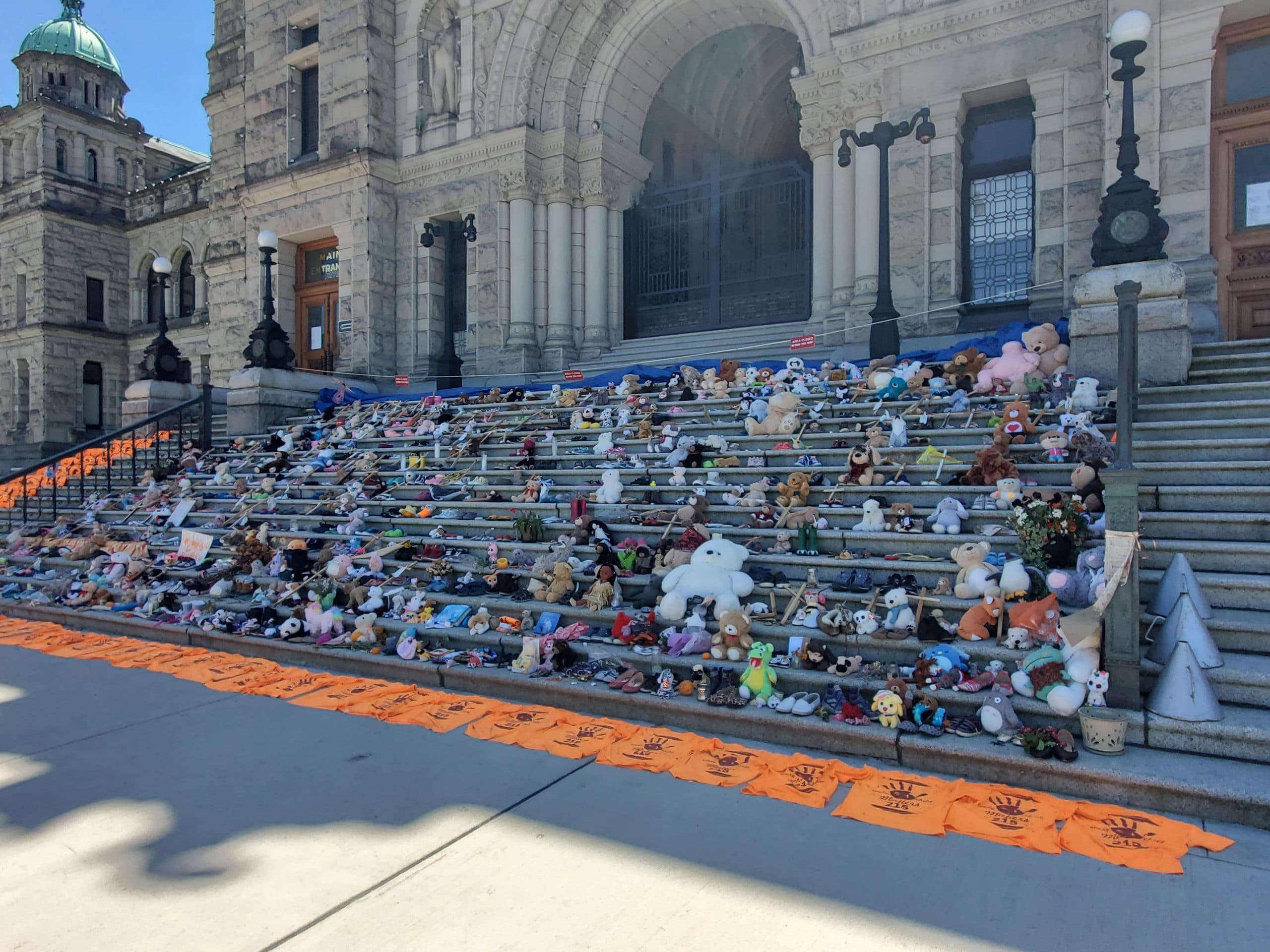
    Memorial on the steps of the BC Legislature; Victoria; 2021

    Along with voicing support and outrage on social media, we can write to our Members of Parliament and show our commitment by supporting Indigenous-led organizations who are best positioned to provide healing during this traumatic time.

    Let this not be a flashpoint moment that dims with the next “big news story,” and let us become even more committed to having difficult conversations with our friends and families about what it means to truly seek reconciliation. Silence and apathy must end here as we move towards justice for and reconciliation with Indigenous communities across Canada.

  • Changing Circumstances Around Opioid-Related Deaths in Ontario during COVID-19

    Changing Circumstances Around Opioid-Related Deaths in Ontario during COVID-19

    overdoses in ontario during covid overdoses in ontario during covid

    “High rates of opioid-related deaths across Canada have been a significant and longstanding national public health issue.1 In 2019, there were almost 4,000 opioid-related deaths across the country, of which over 94% were accidental.2 The COVID-19 pandemic emerged in the midst of this ongoing epidemic of opioid-related deaths, and resulted in the declaration of a state of emergency in Ontario on March 17, 2020.3 Within Ontario, the pandemic response has consisted of waves of public health restrictions of varying severity to help mitigate the spread of COVID-19. “

    Click HERE for more resources

  • National coalition comprised of people who use drugs and drug policy, human rights, and community organizations decry serious flaws in “Vancouver Model” and call for change

    National coalition comprised of people who use drugs and drug policy, human rights, and community organizations decry serious flaws in “Vancouver Model” and call for change

    Vancouver, B.C.—A broad-based Canada-wide coalition of human rights, drug policy, community, and drug user organizations are raising serious concerns about a proposed model for drug decriminalization that will be submitted to the federal government for approval. If adopted, the flawed “Vancouver Model,” as proposed by the City of Vancouver, could be a precedent-setting policy change—the first of its kind in Canada—that could pave the way for other cities to follow suit, including communities in Ontario, Alberta, and Quebec among others. It is therefore critical that this initial model gets decriminalization right by centering the health and rights of people who use drugs, as well as the needs of their loved ones and communities.

    “The mayor personally guaranteed to involve people who use drugs all the way along. But instead, the city met with police behind closed doors and cooked up a restrictive regime. They locked us out and never told us the details until it was a fait accompli,” says Garth Mullins, with the Vancouver Area Network of Drug Users.

    “If I was still using as much heroin as I used to, the mayor’s ‘Vancouver Model’ would re-criminalize me, not set me free. But it’s not too late to fix this.”

    ~Garth Mullins, Member, Vancouver Area Network of Drug Users

    Committed to the health and human rights of people who use drugs and progressive, evidence-based drug policy reforms, the coalition is calling on the federal government to address three critical flaws inherent to the current Vancouver Model. These flaws are outlined in a public statement, Decriminalization Done Right: A Human Rights and Public Health Vision for Drug Policy Reform, released today, and are:

    1. Lack of meaningful engagement of people who use drugs in designing a system that was meant for them. People who use drugs have not been meaningfully consulted, and this has resulted in a proposal that does not reflect the current realities of drug use. This will ultimately diminish the success of the proposed plan to decriminalize personal possession of drugs in Vancouver. A system co-developed by those at the centre of the issue is far more likely to succeed. The coalition is calling on the Government of Canada and City of Vancouver to engage people who use drugs in a substantive and meaningful way.

    2. Drug threshold amounts for decriminalized possession are too low. Health Canada has asked the City of Vancouver to propose threshold amounts for each drug that a person may legally possess. Threshold quantities—depending on how they are set—can provide clarity and advance the health and human rights of people who use drugs. However, if set too low, these thresholds can render a proposal for decriminalization largely meaningless and lead to harm. The thresholds proposed by Vancouver are far too low, failing to reflect the realities of current patterns of drug use. Based on three studies, which Vancouver admits are dated, the proposed thresholds overlook that many people’s drug tolerance and purchasing patterns have dramatically increased and that the drug market itself has changed because of COVID-19. Consultations with people who use drugs only occurred after thresholds were submitted to Health Canada. The coalition is calling on Health Canada and or the City of Vancouver to amend the proposed thresholds to more realistic levels after meaningful consultation with people who use drugs. “The inclusion and impact of unrealistic thresholds will partially negate the intent of a decriminalization law, and will keep people in the shadows,” says Leslie McBain, co-founder of Moms Stop the Harm.

    “The criminalization of people who use drugs and the stigma that comes with it has long-lasting negative consequences for individuals, including fear within their families and friends. Criminalization causes instability and fear for people who use drugs who often, as a consequence, use illicit drugs alone and die alone.”

    ~Leslie McBain, Co-founder, Moms Stop the Harm

    3. Police are dictating the parameters of decriminalization. From the beginning, the Vancouver Police Department (VPD) has been involved in the design of this proposal. This is extremely concerning because “de”-criminalization is meant to remove police involvement from a policy intervention, not give them a greater role by allowing them considerable input in its design. As the City of Vancouver has stated, the current model is meant to be a public-health focused, evidence-based policy. Given the extent to which police actions have historically worked at cross-purposes with health and harm reduction efforts, we have significant concerns about the extensive role of the VPD in this process. There is no legal or other basis requiring police to have the input. We call on the City of Vancouver to remove police influence from the process and the form of decriminalization being proposed to Health Canada.

    “We call for an approach to drugs based on best practices, including the full participation of people affected by drug criminalization. Several municipalities in Quebec have taken steps in this direction and some have urged the federal government to decriminalize simple possession and put an end to the harmful reprisals experienced by drug users and their families,” says Sandhia Vadlamudy, Executive Director of L’Association des intervenants en dépendance du Québec.

    “Quebec municipalities, including Montreal, must avoid the trap present in the model developed by Vancouver. AIDQ supports efforts to ensure that Quebec adopts an inclusive and non-stigmatizing posture with people who use drugs. We must support and not punish.”

    ~Sandhia Vadlamudy, Executive Director, L’Association des intervenants en dépendance du Québec

    Furthermore, the proposed model does not adequately address the intergenerational harm caused by the over-policing and structural stigma directed at Indigenous and Black communities and people of colour who disproportionately feel the impacts of prohibition. Any proposal—if it is to succeed—must address this reality. #DecrimDoneRight should be based on evidence and good public policy, not police objectives.

    Finally, the proposed model does not meet the needs of young people, and explicitly excludes youth under age 19 from the benefits of decriminalization. Instead, the model affirms the discretionary power of police, continuing a worrying trend of maintaining police as the primary resource available to youth, who are stigmatized and targeted for their drug use specifically because of their age.

    “There’s no good reason to continue criminalizing people for simple drug possession in Canada, but there is plenty of evidence that our current laws cause significant harm. To realize the benefits of decriminalization, the federal Minister of Health must insist that the thresholds reflect real-world use and the input of people who use drugs.”

    ~Sandra Ka Hon Chu, Director of Research and Advocacy, HIV Legal Network

    Contacts

    1. Dr. Thomas Kerr — Senior scientist at BC Centre on Substance Use and professor in the Department of Medicine at University of British Columbia: 604-314-7817 (can speak to threshold amounts)
    2. Garth Mullins — Vancouver Area Network of Drug Users, Crackdown Podcast: [email protected]
    3. Jean-Sébastien Fallu —Université de Montréal (French/English): [email protected], 514-777-5948
    4. Leslie McBain (she/her) — Moms Stop the Harm: [email protected]
    5. Marilou Gagnon — Harm Reduction Nurses Association (French/English): [email protected]
    6. Sandhia Vadlamudy — Association des intervenants en dépendance du Québec (French): [email protected], 514-287-9625, poste 103
    7. Scott Bernstein (he/him) — Canadian Drug Policy Coalition: [email protected], 604-500-9893
    8. Kali Sedgemore (they/them) — Coalition of Peers Dismantling the Drug War: 604-220-7165, [email protected]
    9. Sandra Ka Hon Chu — HIV Legal Network: [email protected], 647-295-0861

    — 30 —

    Download our primer, which outlines why and how provincial and municipal governments should request such an exemption.

    Additional Quotes

    “People who use drugs need support, acceptance, and inclusion. We have to move forward and stop structurally stigmatizing them by our drug laws and policies. They are neither criminals nor sick” (Jean-Sébastien Fallu, Université de Montréal)

    “Nurses in British Columbia have been calling for decriminalization for two years. Vancouver had the opportunity to develop a model in partnership with people most impacted by decriminalization and using best practices of consultation, engagement, and transparency. It failed to do so. The proposed model will continue to punish and harm people who use drugs, and maintain barriers to health care. It does not align with a health care approach.” (Marilou Gagnon, Harm Reduction Nurses Association)

    “Youth must be involved meaningfully and equitably in the co-development of policies that are going to impact them, which has not happened with the development of the ‘Vancouver Model.’ The institutions currently involved do not speak on behalf of youth and the proposal does not reflect the realities of young people and drug use. Any model that does not include youth is not truly decriminalization.” (Canadian Students for Sensible Drug Policy, Vancouver Chapter)