Category: Harm Reduction

  • Mark Haden: A Drug Educator’s Apology

    Mark Haden: A Drug Educator’s Apology

    Mark Haden is a drug educator. He has spent the last twenty-five years providing public education on drugs and working with addiction counselling services in Canada. Today he works as a supervisor at the Pacific Spirit Community Health Centre in Vancouver.

    Haden knows that the Canadian Federal government spends approximately six million dollars a year educating parents, teachers, young people, law enforcement and communities about the risks and laws surrounding substance use. He also knows that drug education plays a key role in defining our relationships to mind altering substances.

    “We have overemphasized the harms of drugs, we have neglected to mention the benefits of certain drugs and we have omitted mentioning the harms that drug prohibition causes….”

    Reflecting on the complexity of the relationships we have to drugs, Haden feels that we do a disservice to young people by perpetuating certain myths and maintaining a system that fails to achieve healthy results. During a brief interview in his office, Haden suggested a number of regulatory tools that could be useful in redefining our relationship to drugs and drug education. He advocates for a public health approach that is rooted in human rights and harm reduction and proposes an alternative to prohibition and criminalization.

    Haden is adamant that it is time to explore alternate regulatory frameworks that will actually make certain drugs harder to attain for young people, not easier. He admits that different drugs have different properties and risks and suggests that we consider each one separately, with different approaches taken to reducing the harms of each drug.

    Haden believes that if we can open up discussion about drug use and create public health policies, we can also begin to develop healthy social norms that can minimize their associated harms. “We don’t drink alcohol with breakfast,” he says. If we stop the violence of prohibition and start telling the truth about drugs, then we can begin to develop healthy social habits around drug use.

    Mark’s website has an extensive list of regulatory tools as well as many more resources for understanding and shifting our relationship to drugs towards a public health approach.


  • NAOMI Research Survivors: Experiences and Recommendations

    NAOMI Research Survivors: Experiences and Recommendations

    On March 31st, 2012 the NAOMI Patients Association (NPA) will celebrate the completion of their first research report, NAOMI Research Survivors: Experiences and Recommendations. To mark the occasion, they are having an open house on Saturday, March 31st at noon at the Vancouver Area Network of Drug Users (VANDU), 380 East Hastings Street, in the Downtown Eastside (DTES) of Vancouver, BC where they will be sharing their report and celebrating their achievement. All are welcome and snacks and copies of the report will be available.

    The Background

    Dave Murray
    Dave Murray

    In January 2011, Dave Murray organized a group of former participants from the North American Opiate Medication Initiative (NAOMI) heroin-assisted treatment clinical trial in the Downtown Eastside of Vancouver, now known as the NAOMI Patients Association (NPA).

    The NPA is an independent group that meets every Saturday at the Vancouver Area Network of Drug Users (VANDU) offices. The NPA has reached out to all former NAOMI participants in the heroin stream of the clinical trial and offers support, education, and advocacy to its members. Although attendance at weekly meetings varies, the highest attendance at a meeting was 44 members. On average, 15 members gather each week.

    The NPA is also associated with the British Columbia Association of People On Methadone (BCAPOM).

    Mission of the NPA

    The mission of the NPA is stated as:
    We are a unique group of former NAOMI research participants dedicated to:

    • Support for each other;
    • Advocacy;
    • Educating peers and the public;
    • Personal and political empowerment;
    • Advising future studies (heroin and other drugs) and permanent programs;
    • Improvements in consent and ethics;
    • The right to a stable life and to improvement in quality of life.

    The NPA’s goal is to see alternative and permanent public treatments and programs implemented in Canada, including heroin assistance programs.

    The Research

    In March of 2011 the NPA decided to undertake their own research project focused on their experiences as NAOMI research participants. They met with me, Susan Boyd, a drug policy researcher and activist, and decided to work together to conduct focus groups, brainstorming sessions, and writing workshops with NPA members. The NPA adopted the words below to further guide their own research project. They are written by long-time DTES activist Sandy Cameron who passed away last year, from his poem, Telling Stories.

    Telling Stories
    We need to tell our own stories.
    If we don’t tell our stories,
    people with power
    will tell our stories for us.
    It is from this place that the NPA began their own research, to tell their own story in their own words.

    NPA Research Findings

    Five primary themes emerged from the research:

    • Beneficial outcomes of being a participant in NAOMI,
    • Problematic outcomes of being a participant in NAOMI,
    • Ethics and Consent,
    • Creative writing/Everyday life, and
    • Recommendations for other research projects and programs.

    The NPA’s report, NAOMI Research Survivors: Experiences and Recommendations, expands on these themes and much more. The full report is available here.


  • Le projet de loi C10 : Le travail ne fait que commencer

    Le projet de loi C10 : Le travail ne fait que commencer

    Jeudi dernier, à minuit, le Sénat a approuvé le projet de loi omnibus C-10 des conservateurs, la Loi sur la sécurité des rues et des communautés, avec quelques modifications mineures seulement. Ce fut une journée très triste pour les Canadiens et pour notre sentiment de justice et d’équité pour tous.

    Le projet de loi C-10 n’a jamais vraiment été destiné à être une pièce législative qui représentait une direction mûrement réfléchie ou qui soit apte à renforcer ce qui est, selon toute vraisemblance, l’un des meilleurs systèmes de justice pénale du monde. Non, le projet de loi C-10 a été conçu comme un amalgame rétrograde, punitif, hautement politique et mal pensé d’une loi sur le crime qui fera reculer le pays de manières que nous ne pourrons découvrir que dans dix ou vingt ans. Nous supposons que la loi sera adoptée par la Chambre des communes dans les jours à venir. Ce sera une autre journée de tristesse.

    Mais, au milieu de tout ce délire, des activités remarquables ont eu lieu au cours des derniers mois, car des organisations et des individus ont scruté le projet de loi C-10 au microscope.

    Notamment, une coalition de Canadiens en est venue à prendre part à la discussion et à se prononcer contre cette loi. Ce que nous avons appris de ces personnes le mois dernier durant les audiences du Sénat pour le projet de loi C-10 est profond. Les Canadiens sont sérieusement préoccupés par cette loi et les répercussions qu’elle aura pour nos jeunes, les peuples autochtones, les personnes souffrant de maladie mentale et de toxicomanies, et d’autres populations vulnérables.

    Chef national Shawn A- in-chut Atleo
    de l’Assemblée des Premières nations et l’Assemblée des chefs du Manitoba ont exprimé avec éloquence leur certitude que le projet de loi C-10 va accélérer la surincarcération des Autochtones. Politiciens, chercheurs, prestataires de services, spécialistes de la justice pénale et citoyens ordinaires sont tous venus en nombre croissant se dire inquiets que le Canada s’engage dans une mauvaise voie avec cette loi.

    Et nous avons aussi appris que le monde regarde, incrédule, notre gouvernement nous enfoncer dans cette voie. Les anciens combattants de la guerre aux drogues de Law Enforcement Against Prohibition , dont certains ont même rédigé la loi qui a imposé les peines minimales obligatoires aux É.-U., comme Eric Sterling de la Criminal Justice Policy Foundation de Washington DC, ont pris la parole haut et fort pour mettre en garde les Canadiens de ne pas emprunter la route que les Américains ont prise il y a quelque 30 ans avec ce type de loi pour les infractions liées aux drogues. La Commission mondiale pour la politique des drogues s’est aussi manifestée par une lettre envoyée directement au Sénat, lui demandant de réexaminer la direction que ferait prendre le projet de loi C-10 aux politiques sur les drogues du Canada.

    CC
    CC

    La communauté qui se forme autour des enjeux de justice, de politiques sur les drogues, d’équité et du souci d’élaborer des réponses efficaces, fondées sur des données probantes aux problèmes liés aux drogues au pays grandit à un rythme étonnant.

    Nous voulons que cet élan continue, pour nous tous.

    Le travail du Smart Justice Network , de la Société John Howard du Canada et de l’Association canadienne des sociétés Elizabeth Fry , du Réseau juridique canadien VIH/sida , du Réseau canadien de réduction des méfaits , du TRIP! Project, de l’Association canadienne des libertés civiles, et de tant d’autres doit se poursuivre. Ensemble, nous pouvons créer une vision, et des politiques sur les drogues fondées sur des données probantes pour l’avenir.

    Nous avons collaboré avec Leadnow.ca et d’autres pour accélérer ce processus. Comment pouvons-nous garder ce mouvement vivant, en accroître la force et la capacité? Nous aimerions savoir ce que vous en pensez.

    Le projet de loi C-10 a fait s’arrêter et réfléchir des milliers de Canadiens au sujet du choix qu’a fait le gouvernement fédéral de recourir au droit criminel pour traiter des questions de santé, sociales et économiques véritablement complexes au Canada. La Loi sur la sécurité des rues et des communautés ne nous aidera pas à construire des communautés en santé, vivantes et inclusives. Mais nous savons qu’ensemble, nous le pouvons.

    Voulez-vous travailler avec nous? Donnez-nous de vos nouvelles.

  • La justice réparatrice : Une alternative au projet de loi C-10

    La justice réparatrice : Une alternative au projet de loi C-10

    Hier soir, le juge retraité du Yukon Barry Stuart, un ardent défenseur de la justice réparatrice , a tenu un dialogue au sujet du projet de loi C-10 dans une salle de comité dans l’édifice du Centre sur la colline du Parlement à Ottawa.

    Parmi les participants se trouvaient des représentants de la Société John Howard du Canada, l’Armée du Salut, l’Association des mères somaliennes, les Victimes d’actes criminelles, Penal Reform International et d’autres organisations et individus qui ont une expérience personnelle avec les établissements correctionnels et le système de justice pénale. Le sénateur James Cowan, membre du Comité sénatorial permanent des affaires juridiques et constitutionnelles, y était aussi présent.

    Avec plus de 30 personnes présentes, chaque commentaire et sujet soulevé par les participants aurait pu entraîner toute une discussion d’eux-mêmes. Cependant, quatre thèmes clés ont émergé lors de la soirée.

    M. Stuart et Eva Marszewski, de Peacebuilders International Canada, ont démarré la discussion en parlant du besoin d’impliquer les communautés dans les enjeux liés à la justice. Mme Marszewski a expliqué comment Peacebuilders ont créé un programme pilote qui amène les délinquants à participer dans les cercles de discussion avec les membres de la communauté. Ceci permet à la communauté de décider ce que devrait faire le délinquant afin de réparer ses torts et de rendre des comptes. Ce projet a si bien réussi que les tribunaux provinciaux ont entièrement financé un bureau pour leur travail au centre-ville de Toronto.

    Barry Stuart a ajouté aux points de Mme Marszewski en disant que 75% de sa charge de travail quand il était juge aurait pu être traité à bien meilleur marché par des experts de la santé et membres de la communauté concernée.

    Un des thèmes de la soirée portait sur la démocratie participative qui, selon M. Stuart, vise à « créer un lieu sûr pour permettre à une communauté de faire le travail pour en faire une communauté ». Il y avait certes plusieurs personnes à la table qui avouaient ne pas être experts dans cette approche; toutefois, M. Stuart a répété qu’il s’agit d’un enjeu pour la société civile, un enjeu des droits de la personne , et que tous possède une expertise dans la compréhension humaine.

    Un autre thème de la soirée fut la « dépendance à la punition », tel que nommé par un représentant de l’Église Unie. L’idée que l’incarcération est équitable à la vengeance de la victime semble être enracinée dans les valeurs et les systèmes de croyance de beaucoup de citoyens. Mais comme certains l’ont fait remarquer, les victimes sont souvent simplement à la recherche d’une prise de responsabilité, et ne voient pas d’autre alternative au système de justice pénale. Pourtant, de nombreux partisans de peines plus sévères ne sont pas conscients des méthodes alternatives, telle que l’approche Gladue , qui à la fois économise de l’argent et réduit le récidivisme.

    Dans l’ensemble, il a été convenu qu’une conversation difficile, nébuleuse et moralement difficile se concentrant sur le but du système de justice devrait être entamée. Cet effort devrait viser à comprendre ce qu’est la vraie justice, ce que sont les effets des crimes et ce qui motive les délinquants.

    Le plus grand thème de la discussion futles problèmes que créera le projet de loi C-10. Des enjeux tels que les craintes relatives à la surpopulation carcérale, un système de justice encore plus bouché, des coupures budgétaires aux communautés et aux programmes de prévention déjà inadéquats, la pression croissante à Ottawa en faveur de la privatisation des prisons, ainsi que comment les victimes et délinquants deviendront davantage victimes plus les coupures financières réduiront l’accès à la justice, ont tous été discutés.

    Il n’y avait pas beaucoup d’optimisme dans l’air, puisque le projet de loi C-10 est presqu’assuré de passer et de commencer à contribuer directement à ces problèmes. Cependant, cette discussion a aussi mené au dernier thème de la soirée : l’unité.

    L’énorme quantité de problèmes que tant de groupes entretiennent avec le projet de loi C-10 a semblé unir les gens. Beaucoup de militants de longue date ont estimé que même il y a cinq ans, un tel groupe diversifié de personnes et d’organisations ne serait pas ensemble dans la même pièce. M. Stuart a décrit à quel point il était tanné que tout ces groupes se rencontrent dans une salle, se font remonter le moral, et ensuite retournent à leurs communautés respectives. M. Stuart a noté qu’il y a de nombreux législateurs et citoyens ordinaires qui ont « des fissures de doute » par rapport au projet de loi C-10.

    Il a déclaré qu’il était temps de monter une organisation nationale de justice réparatrice qui pourrait exploiter efficacement ce mouvement diversifié de solutions de rechange à la justice pénale et créer de nouveaux aperçus pour ceux qui y jettent un coup d’œil sobre.

  • Where’s the beef: does the Senate have an aversion to evidence-based policy?

    Where’s the beef: does the Senate have an aversion to evidence-based policy?

    Today’s testimony focused on part 4 of Bill C-10, which would amend the Youth Criminal Justice Act. Specifically, these amendments would allow a judge to lift the publication ban on cases involving defendants as young as 12 years old, introduce dissuasion and deterrence as principals of Canadian youth justice, and make it easier to incarcerate youth convicted of violent crimes.

    The committee heard from a number of lawyers and children’s advocates, including Marvin Bernstein of UNICEF Canada, Mary-Ellen Turpel-Lafond, President, and Sylvie Godin, Vice-President of the Canadian Council of Child and Youth Advocates, and Judge Barry Stuart, former Chief Justice of the Yukon.

    These witnesses unanimously protested nearly all of the proposed amendments to the Youth Criminal Justice Act. They claimed that allowing judges to lift publication bans would have disastrous long-term consequences for young people.

    They also argued that, in the case of young offenders, a violent crime can mean throwing a snowball, throwing water on someone, or threatening a classmate. Bernstein, Turpel-Lafond and Godin also told the committee that, in their opinion, the proposed amendments were in contravention with the UN Convention on the Rights of the Child, to which Canada is a signatory.

    Judge Barry Stuart, a pioneer in restorative justice, had particularly severe warnings for the committee, claiming that if they went down this road, and further criminalized young people, that they would never attain the goals of improving victims’ rights and engaging communities in offender rehabilitation. Rather, the “tail-end” of the criminal justice system would suck up all resources that could have far greater impact on justice and public safety if spent elsewhere.

    Many Conservative senators repeated standard responses to the testimony of these witnesses. Rather than asking questions, their cross-examination seemed more an attempt to discredit their testimony. This behaviour has seemed most often on display when the committee is hearing from academic experts and legal professionals, whereas it changes to a more conciliatory tone in the presence of law enforcement officials.

    In response to the very real problems outlined in regards to Bill C-10, Senator Wallace once again repeated his favourite line: “But when Ministers Toews and Nicholson appeared before this committee, they assured us that the bill will only target violent, repeat offenders, organized criminals, and child abusers.”

    Senator Wallace seems to believe that simply repeating this mantra will make it true, despite the mountains of evidence given by representatives of children’s advocacy groups, the Canadian Bar Association, the Assembly of First Nations, as well as independent academics and many others. Unfortunately, the CDPC was not permitted to add its voice to this overwhelming chorus.

    The comportment of these Conservative Senators—Boisvenu, Lang, Frum, Dagenais, and Wallace—seems to indicate that they don’t understand the fundamental purpose of their own position: to give a sober second thought to proposed legislation one step removed from the dictates of electoral politics. Indeed, during hearings today Senator Lang went so far as to claim that “one might argue the nuances or the details, but it’s the spirit of the law that matters.” Perhaps no one told Senator Lang that the nuances and the details of the law are precisely what a senate committee is meant to discuss.

    Perhaps this disdain for evidence is what prompted Judge Barry Stuart’s remark that the Senate, “probably spends more time weighing evidence on which military aircraft to purchase than on weighing evidence on what is best for our youth.”

  • Challenging prohibition: a missing perspective

    Challenging prohibition: a missing perspective

    Tonight the Senate Committee on Legal and Constitutional affairs heard from a huge variety of witnesses, from researchers at the Canadian Center on Substance Abuse to Chief Ron Evans of the Norway House First Nation to representatives of the RCMP.

    In all, ten witnesses were called. Nearly every witness—including those representing law enforcement—made it clear that a variety of approaches are required to stem drug-related crime, not just enforcement.

    However, not a single witness dared question the efficacy of drug prohibition itself. This important framework was in fact almost entirely missing from the discussion. And with the Senate declining to hear from the Canadian Drug Policy Coalition’s Director, Donald Macpherson, it is unclear if such a perspective will be raised in the hearings to come.

    Witness after witness in today’s hearings sung the praises of harsher sentencing for drug crimes, even though there is no evidence that this approach works to either deter or rehabilitate individuals. What we do know is that prohibition continues to fill the coffers of organized criminals.

    Gwendolyne Landolt, Vice President of the Drug Prevention Network of Canada, went so far as to claim that prohibition was indeed a successful policy given that alcohol consumption decreased during the prohibition era in the United States from 1920 to 1933. However, as evidenced by a recent report from the Health Officers Council of British Columbia, this is actually like comparing apples to oranges.

    During prohibition, there may have been a decrease in alcohol consumption, but there was in fact a marked increase in organized crime.

    After prohibition, alcohol was not only legalized, but drinking was heavily promoted by the alcohol industry.

Senator Joyal came closest to questioning this failed prohibition approach when he brought up the open letter recently signed by four former BC attorneys general.

    In that letter, the attorneys general compare the violence and bloodshed during prohibition to the current situation in British Columbia, where organized crime turns a healthy profit through marijuana and synthetic drugs.

Despite the misinformation put forward by witnesses such as Ms. Landolt, who claimed that young people who use drugs can never hope to participate in society, the fact is that substance use takes place on a spectrum, ranging from beneficial, through recreational, to problematic. The majority of Canadians who use or have used drugs do not suffer from problematic effects or harmful abuse. Perhaps it’s time our lawmakers took these facts into consideration, and produced policy based on health, regulation and human rights.


  • Discretion in Bill C-10 Part II: Ministers versus Judges

    Discretion in Bill C-10 Part II: Ministers versus Judges

    Today’s Senate committee hearings into Bill C-10 focused on testimony from three lawyers regarding amendments to the International Transfer of Prisoners Act: Nathalie Des Rosiers, General Counsel of the Canadian Civil Liberties Association, Fannie Lafontaine, a law professor at the University of Laval, and John Conroy, a lawyer in the Fraser Valley.

    These lawyers were very concerned with the expansion of ministerial discretion over the repatriation of Canadian prisoners. They argued that the bill would make it easier for a minister to deny the transfer of prisoners for what amounts to arbitrary reasons.

    Mr. Conroy brought up the example of the Goulet case, where Minister Toews’ decision not to repatriate a prisoner convicted of a drug crime was deemed unreasonable by a federal judge. The decision cited twelve previous ministerial decisions since 2008 that were also deemed unreasonable, showing a problematic pattern in politicized decision-making over prisoner transfer. In these cases, the minister ignored the evidence put forward by officials at the Ministry of Public Safety; as Mr. Conroy put it, “It’s as if the minister doesn’t trust his own ministry.”

    The three lawyers made it clear that there were many good reasons to repatriate prisoners. Chief among them was that in serving a sentence elsewhere, and returning to Canada upon release, the offender neither has a criminal record in Canada, nor is required to check in with correctional authorities.

    Lawyers argued that public safety is far better served when prisoners are repatriated, since, in the words of Mr. Conroy, it allows Correctional Service Canada to “get to know” the offender through risk evaluations, follow ups, and the increasingly long leash of parole prior to full release. Furthermore, Canadian prison objectives prioritize the rehabilitation and reintegration of offenders, which is not the case in many other jurisdictions including the United States, the source country of 85% of transfers to Canadian prisons.

    But for Conservative members of the committee such as Senators Lang, Runciman, Boisvenu, Dagenais, and Wallace, these arguments are akin to “hug-a-thug” rhetoric that privileges offenders over victims.

    As Senator Lang argued, these offenders “knew the consequences of the crimes they were committing” and should therefore serve out their sentences in the jurisdiction where they committed the crime.

    These senators claim that Canadian prisons are too lax, and it is only for this reason that Canadian offenders would want to return home. For instance, according to Senator Lang, prisoners in the US must serve 85% of their sentence before being eligible for parole, and in many cases the sentences are harsher than those for the same offences in Canada. Lang ignored the fact that the length of a prisoner’s sentence does not change once he or she is repatriated to Canada. From these comments, it seems that what these Conservative senators are really saying is Canada should not only have harsher sentences, but the Canadian Criminal Code’s principal objectives of rehabilitation and reintegration are not to be respected.

    But Lang does have a point: the United States has very harsh sentences. As I mentioned in a previous post, California’s “3 strikes and you’re out” law has put thousands of drug offenders behind bars for life. And in the US federal system as a whole, over half of inmates are serving time for drug offences.

    In watching the committee hearings unfold, I am struck by the way the bill’s proponents seem to desire that our system of justice should do nothing but dole out retributive punishment. Supporters of Bill-C10 consistently show contempt for the Canadian justice system, and a preference for policies that we know do not work. For this reason, they want ministerial discretion over prisoner transfers to be greater, at the expense of judges and officials at Correctional Services Canada whose job it is to determine the likelihood that a criminal will reoffend.

    The real question seems to be who should be in charge of passing judgment on Canadians: elected officials, whose jobs depend on being popular, or the judiciary, who are meant to use objective criteria? We must remember that democracy requires the rule of law to be respected and applied equally to all.

    As the Goulet case shows, ministerial discretion in the case of prisoner transfer is a threat to Canadian democratic values.




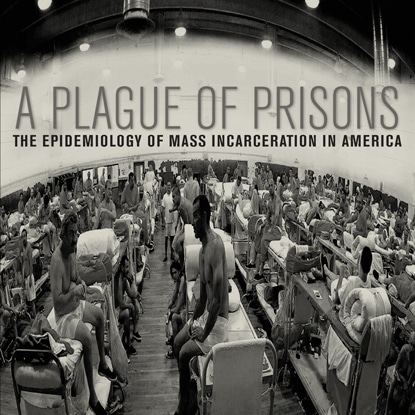
  • Book Review – A Plague of Prisons: The Epidemiology of Mass Incarceration in America

    Book Review – A Plague of Prisons: The Epidemiology of Mass Incarceration in America

    Druckerby Craig Jones Former Executive Director, The John Howard Society of Canada.

    A Plague of Prisons: The Epidemiology of Mass Incarceration in America
    By Ernest Drucker
    The New Press, 2011, pp. xiv, 211

    Every student of epidemiology learns the story of the Broad Street pump (London, Summer 1854), which marks the birth of epidemiology. In A Plague of Prisons, Ernest Drucker uses that story as a metaphor to explain the explosion of incarceration in the United States that followed the 1973 enactment of the Rockefeller drug laws and to illustrate how political decisions act as vectors – pumps – and how these vectors create a social epidemic of gargantuan proportions. Drucker is professor emeritus of family and social medicine at Montefiore Medical Center/Albert Einstein College of Medicine. He was present at the creation of the AIDS epidemic in the Bronx in the early 1980s and watched how politics, ignorance, homophobia and racism facilitated the transmission of disease from certain neighborhoods and populations to a much larger population via the Riker’s Island prison.Between 1880 and roughly 1975, American rates of incarceration were stable at roughly 75 per 100,000 population. Today that number hovers around 743 per 100,000. Drucker’s project is to explain the political path between those two numbers. Drucker employs epidemiology to explain the mechanism by which the United States came to incarcerate 1 out of every 4 incarcerated persons in the world. He can be read in three ways: as an undergraduate introduction to the explanatory power of social epidemiology; as a non-technical analysis of how the United States achieved its historically unprecedented rate of incarceration; and as a warning to Canadians on the propensity of criminalization of non-violent drug users to become a contagion with multi-generational consequences. The book’s timing is apt: Canadians are enacting the political mistakes that produced the plague of prisons in the United States.What were those mistakes? There were three elements embedded in the Rockefeller drug laws that transformed a public health issue into mass incarceration and transmitted that contagion to the entire country. In chronological sequence they are: the decision to criminalize drug use; the political reliance on punishment as the appropriate response; and, the attack on judicial discretion through mandatory minimum sentences. Of the three, the criminalization of drug use featuring large-scale arrests of low-level drug users primed the pump that fueled the contagion of self-sustaining criminality.There are important differences in the way criminal justice is done between the United States and Canada – some of those differences will insulate Canada from the worst effects of the plague of prisons. But there are a couple of lessons for Canadians too. The first is that criminal justice policy is too often made in a consequentialist vacuum – that is, without deliberation over downstream effects on families and particularly children of the incarcerated who will likely be the next generation of the incarcerated. The political imperatives that pushed US policy makers into adopting mandatory minimum sentences appealed to the short-term interests of private prison contractors, correctional officer unions, victims’ advocates, judges and prosecutors. Policies enacted for short-term political opportunity have long-term economic and social consequences, a long tail, but these are of little moment compared to the immediate electoral advantage. The children of the incarcerated – who are at higher risk of incarceration themselves – have no one to speak for them, at least no one with the clout of correctional officer unions or private prison contractors.

    The second lesson is that it is hard to reverse bad policy ideas once they take hold in the public imagination – even once the fiscal costs become unsustainable and the policy itself is clearly failing. As is now clear, the proliferation of mandatory sentencing regimes across the United States has pushed several jurisdictions – Texas, California, Ohio, Florida and New York – to the brink of insolvency, yet they have not achieved rates of crime reduction greater than those jurisdictions that did not embrace draconian sentencing practices. Worse, the sentencing regimes are hard to unwind because they have created a political constituency where prisons have become a source of high-income, non-polluting jobs. The third lesson Canadians should heed is that – in seeking to increase the burden of punishment – criminal justice systems engender a self-perpetuating underclass of non-violent but ever more marginalized persons who, because of onerous pardon requirements, may never be reintegrated. They simply cycle through the prison system and transmit the contagion of criminality to their children and family members.

    This is a cautionary tale. Canadians would be wise to be more attentive to Drucker’s warnings on the self-sustaining dynamic that emerges out of deliberately growing the rate of incarceration for electoral advantage.

    Craig Jones, PhD
    Former Executive Director
    The John Howard Society of Canada
    Kingston  ON

  • Canadian Drug Policy Coalition/ Doalition canadienne des politiques sur les drogues

    Thrown Under the Omnibus

    The idea for the Toronto forum on Bill C10 (the Safe Streets & Communities Act) – “Thrown Under the Omnibus” – was hatched at the harm reduction conference in Ottawa this past summer, during a round-table session that wrapped up the final day. Representatives of five Toronto-based organisations were present – The Toronto Harm Reduction Task Force, The Social Justice committee of the Community Justice Coalition, The Canadian HIV/AIDS Legal Network, PASAN and The Canadian Harm Reduction Network, as well as Donald MacPherson from the Canadian Drug Policy Coalition. It was decided that we would jointly host a forum on Bill C10 in Toronto, as one of a number of community events across Canada supported by the Coalition.

    Back in Toronto, we struck a planning committee culled from the five organisations. The committee also included a current drug user, a person on methadone, a former prisoner, and a very valuable volunteer who because of her employment found it prudent to remain anonymous. Such is life now in the big smoke!

    The Forum itself was very well attended. With an audience of about 225 people almost every seat was filled. It was well moderated and stimulating, and audience questions were addressed with thoroughness and respect.

    There was an excellent networking social after the Forum. We picked up a large number of addresses for our growing mailing list. We had a positive article in the National Post. We also saw many new faces. We had made a particular effort to expand our reach to people outside our usual social services, prison activist and policy lists … particularly into the arts communities, for example … and a number of them turned up.

    What would I do differently the next time?

    Ensure that there is a next time. We need to build on interest and success. Put greater concentration on expanding the audience base. We need to “convert” even more than we need to speak to the converted. We need to form new relationships and coalitions as well as nurturing existing ones.

    Do more with social media. We did some … but none of us was particularly savvy.Really court the media. We did a lot … but obviously we need to do more. Hold a post mortem. We never did it. Perhaps we still will.

    Really celebrate our success.