Author: admin

  • The Global Commission on the war on drugs and HIV/AIDS

    The Global Commission on the war on drugs and HIV/AIDS

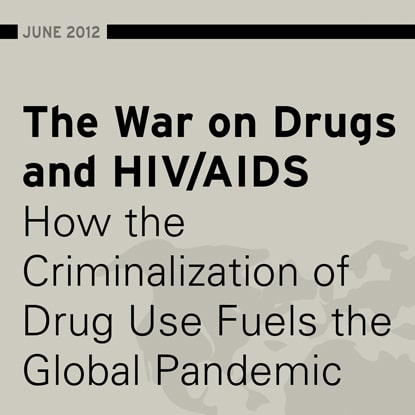
    On June 26th, the Global Commission on Drug Policy released a groundbreaking report on the war on drugs and its failures. Titled “The war on drugs and HIV/AIDS: How the criminalization of drugs fuels the global pandemic”, the report focuses on the relationship between drug policy and the spread of HIV.

    Global Commission Report Launch with Michel Kazatchkine, Ruth Dreifuss and Ilona Szabó
    Global Commission Report Launch with Michel Kazatchkine, Ruth Dreifuss and Ilona Szabó

    Covering a range of issues directly connected to the HIV and AIDS pandemic, the report points out the inability of law enforcement to reduce global drug supply. In fact, the global supply of illicit opiates, such as heroin, has increased by 380% in recent decades. And it describes how repressive drug control policies actually drive the HIV epidemic in many regions of the world. The report also details how policies that prohibit needle exchange increase syringe sharing and the risk of HIV infections, and how the fear of arrest drives people underground and away from needed services. It urges countries to scale up proven drug treatment and public health measures, including harm reduction services, to reduce HIV infection and protect community health and safety.

    Canada often prides itself on being a positive and progressive force on the international stage. But politics, rather than evidence, tend to be the deciding factor in defining Canadian drug policy. As the Global Commission’s report explains, mass incarceration also drives the HIV pandemic. The recent passage of the Omnibus Crime Legislation prescribes mandatory minimum penalties for some drug crimes. This will have the effect of driving up incarceration rates in Canada’s already crowded prisons, and as the Canadian HIV/AIDs Legal Network recently pointed out, the lack of needle exchange programs in Canadian prisons contributes to the spread of HIV and endangers public health.

    The report also documents how the fight against HIV is being won in countries where problematic substance use is treated as a health issue. In Australia and European countries such as Portugal and Switzerland, newly diagnosed HIV infections have been nearly eliminated among people who use drugs.

    The Global Commission members are no lightweights when it comes the development of governmental policy. The Commission comprises a distinguished group of high-level leaders whose ranks include George Schultz, former US Secretary of State, Richard Branson, founder of the Virgin Group and advocate for social causes, and Ruth Dreifuss, former President of Switzerland, among many others.

    This is the second report released by the Global Commission. Its first report, released in June 2011, catalyzed international debate about the urgent need for fundamental reforms of the global drug prohibition regime. It recommended implementing reforms such as alternatives to prison, a greater emphasis on health approaches to drug use, decriminalization, and experiments in drug regulation that avoid the negative effects of full prohibition.

    With widespread media coverage around the world, the report has pushed the topic of drug policy reform back into focus just in time for the International AIDS 2012 Conference, taking place in Washington, DC, later this month. Stressing the need for urgent action, the Global Commission makes a number of recommendations to world leaders and the United Nations, the most fundamental of which being that they acknowledge and address the causal link between the war on drugs and the spread of HIV.

    For more information see:

    Global Commission on Drug Policy: http://www.globalcommissionondrugs.org/
    Canadian HIV/AIDS Legal Network: http://www.aidslaw.ca/EN/index.htm

    Read the Report

  • If you can spell it, you can schedule it.

    If you can spell it, you can schedule it.

    That’s the intention of Canada’s federal government.
    Namely, to include methylenedioxypyrovalerone (MDPV), a synthetic substance that causes stimulant-like psychoactive effects, in Schedule I of the Controlled Drugs and Substances Act. At least that’s the proposal formally announced in the Canada Gazette on June 9, 2012. This follows Health Minister Leona Aglukkaq’s announcement that the drug would be banned because of “recent media reports [that] have linked the use of ‘bath salts’ to violence causing harm.” Interested parties have until July 8, 2012 to comment (details below).

    mdvp_thumbAs the Canadian Centre on Substance Abuse so carefully noted, “bath salts are not salts that go in your bath.”

    Rather, it’s the common name given to MDPV, one of the possible ingredients in a substance available for sale, but as of yet, not regulated in Canada, unlike many of its amphetamine-like cousins already prohibited in Schedule III.

    The government’s claim that bath salts are linked to violence stems from highly sensationalistic reporting of a tragic assault case in Miami where a man was shot and killed by police while apparently eating the face of another man. Miami police officials speculated that this attack was caused by the use of bath salts, though toxicology tests won’t be ready for a few weeks. Nor do they care that the man at the centre of this story had a history of violence, according to Kate Heartfield in the Ottawa Citizen.

    The move to ban MDPV comes amid a news cycle in which numerous stories purport to detail the effects of its use, including a segment of CBC’s The Current with Anna Maria Tremonti on May 30th. The Current marshaled interviews from Halifax with a former bath salts user and an addictions treatment doctor to underscore the supposedly uniquely dangerous effects of this drug and give it a homegrown spin. Sound familiar? It should. Similar “drug scare” narratives have been constructed around the popularization of numerous substances, including crystal meth, PCP, crack, speed, LSD, heroin, reefer and of course, opium.

    bathsaltsThe rush to ban MDPV and place it in Schedule I will mean that the harshest drug law penalties can be applied to people who use, traffic or produce this drug. As researchers have noted, the banning of drugs like Mephedrone often drives its use and manufacture further underground, inflates the price and prevents the implementation of potentially helpful forms of regulation. Prohibiting substances has not made people safer, and has not resulted in the elimination of drug use. It can also displace drug use back to traditional illegal drugs, or to newer, potentially more dangerous “legal highs.”

    We don’t want to ignore the voices of people who have negative experiences with MDPV but neither do we want to rush to ban this drug. In this case, it’s a political response that can placate worried voters but it also alleviates politicians of the responsibility to meaningfully address the underlying causes of problematic substance use.  We urge you to express your concerns about this ban.

    Comments on this proposed change can be directed to Mr. Nathan Isotalo, Regulatory Policy Division, Office of Controlled Substances, Address Locator: 3503D, 123 Slater Street, Ottawa, Ontario K1A 0K9, by fax at 613-946-4224 or by email at OCS_regulatorypolicy-BSC_ [email protected].

    For more information see: Curiosity killed M-Cat: A post-legislative study on mephedrone use in Ireland, Marie Claire Van Hout1 & Rebekah Brennan. Drugs: education, prevention and policy, April 2012; 19(2): 156–162.


  • Canadian Nurses lead the way in harm reduction

    Canadian Nurses lead the way in harm reduction

    Nurses from across the country will be gathering in Vancouver at the Canadian Nurses Association Biennial Convention this week. As part of the occasion Insite and the Dr Peter Centre are each hosting special sessions on June 17th, providing opportunities for knowledge exchange on harm reduction policies and nursing practice.

    Canadian nurses recognize that substance use, both legal and illegal, is an enduring feature of human existence and that abstinence is not always a realistic goal. As such, nurses focus on reducing adverse consequences and building non-judgmental, supportive relationships for the health and safety of individuals, families and communities.

    Screen-shot-2012-06-14-at-6.53.20-AMThere is a risk that the image of nurse-supervised injection is limited to a nurse hovering over a client while the injection takes place and nothing more occurs. I want to dispel this image.

    The nurses of Insite have articulated their framework of nursing practice. Nursing care is client-centred with the focus on relationship building, maintaining dignity and respect, and creating an environment of cultural safety and empowerment. Primary nursing care at Insite includes safer injection education, needle-syringe exchange, first aid, wound care, overdose management, addiction treatment, reproductive health services and communicable disease prevention. These services are delivered as comprehensive harm reduction and health promotion programming nested in partnerships with the health and social service systems and community agencies.

    In 2011 the Canadian Nurses Association released a discussion paper on Harm reduction and currently illegal drugs: implications for nursing policy, practice, education and research, which was endorsed by the Canadian Association of Nurses in AIDS Care. The values of harm reduction are consistent with the values guiding professional ethical nursing practice articulated in CNA’s Code of Ethics for Registered Nurses for the provision of safe, ethical, competent and compassionate nursing care; for the promotion of health and well-being; for the promotion of and respect for informed decision-making; for the preservation of dignity in which care is provided on the basis of need; and for the promotion of justice.

    Considering this it really shouldn’t come as a surprise that Canadian nurses support harm reduction services. The origins of outreach nursing have been attributed to the Grey Nuns, founded by Marguerite d’Youville in Montreal, who by the mid 1700’s, were known for their care to the destitute. Inequity of access to health care and the basic determinants of health has led to “street nursing” practices in many urban centres.

    Lightfoot-etal_09_Gaining-Insite Harm_Reduction_2011_e Hardill

    BCCDC-STI Street Outreach Nurse Program
    BCCDC-STI Street Outreach Nurse Program

    In Vancouver, after World War II nurses led a major effort to reach marginalized people who would not attend hospitals for the treatment of sexually transmitted diseases. In 1988 the BC Centre for Disease Control established the AIDS Prevention Street Nurse Program with a focus on needle and syringe exchange. With the epidemics of overdose deaths and the dramatic outbreak of HIV that Vancouver experienced in the 1990’s, the street nurses were some of the first to advocate for bringing injecting from the alleys into the safety of a supervised injection health service.

    Just over one year ago, professional associations – Canadian Nurses Association, Registered Nurses Association of Ontario and Association of Registered Nurses of British Columbia and BC Nurses Union each acted as intervenors in support of Insite at the Supreme Court of Canada. Nurses across Canada cheered when the Supreme Court ruled in favour of Insite remaining open.

    Look for nurses to be leaders in advocating for the expansion of supervised injection services locally, nationally and globally!


  • New Provincial Guidance for Supervised Injection Services in BC

    New Provincial Guidance for Supervised Injection Services in BC

    Supervised injection sites help save lives and protect communities. This was the conclusion of over 30 research studies on Vancouver’s own supervised injection site known as Insite. And Canada’s Supreme Court agreed in September 2011, ordering the federal Minister of Health to grant a section 56 exemption to the Controlled Drugs and Substance Act to allow Insite to continue to operate.

    To scale up harm reduction and support the development of similar services throughout the province, the BC Ministry of Health has now revised its Guidance Document for Supervised Injection Services. Written for health care professionals, it provides advice to health authorities and other organizations considering supervised injection services in their local areas.

    Kenneth Tupper - B.C. Ministry of Health
    Kenneth Tupper – B.C. Ministry of Health

    At a recent public forum in Victoria, BC, Kenneth Tupper of the B.C. Ministry of Health affirmed the value of supervised injection as part of a “comprehensive program of harm reduction services.”

    “The courts have ruled that supervised injection is a valuable approach to health care,” Tupper said, “and the new Guidance Document affirms the province’s support of these services.”

    The “guidance document” could seem daunting for the uninitiated. It spells out a range of issues that should be covered by any organization considering a supervised injection site. This includes extensive knowledge of the local services, rates of HIV and Hepatitis C and any available estimates of drug use patterns. Interested organizations will also need to provide a detailed description of the proposed service and demonstrate how it will be consistent with the principles of harm reduction as spelled out by the B.C. Ministry of Health documents.

    According to provincial policy, anyone who wants to offer this service will need to consider how they will sustain the support of local groups like medical health officers, police departments and other potentially interested groups. They will also need to plan services to be offered in conjunction with supervised injection even if the proposed supervised injection site is small or mobile and carefully consider how client data will be collected and how issues like the risks of substance use and expectations for conduct at the service are to be communicated and documented.

    ‘Harm reduction’ refers to policies, programs and practices that aim to reduce the negative health, social and economic consequences of using legal and illegal psychoactive drugs, without necessarily reducing drug use. Scaling up harm reduction for individuals, families and communities is core to the work of the CDPC.

    We hope you will join us and help spread the word about the importance of services like supervised injection and help us scale up harm reduction in our communities.


  • Dr. Mark Tyndall – Supervised Injection sites are the lightning rod of harm reduction

    Dr. Mark Tyndall – Supervised Injection sites are the lightning rod of harm reduction

    I sat down with Dr. Mark Tyndall at the 21st Annual Canadian Conference on HIV/AIDS Research(CAHR) in Montreal this April. The theme of the conference was turning points and meeting new challenges. Tyndall is no stranger to confronting challenges and he is known as a national leader in HIV prevention and care. He worked for over a decade in Vancouver at UBC and the BC Centre for Excellence in HIV/AIDS, also as the head of Infectious Diseases at St. Paul’s Hospital. He now calls Ottawa home and serves as the head of Infectious Diseases at the University of Ottawa.

    “supervised injection sites have become a lightning rod of harm reduction, but we all know and recognize that they are a very important way to try and engage people in some kind of continuum of care…and the need is still quite large.”

    Having been at the forefront of Vancouver’s supervised injection site (INSITE), Tyndall knows that supervised sites and harm reduction services need to be scaled up.

    Tyndall says that there is a public health crisis in Ottawa, similar in some cases to what he saw in Vancouver a decade ago. The big question he asks is, do we need to repeat the same research process and make many of the same mistakes, or can we learn from places like Vancouver, Frankfurt, and Sydney and implement harm reduction and supervised injection sites efficiently. Tyndall was a speaker at a press conference we held in Montreal during CAHR looking at injection sites Nationally, and he also contributed to the Toronto Drug Strategy report that we wrote about this spring. Please get connected and leave your comments to let us know what you think needs to happen in your community.

  • Mark Haden: A Drug Educator’s Apology

    Mark Haden: A Drug Educator’s Apology

    Mark Haden is a drug educator. He has spent the last twenty-five years providing public education on drugs and working with addiction counselling services in Canada. Today he works as a supervisor at the Pacific Spirit Community Health Centre in Vancouver.

    Haden knows that the Canadian Federal government spends approximately six million dollars a year educating parents, teachers, young people, law enforcement and communities about the risks and laws surrounding substance use. He also knows that drug education plays a key role in defining our relationships to mind altering substances.

    “We have overemphasized the harms of drugs, we have neglected to mention the benefits of certain drugs and we have omitted mentioning the harms that drug prohibition causes….”

    Reflecting on the complexity of the relationships we have to drugs, Haden feels that we do a disservice to young people by perpetuating certain myths and maintaining a system that fails to achieve healthy results. During a brief interview in his office, Haden suggested a number of regulatory tools that could be useful in redefining our relationship to drugs and drug education. He advocates for a public health approach that is rooted in human rights and harm reduction and proposes an alternative to prohibition and criminalization.

    Haden is adamant that it is time to explore alternate regulatory frameworks that will actually make certain drugs harder to attain for young people, not easier. He admits that different drugs have different properties and risks and suggests that we consider each one separately, with different approaches taken to reducing the harms of each drug.

    Haden believes that if we can open up discussion about drug use and create public health policies, we can also begin to develop healthy social norms that can minimize their associated harms. “We don’t drink alcohol with breakfast,” he says. If we stop the violence of prohibition and start telling the truth about drugs, then we can begin to develop healthy social habits around drug use.

    Mark’s website has an extensive list of regulatory tools as well as many more resources for understanding and shifting our relationship to drugs towards a public health approach.


  • NAOMI Research Survivors: Experiences and Recommendations

    NAOMI Research Survivors: Experiences and Recommendations

    On March 31st, 2012 the NAOMI Patients Association (NPA) will celebrate the completion of their first research report, NAOMI Research Survivors: Experiences and Recommendations. To mark the occasion, they are having an open house on Saturday, March 31st at noon at the Vancouver Area Network of Drug Users (VANDU), 380 East Hastings Street, in the Downtown Eastside (DTES) of Vancouver, BC where they will be sharing their report and celebrating their achievement. All are welcome and snacks and copies of the report will be available.

    The Background

    Dave Murray
    Dave Murray

    In January 2011, Dave Murray organized a group of former participants from the North American Opiate Medication Initiative (NAOMI) heroin-assisted treatment clinical trial in the Downtown Eastside of Vancouver, now known as the NAOMI Patients Association (NPA).

    The NPA is an independent group that meets every Saturday at the Vancouver Area Network of Drug Users (VANDU) offices. The NPA has reached out to all former NAOMI participants in the heroin stream of the clinical trial and offers support, education, and advocacy to its members. Although attendance at weekly meetings varies, the highest attendance at a meeting was 44 members. On average, 15 members gather each week.

    The NPA is also associated with the British Columbia Association of People On Methadone (BCAPOM).

    Mission of the NPA

    The mission of the NPA is stated as:
    We are a unique group of former NAOMI research participants dedicated to:

    • Support for each other;
    • Advocacy;
    • Educating peers and the public;
    • Personal and political empowerment;
    • Advising future studies (heroin and other drugs) and permanent programs;
    • Improvements in consent and ethics;
    • The right to a stable life and to improvement in quality of life.

    The NPA’s goal is to see alternative and permanent public treatments and programs implemented in Canada, including heroin assistance programs.

    The Research

    In March of 2011 the NPA decided to undertake their own research project focused on their experiences as NAOMI research participants. They met with me, Susan Boyd, a drug policy researcher and activist, and decided to work together to conduct focus groups, brainstorming sessions, and writing workshops with NPA members. The NPA adopted the words below to further guide their own research project. They are written by long-time DTES activist Sandy Cameron who passed away last year, from his poem, Telling Stories.

    Telling Stories
    We need to tell our own stories.
    If we don’t tell our stories,
    people with power
    will tell our stories for us.
    It is from this place that the NPA began their own research, to tell their own story in their own words.

    NPA Research Findings

    Five primary themes emerged from the research:

    • Beneficial outcomes of being a participant in NAOMI,
    • Problematic outcomes of being a participant in NAOMI,
    • Ethics and Consent,
    • Creative writing/Everyday life, and
    • Recommendations for other research projects and programs.

    The NPA’s report, NAOMI Research Survivors: Experiences and Recommendations, expands on these themes and much more. The full report is available here.


  • No crime problem in Canada? We’ll just make one!

    No crime problem in Canada? We’ll just make one!

    Today the Senate Committee looking into Bill C-10 heard from two very different panels.The first represented Corrections Service Canada (CSC) and the Parole Board of Canada. The second had representatives from the John Howard Society of Canada and the Canadian Association of Elizabeth Fry Societies.

    Both of these latter organizations work towards reforming the justice system and helping offenders—many of whom are themselves victims. Given such mandates, it was no surprise when Kim Pate, Executive Director of Elizabeth Fry, and Catherine Latimer, Executive Eirector of John Howard, both came out against the bill.

    This opposition met with incomprehension from Senator Lang, who demanded to know how the Canadian Association of Elizabeth Fry Societies could not support this bill given that it included mandatory minimum sentences (MMS) for a variety of sexual crimes. He went so far as to accuse Ms. Pate of not sharing all of the information on the bill with her member societies.

    Ms. Pate had a very interesting and nuanced response: according to her, when it comes to sex offences, MMS can actually dissuade a victim from coming forward. Victims of these crimes are already under immense pressure; often their abusers are in positions of authority, or are the breadwinners in their household. Lengthier prison terms means that an accused who may have pled guilty will instead choose to go to trial, putting more pressure on the victim to recant. Ms. Pate brought up cases of women of colour in the United States advising one another not to report domestic abuse because of the disastrous effects MMS can have on their communities.

    Furthermore, testimony from Jan Looman, Psychologist and Program Director of the high intensity sex offender treatment program at CSC, showed that recidivism among sex offenders is very low. According to his data, “90-95% of sex offences are first time offences, and the vast majority don’t reoffend.”

    Effectively C-10 will mean that more victims will be less likely to come forward, and sex offenders who are already at a very low risk of reoffending will be locked up for longer.

    But, you may ask, shouldn’t they be locked up? That’s where they will receive their treatment, right? Not necessarily.

    Pointed questions from Senators Runciman, Fraser and Cowan to the CSC made it clear that treatment for sex offenders and others requiring psychiatric intervention was imperiled by lack of funding and the CSC’s difficulty in retaining professionals within their ranks.

    Senator Runciman argued that in cases where correctional officers were replaced with healthcare professionals, such as in St. Lawrence Valley Correctional and Treatment Centre in Brockville, Ontario there are excellent results in terms of decreased recidivism and improved prison life in general. However, as Senator Fraser pointed out, in Howard Sapers’ preliminary evaluation of CSC’s new “Integrated Correctional Programming Model,” many programs for specific groups, including Aboriginal offenders, had been removed, resulting in the programs offered being decreased by up to a factor of 3. This “one size fits all” approach at CSC is commensurate with Bill C10’s approach to justice. However, with so many mentally ill people in prison, it is clear that cookie cutter approaches, to both sentencing and programming, will not work.

    As witness after witness points to the high effectiveness of prevention measures, community justice initiatives, andalternative sentencing, one has to wonder why anyone would think that solving Canada’s crime problems should involve putting more people in prison.

    Though, perhaps we actually have an answer looking for a question; C-10’s myopic approach to criminal justice is sure to create more recidivists through lack of programming and over-incarceration. So Stephen Harper will soon get a chance to be tough on crime—the crime that his own legislation will have created.

  • Bill C-10: Making judges the enemies of justice?

    Bill C-10: Making judges the enemies of justice?

    According to some Conservative senators and many victims’ groups appearing at the committee hearings into Bill C-10, Canadians have lost confidence in the judiciary. Mandatory minimum sentences (MMS) are supposed to restore this confidence by forcing judges to hand down stiffer sentences. To this end, Senator Lang stated today that Parliament must provide a “moral compass” not only to offenders, but to the judiciary, regarding sex offences “so that they know that this is a very serious offense.”

    There are two glaring problems with claiming C-10 somehow represents the popular will. The first is that it’s false.

    Citing the Department of Justice’s own report, Graham Stewart, former executive director of the John Howard Society, told the senators that for Canadians, the number one principle of sentencing should be rehabilitation. Furthermore, the same report states that over 75% of Canadians are confident in our criminal justice system.

    This brings us to the second problem; justifying legislation with Bill C-10’s purported popularity. To illustrate this problem, Graham Stewart reminded us of the disastrous effects of another popular policy: Aboriginal residential schools.

    Mr. Stewart characterized residential schools as the worst crime in Canadian history. Senator Frum countered, acknowledging that residential schools were indeed horrific, but that “the government didn’t rape anyone,” and that it will not be the government raping anyone with Bill C-10 either; rather, the government will simply be ensuring that convicted offenders receive jail time.

    The problem with Senator Frum’s view of the matter is that both residential schools and Bill C-10 set up an institutional capacity for the abuse of authority. C-10 will force judges to dole out arbitrary sentences, as well as giving the Correctional Service of Canada more latitude to administer unjust punishments to those in custody.

    With such horrific, long-lasting results, why were residential schools so popular for the Canadian public at the time? They promised to educate the residents and improve their lives. They couldn’t know the intergenerational trauma that would result.

    But in the case of MMS, we do have experience to draw on that should prevent us from committing such a mistake again. As Mr. Stewart submitted to the committee, in 1974 prior to implementing MMS, the US had a prison population of 149 per 100,000 people. In Canada it was 89 per 100,000. The difference was significant then; however, 40 years later that difference is staggering. After implementing MMS, the US prison population jumped over 400% to 730 per 100,000. In Canada 118 people per 100,000 are currently incarcerated, an increase of 33% since 1974 according to Mr. Stewart’s figures.

    The result of MMS in the US is a human rights nightmare, with entire generations of people being consigned to the equivalent of a human garbage bin. In the US, MMS has targeted the most vulnerable in society, with 1 in 9 black men between 20 and 34 incarcerated. Over half of these inmates are in prison on drug charges. Our system is already going in that direction, with a disproportionate amount of Aboriginal people, women, people with mental illness, older people, and people with addictions in prison.

    The point here, made by both Jackson and Stewart, is that the state’s powers to detain people in the service of public safety must be balanced by respect for human rights.

    And while some may not have any concern for the rights of prisoners, respecting their human rights while incarcerated is essential to public safety. There is a chain of causality from increased prison crowding—already an epidemic in Canada, with some provinces at over 200% capacity, that will only be exacerbated by C-10—through to recidivism.

    Furthermore, increasing incarceration rates, regardless of the kind of offence, increases the use of injection drugs and thus the rate of blood-borne disease among prisoners, nearly all of whom will one day be released into the population.

    Beyond MMS, the legislation imperils democracy by undermining human rights in prison. The bill replaces the requirement that corrections officers use “least restrictive measures” to control inmates with “appropriate measures.” According to Professor Jackson, the requirement to use the least restrictive measures in controlling inmates is enshrined in constitutional law through the Oakes case, and was meant to amend the horrific conditions faced by prisoners in Canada in the 1970s, which itself resulted in a wave of prison riots and hostage taking. One can only wonder what decreasing standards for punishments in prison, coupled with an increase in overcrowding, will mean for the prison population.

    We have heard so much evidence put forward by legal experts that nearly every part of Bill C-10 will be the target of a constitutional challenge.

    In much the same way that this bill will create a crime problem in Canada where there was none, the unconstitutionality of these supposedly popular measures will likely result in the Conservative party spinning more rhetoric about judicial activism, thus fabricating the very lack of confidence in the judiciary they are using to justify the bill itself.

    In painting MMS as a panacea to Canada’s crime problem and ignoring the impact of prohibition on the health of Canadian society, the Conservative government has blinkered us to real alternatives and made judges somehow the enemy of justice.